SP-Congress seat-sharing row: UP 2027 alliance hits turbulence over poster controversy
Synopsis
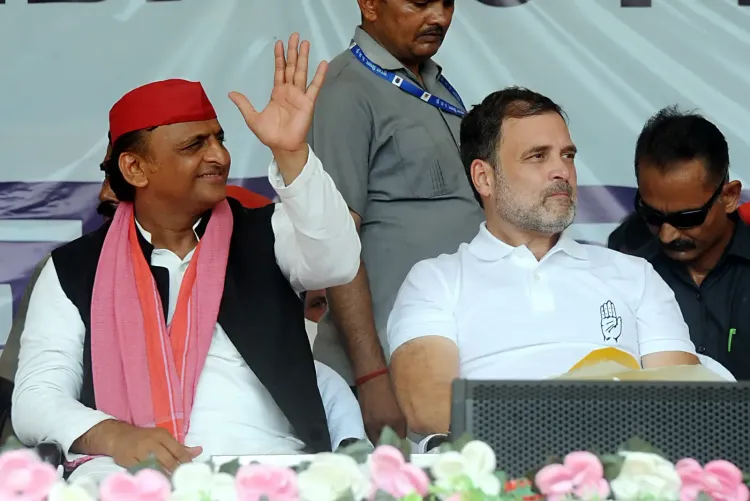
A set of unauthorised posters claiming 200 Uttar Pradesh seats for the Congress has blown the lid off a brewing alliance crisis. With the SP dismissing them as a BJP plant and Congress reportedly demanding over 150 seats, the INDIA Bloc's most critical state partnership is under stress — just as the 2027 campaign begins to take shape.
Key Takeaways
Posters reading '200 seat haq hai hamara, UP ko hai Rahul Gandhi par bharosa' appeared in Lucknow and other UP districts, sparking an alliance row.
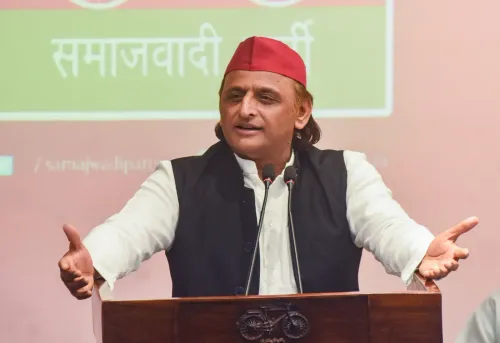
SP chief Akhilesh Yadav dismissed the hoardings as fake and accused the BJP of trying to divide the INDIA Bloc.
The Congress has reportedly submitted an initial seat list of 175–200 seats in the 403-member UP Assembly; regional leaders have cited a floor of 150 seats .
The SP reportedly bases seat allocation on winnability and grassroots strength — criteria on which the Congress currently lags.
The 2024 Lok Sabha performance in UP emboldened the Congress, but the SP views a near-equal split as a strategic liability.
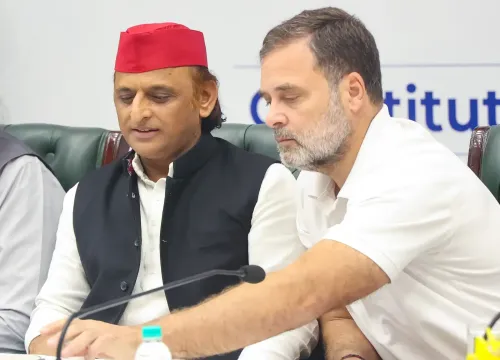
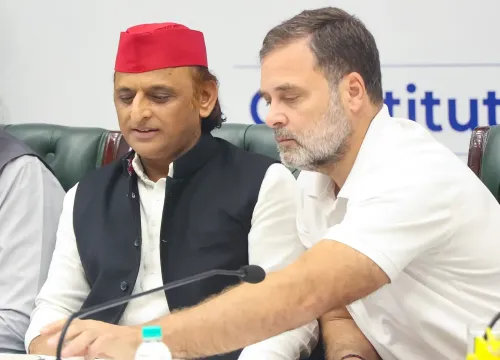
A final decision is reportedly contingent on direct talks between Rahul Gandhi and Akhilesh Yadav .
A set of unauthorised posters in Lucknow and several Uttar Pradesh districts has reignited tensions between the Samajwadi Party (SP) and the Indian National Congress, exposing the unresolved fault lines in seat-sharing negotiations ahead of the 2027 Uttar Pradesh Assembly election. The hoardings, which read '200 seat haq hai hamara, UP ko hai Rahul Gandhi par bharosa' (200 seats are our right, Uttar Pradesh trusts Rahul Gandhi), appeared at a moment when the two INDIA Bloc allies are yet to reach any formal agreement on the division of the state's 403 Assembly constituencies.
SP Calls the Posters Fake, Points Finger at BJP
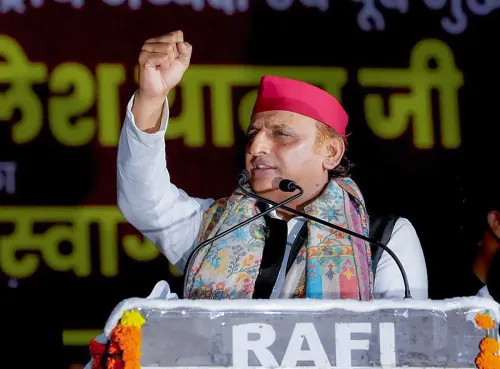
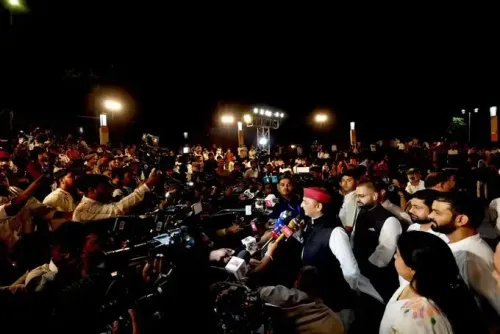
SP chief Akhilesh Yadav was quick to distance his party from the hoardings, dismissing them as fabricated and accusing the ruling Bharatiya Janata Party (BJP) of engineering the controversy to sow discord within the INDIA Bloc. He reportedly argued that the ruling establishment was uncomfortable with a united opposition and had allegedly used unauthorised displays to generate mistrust between the two allies. Yadav is also said to have demanded accountability from municipal officials for permitting the hoardings without proper authorisation.
Whether the posters originated from a BJP operation or from within the Congress ecosystem remains unverified. What they have undeniably done, however, is thrust the sensitive seat-sharing conversation into the public domain before either side was ready for it.
The Numbers at the Heart of the Dispute
Reports indicate that the Congress has recently submitted what is described as an 'initial list' of anywhere between 175 and 200 seats, with statements attributed to the state party's top leadership. Regional party leaders have long been quoted as seeking 'anything above 150 seats' — a figure the SP finds difficult to reconcile with its own electoral dominance in the state. The Congress's ambition reflects its stated need to rebuild organisational presence across a state where its footprint has contracted significantly over the past two decades.
Sections within the SP reportedly remain unconvinced that the Congress possesses sufficient ground-level strength in Uttar Pradesh to justify such a large allocation. The SP's calculus, according to reports, is rooted in winnability and existing grassroots networks — criteria on which the Congress currently trails its regional partner by a considerable margin.
2024 Lok Sabha Boost Emboldened Congress
The Congress-SP partnership delivered a strong performance in Uttar Pradesh during the 2024 Lok Sabha election, significantly reducing the BJP's seat tally in the state and giving the INDIA Bloc a national momentum boost. Encouraged by that result, Congress leaders have been pushing for an early, 'respectable' seat-sharing arrangement ahead of 2027 — leveraging both Rahul Gandhi's national visibility and the INDIA Bloc's joint campaign, particularly on the Election Commission's Special Intensive Revision (SIR) of the voters' list, to strengthen their negotiating position.
The tension is rooted in a structural asymmetry: the Congress believes a large seat count is necessary to revive its organisation, while the SP views any allocation disconnected from electoral strength as a strategic liability.
Public Sparring Signals Alliance Stress
The disagreement has spilled into open exchanges, with leaders on both sides reportedly trading barbs over relative political stature, organisational reach, and electoral contributions. Analysts note that such public friction, however, is not uncommon in pre-poll alliance negotiations — particularly in a state as complex as Uttar Pradesh, where other INDIA Bloc partners are also expected to demand their own 'respectable' share of the 403 seats.
Notably, a final call on seat allocation is reportedly contingent on direct engagement between Rahul Gandhi and Akhilesh Yadav, suggesting the matter will ultimately be resolved — or not — at the highest political level.
What the Poster Row Really Reveals
The hoardings, intentional or not, appear to have shifted the tenor of negotiations from bargaining to assertion. Political observers argue that framing the demand as an entitlement — 'haq hai hamara' (it is our right) — is precisely the kind of language that complicates an alliance built on mutual compromise. The SP, as the dominant regional force by both seat count and organisational depth, is unlikely to accept a near-equal partnership without hard evidence of the Congress's ability to win seats on the ground.
With the 2027 Uttar Pradesh Assembly election still months away, both parties have time to reach an accommodation — but the public nature of the dispute suggests that the path to a durable deal will require significant political capital from both Gandhi and Yadav.
Point of View
But leverage is not the same as organisational reality — and in Uttar Pradesh, booth-level networks still determine outcomes. Yadav's reflex to blame the BJP is a politically convenient deflection, but it does not resolve the underlying arithmetic. If Gandhi and Yadav cannot bridge the gap privately before the campaign intensifies, the INDIA Bloc's most consequential state partnership risks becoming its most publicly fractured one.
NationPress
26 Oct 2026
Frequently Asked Questions
What did the controversial UP posters say, and why did they cause a row?
The posters read 'UP ko hai Rahul Gandhi par bharosa, 200 seat haq hai hamara' — claiming 200 of Uttar Pradesh's 403 Assembly seats for the Congress. They caused a row because seat-sharing talks between the SP and Congress are still unresolved, and the assertive language inflamed tensions within the INDIA Bloc alliance.
Why did Akhilesh Yadav call the posters fake?
SP chief Akhilesh Yadav dismissed the hoardings as unauthorised and reportedly accused the ruling BJP of fabricating them to create divisions within the INDIA Bloc. He also allegedly sought action against municipal officials for allowing the displays without proper clearance.
How many seats is the Congress demanding in Uttar Pradesh for 2027?
According to reports, Congress leaders have cited a floor of 'anything above 150 seats,' and an initial list of 175 to 200 seats has reportedly been submitted by the state party's leadership. The SP has not publicly accepted these figures, basing its own calculus on candidate winnability and ground-level presence.
How did the SP-Congress alliance perform in the 2024 Lok Sabha election in UP?
The SP-Congress partnership delivered a strong result in Uttar Pradesh in the 2024 general election, significantly reducing the BJP's seat count in the state and boosting the INDIA Bloc's national position. That performance has since emboldened Congress leaders in their seat-sharing demands for the 2027 Assembly election.
When will the SP-Congress seat-sharing deal for UP 2027 be finalised?
No timeline has been officially announced. Reports suggest a final decision is likely to be taken after direct consultations between Rahul Gandhi and Akhilesh Yadav, meaning the resolution will ultimately be a top-level political call rather than a bottom-up negotiation.