Congress-SP seat-sharing row in UP echoes Bihar Mahagathbandhan tensions
Synopsis
The Congress-SP seat-sharing spat in Uttar Pradesh is not a new script — it is almost a scene-by-scene replay of how the Bihar Mahagathbandhan unravelled before the 2025 polls, costing the Opposition badly. With Congress reportedly demanding 150-plus seats and SP comfortable with 80, the gap is wide, the deadline is closing, and the BJP is watching.
Key Takeaways
Congress is reportedly seeking more than 150 seats in the 403-member Uttar Pradesh Assembly; the SP is said to favour allocating around 80 seats to its partner.
The final decision is expected to be taken by Rahul Gandhi and Akhilesh Yadav , despite public sparring between lower-rung leaders.
In Bihar's 2025 Assembly election , a similar Congress-RJD standoff ended with Congress contesting 61 seats and winning only 6 — 13 fewer than in 2020 .
The JMM 's marginalisation in Bihar cost the Mahagathbandhan at least one Scheduled Tribe-reserved seat , illustrating the price of ignoring smaller allies.
The NDA won around 16 of Bihar's 32 Muslim-dominated seats in 2025, partly capitalising on the Opposition's internal rifts.
How Congress and SP resolve their differences is seen as critical to the INDIA bloc's broader viability ahead of the UP Assembly election .
As Uttar Pradesh prepares for its Assembly election early next year, a simmering dispute between the Indian National Congress (Congress) and the Samajwadi Party (SP) over seat-sharing is drawing comparisons to the fault lines that fractured Bihar's Mahagathbandhan during the 2025 state poll. In both instances, Congress sought a larger stake while the dominant regional partner resisted conceding ground.
The UP Seat-Sharing Standoff
The Congress-SP alliance delivered a strong performance in the 2024 Lok Sabha election, giving the INDIA bloc a meaningful boost in Uttar Pradesh and significantly denting the Bharatiya Janata Party (BJP)'s dominance in the state. Reportedly emboldened by that result, Congress leaders have been pushing for an early seat-sharing deal — one that would give them what is described internally as a 'respectable' allocation.
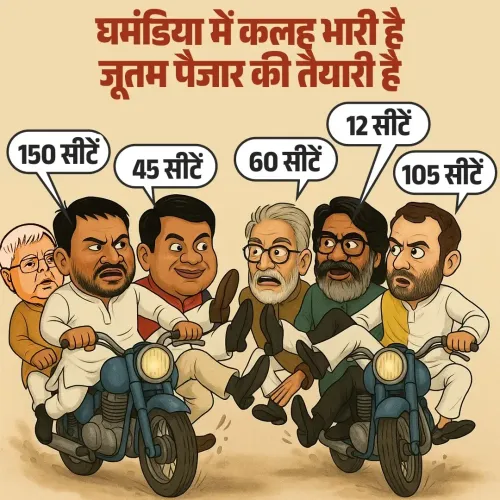
According to reports, Congress is seeking more than 150 seats in the 403-member Uttar Pradesh Assembly, a figure that would also need to accommodate other alliance partners. The SP, however, is believed to be comfortable with allocating only around 80 seats to Congress. The gap between those two positions has already spilled into the open, with leaders from both sides reportedly exchanging barbs over each other's organisational strength and electoral contributions.
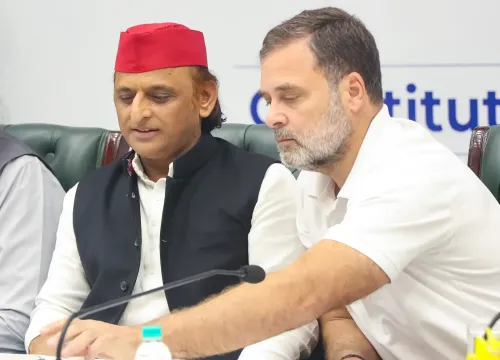
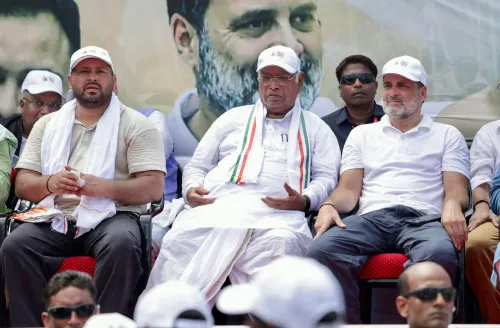
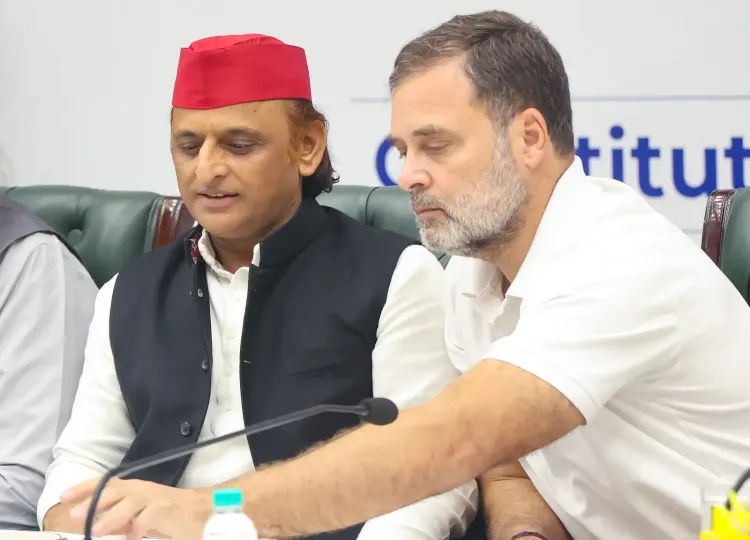
Despite the public sparring, leaders on both sides have acknowledged that the final decision rests with the 'Central leadership' — widely understood to mean Congress leader Rahul Gandhi and SP chief Akhilesh Yadav.
The Bihar Blueprint: A Cautionary Parallel
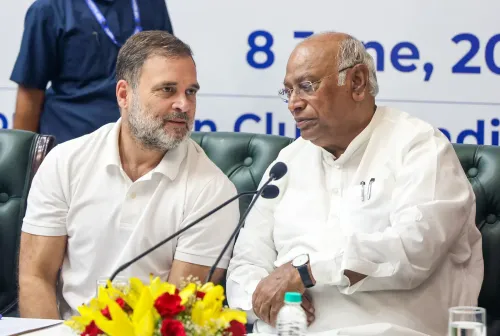
The dynamics unfolding in UP bear a striking resemblance to what played out in Bihar ahead of the 2025 Assembly election. Congress entered those negotiations with a sense of momentum, buoyed by Rahul Gandhi's intensified political outreach, and sought to translate renewed visibility into bargaining leverage within the Mahagathbandhan.
But Rashtriya Janata Dal (RJD) leader Tejashwi Yadav held firm. Congress pressed for around 70 seats — matching its 2020 tally — but Tejashwi reportedly insisted that electoral performance, not aspiration, should determine allocations. The RJD pointed to Congress' dismal 2020 strike rate, when it won only 19 of the 70 seats it contested, to justify curtailing its ambitions. At one point, Tejashwi declared the RJD was prepared to contest all 243 Assembly seats alone — a move widely read as pressure tactics.
Congress ultimately settled for 61 seats. In the final result, it won just six seats — 13 fewer than in 2020 — as the National Democratic Alliance (NDA) swept Bihar, breaking into constituencies that the Opposition had long considered safe ground.
Smaller Partners Left Out in the Cold
Bihar also demonstrated the cost of sidelining smaller allies while senior partners fought over numbers. The Jharkhand Mukti Morcha (JMM), a key ally of Congress and RJD in neighbouring Jharkhand, spent months seeking meaningful accommodation within Bihar's Mahagathbandhan. JMM leaders alleged that assurances were not honoured and publicly accused the alliance leadership of marginalisation.
Tensions escalated to the point where JMM threatened to contest independently. The fallout was concrete: the Opposition alliance won only one of the two Scheduled Tribe-reserved seats in Bihar and lost the other. Of the four other seats JMM had intended to contest, the RJD won one while the remaining went to NDA constituents.
Separately, the All India Majlis-e-Ittehadul Muslimeen (AIMIM) repeatedly sought entry into the Mahagathbandhan — writing to the RJD leadership and publicly offering to contest a limited number of seats. According to AIMIM leaders, those overtures were ignored despite direct approaches to Lalu Prasad Yadav and Tejashwi Yadav. AIMIM ultimately formed a separate alliance and contested 28 of the 79 seats fielded by that third front, winning five — replicating its 2020 performance.
Notably, the NDA secured around 16 of Bihar's approximately 32 Muslim-dominated seats — constituencies concentrated in the Seemanchal region along the Nepal border — which recorded increased turnout in 2025, a development analysts attributed partly to the fragmented Opposition vote.
What the UP Alliance Must Resolve
Whether Congress and SP can navigate their differences more deftly than the Bihar alliance managed may prove decisive — not just for their performance in Uttar Pradesh, India's most politically consequential state, but for the broader viability of the INDIA bloc's electoral strategy. The Bihar precedent suggests that unresolved tensions at the top tend to cascade into weakened coordination on the ground, gift-wrap seats for the BJP, and leave smaller partners feeling alienated enough to act as spoilers.
All eyes now turn to whether Rahul Gandhi and Akhilesh Yadav can reach a formula before the disagreement hardens into a structural fracture.
Point of View
The party's insistence on aspirational seat numbers — disconnected from its actual strike rate — handed the RJD a negotiating cudgel and ultimately produced Congress' worst Bihar result in recent memory. The same pattern appears to be repeating in UP, where the party's 2024 Lok Sabha tailwind is being leveraged to demand a seat share that the SP has little incentive to concede. The deeper problem is structural: Congress remains caught between projecting a national revival and accepting that, in Hindi-belt states, it is still a junior partner. Until it resolves that identity tension, every seat-sharing negotiation risks becoming a public relations liability — one that the BJP is well positioned to exploit.
NationPress
30 Sept 2026
Frequently Asked Questions
What is the Congress-SP seat-sharing dispute in Uttar Pradesh about?
Congress is reportedly seeking more than 150 seats in the 403-member Uttar Pradesh Assembly for the upcoming state election, while the SP is said to be comfortable allocating around 80 seats to its ally. The gap has triggered public exchanges between leaders of both parties, though a final decision is expected from Rahul Gandhi and Akhilesh Yadav.
How does the UP dispute compare to Bihar's Mahagathbandhan tensions in 2025?
In both cases, Congress sought a seat allocation larger than its regional partner was willing to grant, citing perceived momentum from Rahul Gandhi's outreach. In Bihar, Congress eventually contested 61 seats but won only 6, while the NDA swept the state. Analysts warn that a similar unresolved standoff in UP could benefit the BJP.
What happened to Congress in Bihar's 2025 Assembly election?
Congress won just 6 seats in Bihar's 2025 Assembly election, 13 fewer than the 19 it had won in 2020. The RJD had limited Congress to 61 seats after pointing to its poor 2020 strike rate of 19 wins from 70 contests.
How did the JMM's exclusion affect the Bihar Opposition alliance?
The Jharkhand Mukti Morcha alleged its assurances were not honoured and threatened to contest independently. The fallout cost the Mahagathbandhan at least one of Bihar's two Scheduled Tribe-reserved seats, with the remainder of JMM-intended seats largely going to NDA constituents.
Why does the UP alliance outcome matter beyond the state?
Uttar Pradesh is India's most politically consequential state, and how the Congress-SP alliance navigates its seat-sharing dispute is seen as a bellwether for the INDIA bloc's broader electoral viability. A fractured alliance in UP could replicate the Bihar outcome and materially weaken the Opposition's national standing ahead of future elections.