Did a Special Court Just Release an Accused in the Rubaiya Sayeed Kidnapping?
Synopsis
In a surprising turn of events, a special court has released Shafat Ahmad Shangloo, arrested by the CBI for his alleged involvement in the 1989 kidnapping of Rubaiya Sayeed. This decision has raised eyebrows as the case continues to unfold, revealing long-hidden connections and conspiracies.
Key Takeaways
Shafat Ahmad Shangloo was arrested in connection with the 1989 kidnapping case.
A special court refused the CBI's request for his custody.
The case involves the release of five terrorists in exchange for Rubaiya Sayeed.
Yasin Malik is currently in jail and was identified as her key abductor.
The case highlights ongoing legal complexities and political implications.
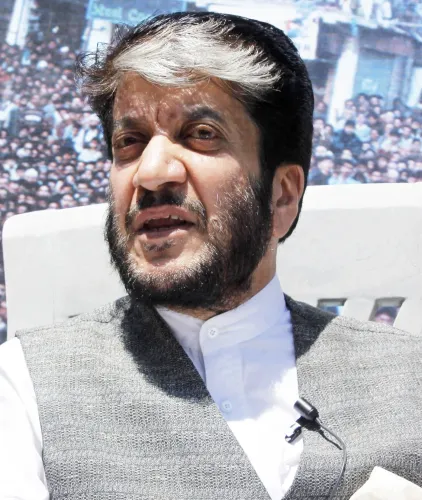
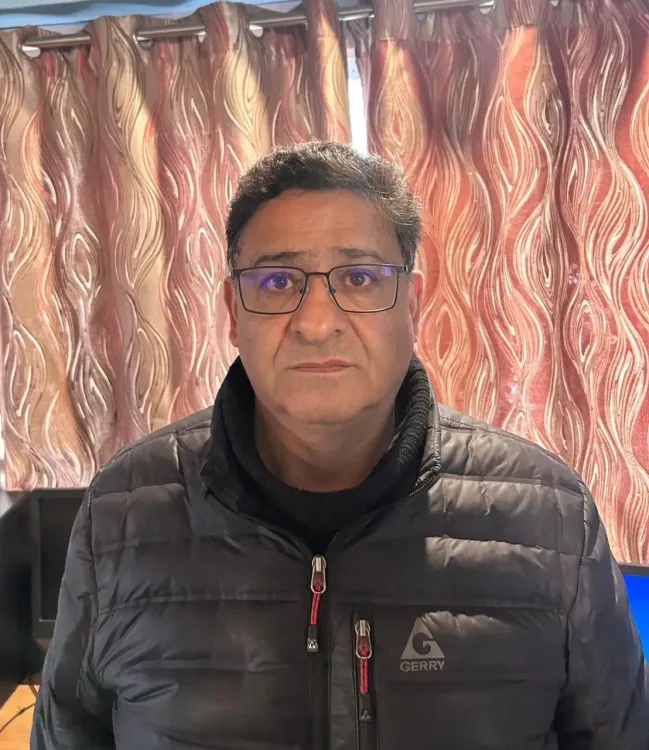
Jammu, Dec 2 (NationPress) Following the recent arrest of Shafat Ahmad Shangloo by the Central Bureau of Investigation (CBI) in relation to the 1989 kidnapping of Rubaiya Sayeed, a special court has decided to release him, denying the agency's request for his custody for interrogation.
The court dismissed the CBI's request for custody, highlighting the absence of any mention of Shangloo in the charge sheet submitted by the agency.
The CBI had argued for his custody, alleging that he had been evading authorities for years concerning the notorious case, which involved the kidnapping of Sayeed, the daughter of then Union Home Minister Mufti Mohammed Sayeed, on December 8, 1989. The incident concluded after five days with the release of five notorious JKLF terrorists.
Shangloo's arrest on Monday was part of the CBI's investigation into a conspiracy involving members of the banned Jammu and Kashmir Liberation Front (JKLF) to abduct Rubaiya Sayeed. The CBI counsel mentioned that he had a reward of Rs 10 lakh on his head.
Shangloo is said to be a close associate of JKLF chief Yasin Malik. The CBI's lawyer, S.K. Bhat, stated, "We have sought custody of the accused," prior to the court's ruling.
In a statement following the arrest, the CBI indicated that Shangloo conspired with Malik and others to commit offenses under various sections of the Ranbir Penal Code and the TADA Act in 1989.
According to official sources, Shangloo allegedly held a financial position within the JKLF. He was taken into custody by the CBI and Jammu and Kashmir Police from his home in the Nishat area of Srinagar.
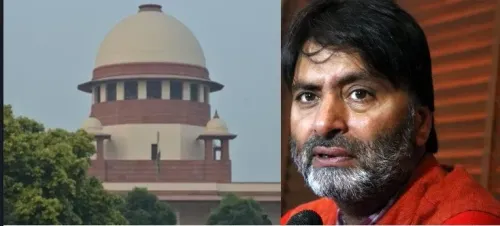
Malik, currently serving a life sentence in Delhi’s Tihar Jail for a terror funding case, was not physically produced in court due to a Ministry of Home Affairs directive that restricts his movement. However, Rubaiya Sayeed had previously identified him as her primary abductor in 1989.
Point of View
It is essential to recognize the complexities surrounding this case. The court's decision to release Shangloo highlights ongoing challenges in the judicial system, particularly in long-standing cases involving political figures. This incident reflects the need for transparency and accountability in handling sensitive matters that affect public trust.
NationPress
21 Sept 2026
Frequently Asked Questions
Who is Shafat Ahmad Shangloo?
Shafat Ahmad Shangloo is an individual recently arrested by the CBI in connection with the 1989 kidnapping of Rubaiya Sayeed, the daughter of former Union Home Minister Mufti Mohammed Sayeed.
What was the court's decision regarding Shangloo?
The special court decided to release Shafat Ahmad Shangloo, rejecting the CBI's request for his custody for questioning.
How did Rubaiya Sayeed's kidnapping end?
Rubaiya Sayeed's kidnapping ended after five days when the authorities released five JKLF terrorists.
What is the significance of this case?
This case is significant as it involves high-profile political figures and raises questions about the effectiveness of the judicial process in addressing historical crimes.
Why was Malik not present in court?
Yasin Malik, the chief of JKLF, was not physically produced in court due to a Ministry of Home Affairs order restricting his movement.