Did J&K Court Grant Bail to Eight Accused in Custodial Torture Case?

Synopsis
A significant ruling from the J&K court has granted bail to eight individuals accused in a notorious custodial torture case, igniting discussions about police brutality and institutional accountability. The Supreme Court's involvement highlights the serious implications of the investigation led by the CBI, reflecting on human rights violations.
Key Takeaways
The J&K court has granted bail to eight accused in a high-profile custodial torture case.
The case is under investigation by the CBI following Supreme Court orders.
Significant compensation of Rs 50,00,000 was awarded to the victim.
The Supreme Court condemned the state's narrative and emphasized the need for justice.
The court set strict conditions for the bail, including no interference with the investigation.
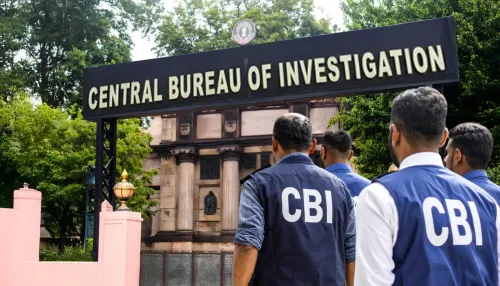
Srinagar, Dec 30 (NationPress) The Principal District & Sessions Judge, Kupwara in Jammu and Kashmir, on Tuesday, approved bail for eight individuals implicated in the notorious custodial torture case currently being examined by the Central Bureau of Investigation (CBI) following directives from the Supreme Court.
The accused include Deputy SP Aijaz Ahmad, Sub-Inspector Riyaz Ahmad Mir, Special Police Officer Jahangeer Ahmad Beigh, Head Constables Mohammad Younis Khan and Tanveer Ahmad Malla, along with Selection Grade Constables Shakir Hussain Khoja and Altaf Hussain Bhat, and Constable Shahnawaz Ahmad, all of whom are currently incarcerated in the central jail after their arrests by the CBI in August.
The court has mandated the accused to provide personal and surety bonds of Rs 1,00,000 each and has restricted them from leaving the jurisdiction of the court without prior approval. Any of them holding a passport is required to submit it to the court, as per the order.
The court has warned that the accused must not intimidate or influence prosecution witnesses, tamper with evidence, and must attend all hearings unless otherwise excused by the court. Any violation of these conditions could lead to serious consequences and potential bail revocation.
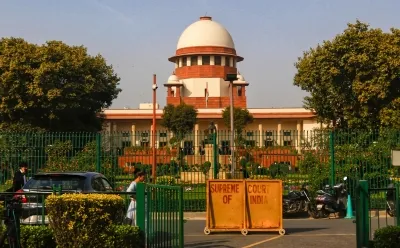
The Supreme Court, addressing state abuse and institutional failures, mandated the CBI to take over the inquiry into the illegal detention and severe custodial torture of a police constable, Khursheed Ahmad Chohan, at the Joint Interrogation Centre (JIC) in Kupwara, J&K.
To underscore the severity of the violations, the court has also mandated reparations, awarding Rs 50,00,000 in compensation to the victim, recognizing it as a necessary constitutional remedy due to the violation of Article 21.
Moreover, the Supreme Court nullified a retaliatory FIR against the victim under Section 309 IPC for "attempt to suicide" and has called for the immediate arrest of the implicated officers, directing the Union Territory of J&K to pay Rs 50 lakh as constitutional compensation, which can be recouped from the guilty officers through departmental proceedings.
The CBI has been instructed to investigate systemic failures and institutional impunity at the JIC.
The Supreme Court remarked, "The unprecedented gravity of this case, involving horrific and inhuman custodial torture, especially the complete mutilation of the appellant's genitalia, stands as one of the most barbaric examples of police brutality that the state is attempting to defend and conceal using its pervasive power. Medical evidence decisively establishes that such injuries cannot be self-inflicted. The respondent’s suggestion of a suicide attempt collapses when evaluated against both the timeline and medical evidence," the apex court stated.
Delivering the ruling, a bench consisting of Justices Vikram Nath and Sandeep Mehta characterized the case as one of "unprecedented gravity," highlighting the complete mutilation of genitalia, the use of pepper powder and electric shocks on sensitive areas, and injuries consistent with custodial torture techniques such as falanga, along with the presence of multiple vegetative particles in the rectum and signs of anal insertion.
The court deemed the state's claim of attempted suicide as "medically impossible," dismissing it as a fabricated narrative intended to protect the perpetrators.
Point of View
This case underscores the pressing need for reform within law enforcement agencies. The judiciary's involvement signals a commitment to uphold justice and accountability, vital in restoring public trust in institutions. As we navigate these complex issues, it is crucial that we remain vigilant in our advocacy for human rights and systemic change.
NationPress
19 Sept 2026
Frequently Asked Questions
What was the main outcome of the J&K court ruling?
The J&K court granted bail to eight accused in a custodial torture case, emphasizing conditions to prevent interference with the investigation.
Who are the accused in the custodial torture case?
The accused include Deputy SP Aijaz Ahmad, Sub-Inspector Riyaz Ahmad Mir, and several police officers and constables.
What were the conditions of the bail granted?
The accused must provide personal and surety bonds of Rs 1,00,000 each and cannot leave the court's jurisdiction without permission.
What compensation was ordered for the victim?
The Supreme Court ordered a compensation of Rs 50,00,000 for the victim due to the violation of their constitutional rights.
What further actions were mandated by the Supreme Court?
The Supreme Court directed the CBI to investigate systemic failures and institutional impunity at the Joint Interrogation Centre.