Death Penalty for Nine Police Officers in Sattankulam Custodial Deaths Case

Synopsis
A landmark ruling in Madurai has seen nine police officers sentenced to death for their roles in the tragic custodial deaths of P. Jayaraj and his son J. Benicks. This verdict reignites a national conversation on the dark realities of custodial violence in India.
Key Takeaways
Landmark Judgment: Nine police officers sentenced to death.
Custodial Violence: Case highlights ongoing issues of brutality in police custody.
Public Outrage: The case stirred national protests and discussions.
CBI Investigation: Transferred to ensure impartiality.
Legal Significance: Reflects the judicial system's stance on serious crimes.
Madurai, April 6 (NationPress) In a significant ruling that has reignited discussions nationwide regarding custodial violence, the First Additional District and Sessions Court in Madurai has sentenced nine police officers to death for their involvement in the 2020 Sattankulam custodial deaths case.
This case revolves around the tragic deaths of trader P. Jayaraj (58) and his son J. Benicks (31), who reportedly succumbed to severe torture while in police custody. The court had, on March 23, 2026, declared all nine defendants guilty but postponed the sentencing phase.
In today's announcement of the sentence, the court upheld the prosecution's assertion that this case fell into the category of 'rarest of rare' crimes, meriting capital punishment.
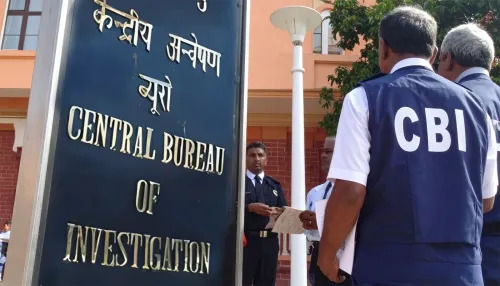
During the sentencing deliberations, both the Central Bureau of Investigation (CBI) and the legal representatives for the victims' family advocated strongly for the maximum sentence.
They contended that the victims were subjected to horrific torture throughout the night at the Sattankulam police station, despite committing no grave offense.
The extreme brutality, they argued, warranted the utmost penalty under the law.
The incident triggered a wave of outrage across the nation in 2020, leading the Madurai Bench of the Madras High Court to take suo motu cognizance.
Consequently, the investigation was shifted from the state police to the CBI by the then AIADMK government to guarantee an unbiased inquiry.
Initially, ten police officers were implicated in the case, but one, Special Sub-Inspector Pauldurai, passed away after contracting COVID-19 during the trial, leaving nine to face legal action.
The CBI submitted its initial charge sheet in September 2020, followed by a supplementary charge sheet in August 2022, outlining the events and evidence collected.
The investigation revealed that Jayaraj was apprehended from his store near the Kamaraj statue on the evening of June 19, 2020. His son Benicks subsequently arrived at the police station upon hearing of the arrest and was also detained after a confrontation with the officers.
Both victims reportedly endured severe custodial brutality throughout the night. The CBI reported that they were brutally beaten, forced to clean their own blood, and later falsely accused in another case.
Evidence, which includes witness statements, medical documentation, and video footage analysis, indicated a deliberate attempt to eliminate evidence of the crime.
Considering these findings, the court concluded that the accused had intentionally inflicted fatal injuries, resulting in the deaths of the father and son, thus justifying the death sentence.
Point of View
This ruling underscores a pivotal moment in India's legal landscape concerning custodial violence. It reflects a growing acknowledgment of the need for accountability within law enforcement, emphasizing the importance of justice for victims and their families.
NationPress
20 Sept 2026
Frequently Asked Questions
What was the outcome of the Sattankulam custodial deaths case?
Nine police personnel were sentenced to death by the First Additional District and Sessions Court in Madurai for their involvement in the custodial deaths of P. Jayaraj and his son J. Benicks.
Why was the case significant?
The case highlighted serious issues related to custodial violence and prompted widespread outrage, leading to a national debate on police accountability.
What led to the transfer of the investigation to the CBI?
The investigation was transferred from the state police to the CBI by the AIADMK government to ensure an impartial inquiry into the custodial deaths.
What types of evidence were presented in the trial?
Evidence included witness testimonies, medical reports, and video footage that demonstrated a deliberate attempt to destroy evidence of the crime.
What does the term 'rarest of rare' mean in legal context?
The term 'rarest of rare' refers to cases that are so heinous that they warrant the death penalty as a punishment.