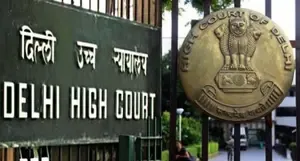
Delhi HC awards ₹18.44 lakh to father of custodial suicide victim, cites Article 21

Synopsis
The Delhi High Court has ruled that the state cannot escape liability for a custodial suicide by pointing to statutory schemes or the absence of direct violence — a significant expansion of Article 21 accountability. The ₹18.44 lakh award to the father of 19-year-old Deepak, who died at Karawal Nagar Police Station in 2018, sets a precedent that any unnatural death in custody triggers constitutional compensation, regardless of cause.
Key Takeaways
The Delhi High Court ordered the Delhi government to pay ₹18.44 lakh to the adoptive father of Deepak , who died by suicide in police custody on 16 January 2018 .
Justice Sachin Datta held that an unnatural custodial death — even by suicide — violates Article 21 and attracts state liability.
The deceased was lodged at Karawal Nagar Police Station ; the post-mortem attributed death to 'asphyxia due to ante-mortem hanging' .
The Delhi government's argument that statutory schemes under Section 357A CrPC should govern compensation was rejected.
Compensation was calculated on a monthly income of ₹12,000 , a 40% future-prospects addition, and a multiplier of 18 .
Authorities have been directed to pay within eight weeks .
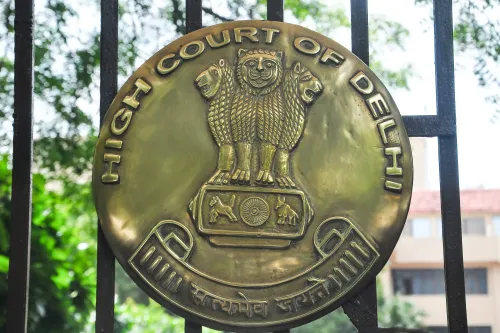
The Delhi High Court has directed the Delhi government to pay ₹18.44 lakh in compensation to the adoptive father of a 19-year-old who died by suicide while in police custody, ruling that an unnatural custodial death — even one attributed to suicide — constitutes a violation of the fundamental right to life under Article 21 of the Constitution and attracts public law liability. The judgment was delivered on Wednesday, 2 July by a single-judge Bench of Justice Sachin Datta.
Background: What Happened at Karawal Nagar Police Station
The writ petition was filed by Shyam Sundar, the adoptive father of Deepak, who was arrested in connection with an FIR and lodged at Karawal Nagar Police Station. According to the petitioner, both he and his son were allegedly assaulted by police personnel following the arrest, who also reportedly demanded ₹20,000–30,000 for securing Deepak's release.
On 16 January 2018, the day after the arrest, Shyam Sundar was informed that his son had allegedly died by suicide in custody. Deepak was declared 'brought dead' at Guru Tegh Bahadur Hospital. A post-mortem conducted by a medical board attributed the cause of death to 'asphyxia due to ante-mortem hanging'.
The Court's Ruling on State Liability
Justice Datta held that the state, as custodian of life and liberty, bears an absolute duty to protect persons in its custody and cannot escape liability merely because the death was self-inflicted. 'The very fact of custodial death, being unnatural, attracts liability and obliges the court to mould relief in the form of compensation,' the court said.
The judgment further noted that a person in custody does not forfeit fundamental rights guaranteed under Article 21, and that an unnatural death in custody — regardless of its immediate cause — reflects an omission of duty by those charged with safekeeping. 'It is not a private act divorced from state responsibility,' the court observed.
Rejection of Government's Defence
The Delhi government had opposed the petition, arguing that compensation is not an automatic consequence of every custodial death and that the matter should be governed by the statutory framework under Section 357A of the Code of Criminal Procedure and the Delhi Victim Compensation Scheme.
Justice Datta rejected this contention outright, holding that compensation for custodial deaths flows directly from the violation of Article 21 and is legally distinct from statutory remedies. The state, the court ruled, 'cannot escape responsibility by invoking statutory schemes or by contending absence of direct culpability.'
How the Compensation Was Calculated
Taking the deceased's monthly income at ₹12,000, adding 40% towards future prospects, and applying a multiplier of 18, Justice Datta arrived at a total compensation of ₹18,44,400. This figure includes conventional amounts towards funeral expenses and loss of estate.
The court directed the authorities to disburse the full amount within eight weeks and disposed of the writ petition. The judgment underscores that custodial death is 'not merely an individual tragedy but a matter of systemic concern, striking at the very foundation of the rule of law.'
Broader Implications for Custodial Accountability
This ruling adds to a growing body of jurisprudence holding the state strictly accountable for deaths in custody, irrespective of the mechanism of death. Notably, the court's reasoning — that any lapse resulting in death within custody 'demands judicial scrutiny' — sets a high evidentiary bar for state agencies seeking to distance themselves from custodial fatalities. With custodial deaths remaining a persistent concern in India, the judgment may be cited in future compensation claims where direct police violence is difficult to establish.
Point of View
Justice Datta makes it harder for governments to route claims through low-ceiling victim-compensation funds. What the judgment does not address — and what remains a systemic gap — is the accountability of the individual officers allegedly involved in assault and extortion. Constitutional compensation to the family is necessary; it is not sufficient. Until criminal liability follows custodial deaths with the same consistency as civil awards, the deterrent effect of rulings like this one will remain limited.
NationPress
1 Oct 2026
Frequently Asked Questions
What did the Delhi High Court rule in the custodial death case?
The Delhi High Court ruled on 2 July that the Delhi government must pay ₹18.44 lakh to the adoptive father of Deepak, a 19-year-old who died by suicide at Karawal Nagar Police Station in 2018. Justice Sachin Datta held that any unnatural custodial death — including suicide — violates Article 21 of the Constitution and obliges the state to pay compensation.
Why is custodial suicide treated as a state liability under this judgment?
The court held that when a person is in state custody, the authorities assume an absolute duty to protect their life and dignity. An unnatural death in custody — regardless of whether it is caused by violence, negligence, or suicide — reflects an omission of that duty, making the state constitutionally liable under Article 21.
How was the ₹18.44 lakh compensation amount calculated?
Justice Sachin Datta calculated the award by taking the deceased's monthly income of ₹12,000, adding 40% for future prospects, and applying a multiplier of 18. The total of ₹18,44,400 also includes conventional amounts for funeral expenses and loss of estate.
Can the Delhi government use the Victim Compensation Scheme instead of paying this award?
No. The court explicitly rejected the government's argument that Section 357A of the CrPC and the Delhi Victim Compensation Scheme should govern the claim. Justice Datta held that compensation for custodial deaths flows directly from the constitutional violation of Article 21 and is distinct from statutory remedies.
What happened to Deepak at Karawal Nagar Police Station?
Deepak, 19, was arrested in connection with an FIR and lodged at Karawal Nagar Police Station. His adoptive father Shyam Sundar alleged that both were assaulted by police after the arrest and that officers demanded ₹20,000–30,000 for his release. The following day, Deepak was declared brought dead at Guru Tegh Bahadur Hospital; the post-mortem cited asphyxia due to ante-mortem hanging.