Did Cameroon's Ruling Party Secure Victory in Regional Elections?
Synopsis
In a significant political development, the ruling Cameroon People's Democratic Movement (CPDM) has claimed victory in the recent regional elections, reflecting the party's ongoing influence and support among the populace. As tensions rise in the country, the implications of this election could reshape the political landscape as Cameroon navigates its decentralization efforts.
Key Takeaways
CPDM wins majority in regional elections.
Significant voter turnout at 57.76%.
Political parties can contest election results legally.
Protests erupted following the October 12 presidential election .
Decentralization remains a focus for Cameroonian governance.
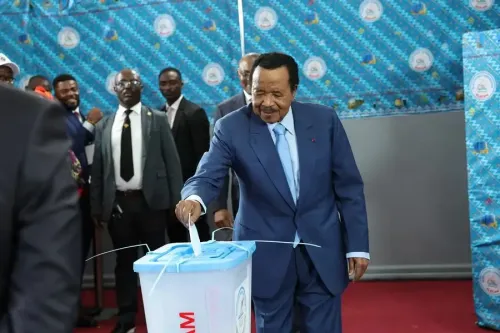
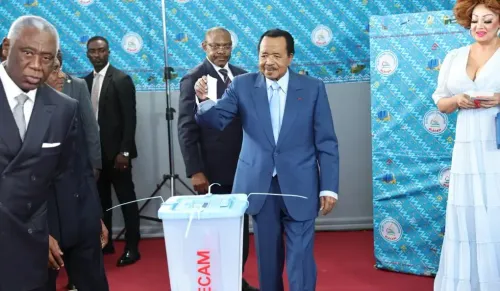
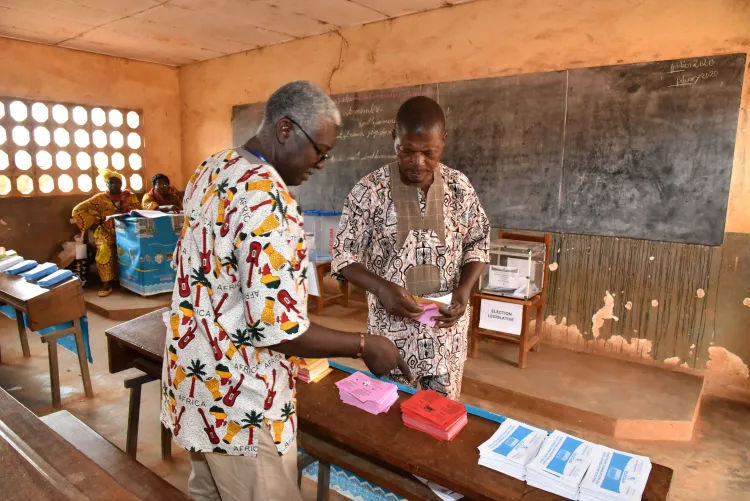
Yaounde, Dec 4 (NationPress) The ruling Cameroon People's Democratic Movement (CPDM) has emerged victorious in the regional elections conducted last Sunday, based on the provisional results provided by regional supervisory commissions.
The initial figures unveiled on Wednesday reveal that the CPDM claimed the majority of the contested regional council seats across 58 divisional headquarters of the nation, as reported by Xinhua News Agency.
"This is an outstanding victory and clearly demonstrates that the people of Cameroon have faith in the CPDM," commented Nick Ngwanyam, a prominent party official.
Under Cameroon's Electoral Code, political parties have the right to submit petitions for partial or complete annulment of the election activities in appropriate courts, after which the final results will be announced.
Having conducted its first regional election in 2020, Cameroon has positioned these elections as a vital aspect of its decentralization strategy. The regional councils across the country's 10 regions function as legislative bodies for regional matters.
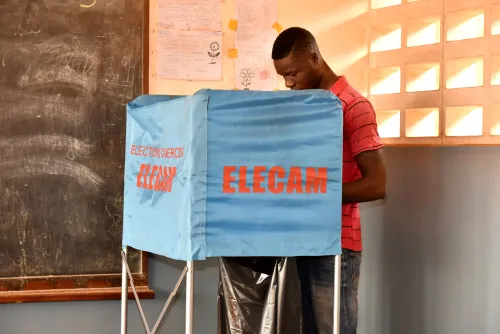
The voting for these elections took place on November 30, with officials from the national electoral authority, Elections Cameroon, stating that the voting process in 58 divisional headquarters commenced "smoothly."
On November 3, however, Rene Emmanuel Sadi, Cameroon's Minister of Communication, denounced violent protests and civil disobedience following the elections, pledging that effective measures would be implemented to restore peace.
Sadi, who also serves as the government spokesperson, indicated that the violent demonstrations subsequent to the October 12 presidential election resulted in significant property damage and looting.
"Individuals responsible for these disturbances, caught in the act of their crimes, have been apprehended," Sadi stated.
This statement coincided with a civil disobedience initiative led by the opposition, which rendered many streets in the Central African nation deserted at the beginning of the workweek on November 3.
Opposition candidate Issa Tchiroma Bakary, who asserted his victory in the election, called for a three-day nationwide "ghost town" protest from November 3-5, urging citizens to remain at home and halt all activities as a form of nonviolent resistance.
Earlier in October, Paul Biya was re-elected as President of Cameroon for an eighth term, garnering 53.66% of the votes, as announced by the country's Constitutional Council.
Bakary, representing the Cameroon National Salvation Front, secured the second position with 35.19% of the votes. More than 4.6 million Cameroonians participated in the voting process out of over eight million registered voters, resulting in a turnout rate of 57.76%, compared to 53.85% in 2018 and 65.82% in 2011.
While announcing the final results, Clement Atangana, President of the Constitutional Council, declared the election to be free and fair.
Biya, aged 92 and in power since 1982, heads the Cameroon People's Democratic Movement.
Point of View
The recent electoral victory for the CPDM signifies a consolidation of power, amidst challenges posed by opposition protests and calls for civil disobedience. The electoral process, hailed as free and fair, reflects the ongoing commitment to decentralization in Cameroon while highlighting the complexities of the current political climate. As the nation navigates these waters, the implications for governance and citizen engagement remain crucial.
NationPress
20 Sept 2026
Frequently Asked Questions
What were the results of the recent regional elections in Cameroon?
The ruling Cameroon People's Democratic Movement (CPDM) won the majority of regional council seats contested in the elections held on November 30.
What is the significance of the regional elections for Cameroon?
The regional elections are a critical part of Cameroon's decentralization process, allowing for regional governance and representation.
What actions can political parties take following the election results?
According to the Electoral Code, political parties can file petitions for the partial or total annulment of the election operations in appropriate courts.
What were the circumstances surrounding the recent protests in Cameroon?
Post-election protests were condemned by the government and were linked to unrest following the October 12 presidential election .
Who is currently the President of Cameroon?
The current President of Cameroon is Paul Biya , who was re-elected for an eighth term in October.