CPI(M) Central Committee faults Vijayan-centric campaign in Kerala's worst defeat in 40 years
Synopsis
The CPI(M)'s own Central Committee has delivered a verdict more damning than anything the opposition managed: the LDF's collapse from 99 to 35 seats in Kerala was self-inflicted. An over-personalised campaign, cadre arrogance, minority alienation, and a leadership so disconnected it couldn't read the public mood — all formally admitted, all previously denied during the campaign itself.
Key Takeaways
The CPI(M) Central Committee formally identified internal failings as the decisive cause of the LDF 's worst Kerala defeat in four decades .
The LDF fell from 99 seats in 2021 to 35 seats in 2026 ; the CPI(M) 's own tally dropped from 64 to 26 seats .
The party's vote share declined to 21.77 per cent — its lowest in Kerala in four decades.
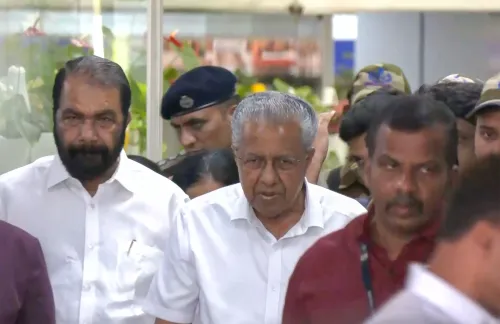
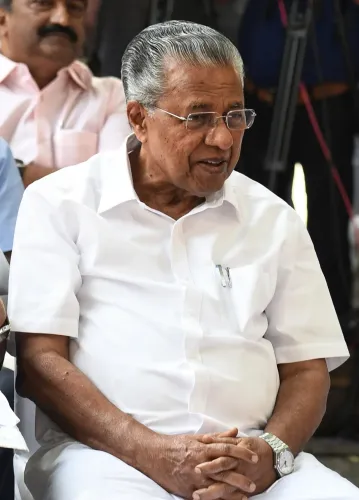
The review faults an over-personalised campaign around Pinarayi Vijayan , perceptions of arrogance and nepotism, and alienation of minority communities.
Controversies including the Global Ayyappa Sangamam and the PM-SHRI issue reportedly damaged the party's secular credentials.
An extended state committee meeting in Kozhikode in September is expected to address organisational restructuring and possible leadership changes.
The CPI(M) Central Committee has formally identified an over-personalised campaign around former Kerala Chief Minister Pinarayi Vijayan, perceptions of arrogance and nepotism, minority community alienation, and a deepening grassroots disconnect as the core reasons behind the Left Democratic Front (LDF)'s worst electoral defeat in Kerala in four decades. The post-election review, adopted on 28 July, marks the party leadership's most candid acknowledgement yet that internal failings — not external forces — drove the rout.
The LDF collapsed from 99 seats in 2021 to just 35 seats in 2026, while the CPI(M)'s own tally fell sharply from 64 to 26 seats. The party's vote share dropped to 21.77 per cent — its lowest in the state in four decades.
The Vijayan Problem
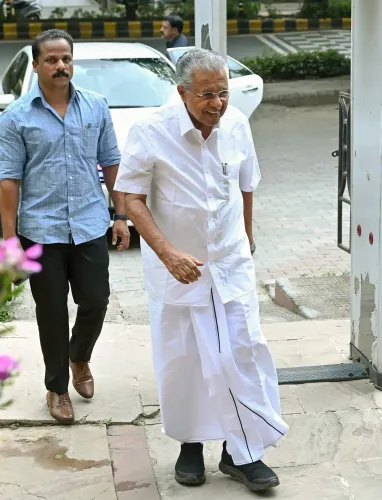
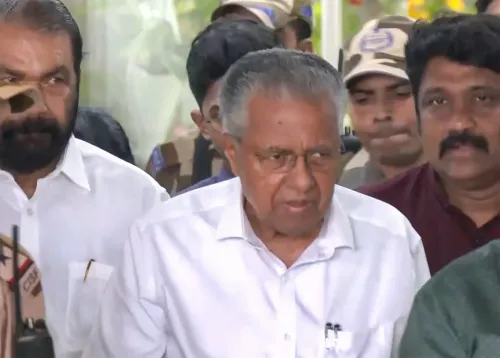
The most politically significant finding in the review is the Central Committee's acknowledgement that the 2026 Assembly election campaign became excessively personalised around Pinarayi Vijayan. While describing him as an efficient Chief Minister, the committee concedes that centering the election on one individual handed the United Democratic Front (UDF) a concentrated target, allowing it to mount a focused offensive against him rather than defending its own record.
Instead of engaging the Indian National Congress (Congress) and the Bharatiya Janata Party (BJP) on ideological and policy ground, the Left found itself in a defensive posture throughout the campaign — protecting a single leader rather than prosecuting a political argument.
Arrogance, Nepotism and Credibility Erosion
The review is equally direct about the party's damaged public image. It admits that perceptions of arrogance, corruption, nepotism, and affluent lifestyles among a section of leaders and cadre eroded the CPI(M)'s credibility with voters. Delays in taking disciplinary action against leaders facing serious allegations, irregularities in cooperative institutions, and allegations of favouritism in candidate selection compounded these perceptions, according to the report.
Minority Alienation and the Secular Image
Another significant admission concerns the alienation of minority communities. The Central Committee acknowledges that controversies — including the reading of Uttar Pradesh Chief Minister Yogi Adityanath's message at the Global Ayyappa Sangamam, the party's weak response to Vellappally Natesan's anti-Muslim remarks, and the handling of the PM-SHRI issue — collectively created an impression that the CPI(M) was soft towards Hindutva forces. These developments, the report says, adversely affected the party's secular image and enabled the UDF to consolidate sections of minority voters.
Grassroots Disconnect and a Misread Mandate
Perhaps the most damaging finding is the party's admission that it had gradually lost touch with its own social base. Mass organisations weakened, ministers were increasingly seen as inaccessible, and cadre depended excessively on the bureaucracy rather than taking up people's grievances directly. Traditional supporters — workers, agricultural labourers, and poor peasants — drifted away.
The leadership also failed to gauge the depth of public resentment over unresolved issues ranging from pension arrears and cooperative sector problems to the wild elephant menace. So deep was the disconnect, the review concedes, that people were no longer candid even with the party's own cadre — leaving the leadership unable to anticipate the scale of the backlash until after the verdict.
What Comes Next
Notably, many of the shortcomings now formally acknowledged are the very issues the Kerala leadership had consistently dismissed during the campaign itself, making this review less a routine exercise than a belated reckoning. The CPI(M)'s extended state committee meeting, scheduled in Kozhikode in September, is expected to focus on organisational restructuring and whether a leadership change is warranted in the aftermath of the defeat.
Point of View
The cadre arrogance, the minority alienation — was flagged by critics during the campaign and rejected by the Kerala leadership. The belated admission raises a harder question: if the warning signs were visible and ignored, is this a review or a ritual? The September Kozhikode meeting will reveal whether the party can translate self-criticism into structural change, or whether it settles for a leadership reshuffle that leaves the underlying culture intact.
NationPress
26 Oct 2026
Frequently Asked Questions
Why did the LDF lose the 2026 Kerala Assembly election so badly?
The CPI(M) Central Committee's post-election review attributes the LDF's defeat primarily to internal failings: an over-personalised campaign around Pinarayi Vijayan, perceptions of arrogance and nepotism, minority community alienation, and a deepening disconnect between leadership and grassroots. The LDF fell from 99 seats in 2021 to just 35 seats in 2026.
What did the CPI(M) Central Committee say about Pinarayi Vijayan?
The Central Committee described Vijayan as an efficient Chief Minister but acknowledged that centering the campaign on him allowed the UDF to mount a focused attack, causing the Left to lose political initiative. The party found itself defending one leader rather than engaging opponents on ideology and policy.
How did minority alienation contribute to the CPI(M)'s defeat?
The review points to several controversies — including the reading of UP CM Yogi Adityanath's message at the Global Ayyappa Sangamam, a weak response to Vellappally Natesan's anti-Muslim remarks, and the PM-SHRI issue — as having created an impression that the CPI(M) was soft on Hindutva. This reportedly enabled the UDF to consolidate minority voters.
What is the CPI(M)'s vote share in Kerala after the 2026 election?
The CPI(M)'s vote share in Kerala dropped to 21.77 per cent in the 2026 Assembly election — the party's lowest in the state in four decades.
What happens next for the CPI(M) in Kerala?
The CPI(M)'s extended state committee meeting is scheduled in Kozhikode in September, where discussions are expected to focus on organisational restructuring and whether a leadership change is required following the historic electoral setback.