CPI(M)'s M.A. Baby slams Modi govt, calls it a 'street goon' regime
Synopsis
CPI(M) general secretary M.A. Baby's 'street goon' broadside against the Modi government at a veteran leader's death anniversary wasn't just political theatre — it tied constitutional grievances over the Election Commission to a call for sustained street mobilisation, while Baby himself had to defend accepting an award from a man his own party expelled in 1986.
Key Takeaways
CPI(M) general secretary M.A.
Baby called the Modi government a 'street goon' regime on 9 November 2026 in Thiruvananthapuram .
Baby accused the Centre of defying Supreme Court directions on the appointment of the Election Commission of India .
The remarks were made at a function marking the 12th death anniversary of veteran leader M.V.
Raghavan was expelled from CPI(M) in 1986 , later founded the Communist Marxist Party (CMP) , and served twice as a minister in UDF governments.
Baby defended accepting an award in Raghavan's name, stating the party's earlier disciplinary action was procedural, not personal.
State Transport Minister C.P.
John , who quit CPI(M) with Raghavan in 1986, continues to lead a CMP faction within the UDF .
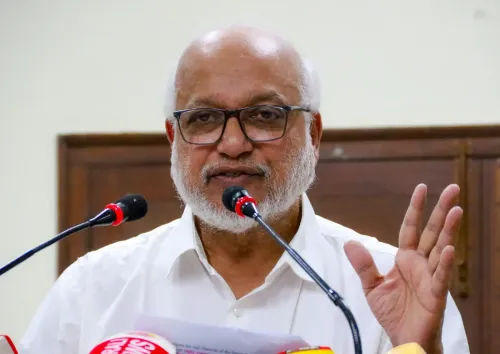
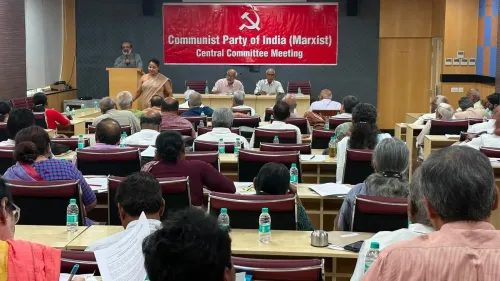
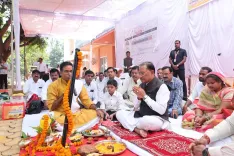
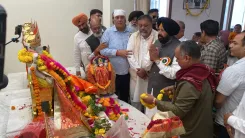
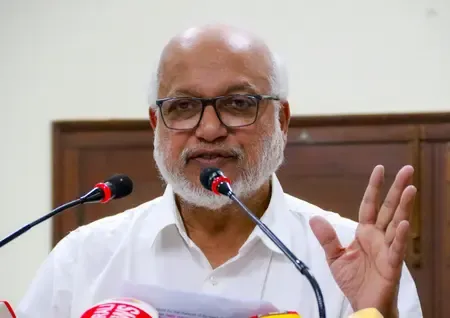
Communist Party of India (Marxist) general secretary M.A. Baby on Monday, 9 November 2026, launched a blistering attack on the Narendra Modi government in Thiruvananthapuram, describing it as a regime that behaves like a 'street goon' and calling for intensified protests against its policies. The remarks came at a function marking the 12th death anniversary of veteran Kerala communist leader M.V. Raghavan.
The Attack on the Centre
Baby accused the Centre of openly defying the Supreme Court's directions on the appointment of the Election Commission of India, alleging the government had simply 'torn up' those directives. He argued that protests against such conduct must be sustained and intensified, regardless of whether the CPI(M) held power at the state level or sat in opposition. The remarks reflect a broader Left Front position that the Bharatiya Janata Party (BJP)-led Centre has systematically undermined constitutional institutions.
Electoral Accountability and Organisational Lessons
Baby also used the occasion to address internal party discipline, cautioning that parties must resist the temptation to blame voters when they lose elections. 'Ask what we did wrong,' he said, underscoring a theme of organisational introspection. He cited Raghavan as an outstanding example of political organisational ability, crediting him with an exceptional grasp of how to build and mobilise a party structure.
Who Was M.V. Raghavan
M.V. Raghavan was a towering figure in Kerala's communist movement before a dramatic falling-out with the CPI(M). A seven-time legislator — elected four times on the CPI(M) ticket — he was expelled from the party in 1986 after proposing an alternative tactical line that the leadership rejected. At the time of his expulsion, he ranked among the party's most senior leaders, with even current Kerala Chief Minister Pinarayi Vijayan ranked below him in the party hierarchy.
Following his expulsion, Raghavan founded the Communist Marxist Party (CMP), which subsequently aligned itself with the Congress-led United Democratic Front (UDF). He served twice as a minister in UDF governments and remained a persistent and vocal critic of CPI(M)'s top leadership, frequently targeting former Chief Ministers E.K. Nayanar and V.S. Achuthanandan, as well as Vijayan, until his death.
Baby's Acceptance of Raghavan Award Draws Scrutiny
Baby on Monday also addressed social media criticism over his acceptance of an award instituted in Raghavan's name, given that he himself had been a critic of the expelled leader during his lifetime. He defended the decision, noting that the CPI(M) had taken disciplinary action against Raghavan strictly through its own organisational procedures — implying no personal animus was involved. He also recalled Raghavan's constructive role in persuading self-financing medical college managements to cooperate with the state government during V.S. Achuthanandan's tenure as Chief Minister.
The CMP's Present State
Raghavan's CMP underwent a split after his death. One faction remains within the UDF. State Transport Minister C.P. John, a close associate who quit the CPI(M) alongside Raghavan in 1986, continues to lead that faction today. The anniversary function thus carried layers of historical complexity — a CPI(M) leader honouring a man the party once expelled, at a gathering that underscored how Kerala's fractured communist lineage continues to shape its politics.
Point of View
But the substance — CPI(M) accusing the Centre of brushing aside Supreme Court directions on Election Commission appointments — deserves more scrutiny than the rhetoric. The Left has a structural incentive to amplify institutional grievances, particularly in Kerala where it holds power; yet that does not automatically make the underlying concern invalid. More telling is the layered irony of the occasion: a CPI(M) leader eulogising a man his party expelled, accepting an award in that leader's name, while calling for democratic accountability from others. Kerala's communist politics has always been as much about managing its own internal fractures as it is about challenging New Delhi.
NationPress
9 Nov 2026
Frequently Asked Questions
What did CPI(M) general secretary M.A. Baby say about the Modi government?
M.A. Baby on 9 November 2026 described the Modi government as a regime that behaves like a 'street goon' and called for intensified protests against its actions. He specifically accused the Centre of defying Supreme Court directions on the appointment of the Election Commission of India.
Where and why were Baby's remarks made?
Baby spoke at a function in Thiruvananthapuram marking the 12th death anniversary of veteran Kerala communist leader M.V. Raghavan. The event served as the platform for his political attack on the Centre as well as reflections on organisational discipline within political parties.
Who was M.V. Raghavan and why was he expelled from CPI(M)?
M.V. Raghavan was a seven-time Kerala legislator and one of the CPI(M)'s most senior leaders until his expulsion in 1986. The party expelled him after he proposed an alternative tactical line that the leadership rejected; he subsequently founded the Communist Marxist Party (CMP), which aligned with the Congress-led UDF.
Why was Baby criticised for accepting an award in Raghavan's name?
Critics on social media questioned how Baby could accept an award named after Raghavan, given that he had previously criticised the expelled leader. Baby responded that the CPI(M)'s action against Raghavan was a procedural disciplinary matter and not a reflection of personal hostility.
What is the current status of Raghavan's Communist Marxist Party (CMP)?
The CMP split after Raghavan's death, with one faction remaining in the Congress-led UDF. State Transport Minister C.P. John, who left the CPI(M) alongside Raghavan in 1986, leads that faction today.