Cyclone Murasu nears Andhra coast; heavy rain batters Chennai
Synopsis
Severe cyclonic storm Murasu is hours from landfall near Ongole on the Andhra Pradesh coast, packing winds gusting to 120 kmph, while Chennai has already taken a battering — Parrys logged 149.2 mm of rain in a single day. With Cyclone Arnab's damage still fresh, Andhra Pradesh CM Chandrababu Naidu has mobilised Tamil Nadu, Karnataka, and Telangana for emergency power restoration — a rare multi-state coordination effort triggered by back-to-back cyclones.
Key Takeaways
Severe cyclonic storm Murasu is expected to make landfall between Nellore and Narsapur , near Ongole , between midnight 2 November and early hours of 3 November 2026 .
Parrys in northern Chennai recorded 149.2 mm of rain in 24 hours; very heavy rain was logged at five locations and heavy rain at 28 others.
The storm is packing sustained winds of 100–110 kmph , gusting to 120 kmph , according to the IMD .
AP CM Chandrababu Naidu sought emergency assistance from Tamil Nadu CM Vijay and Karnataka CM D.K.
Shivakumar for post-cyclone power restoration.
Telangana teams are already in the field restoring power damaged by the earlier Cyclone Arnab ; additional Andhra Pradesh electricity personnel have been placed on standby.
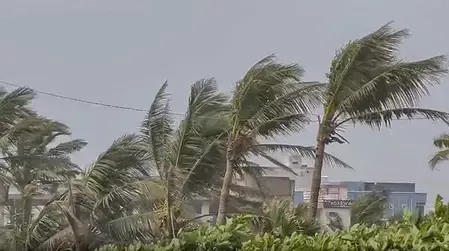
Severe cyclonic storm Murasu moved steadily over the Bay of Bengal towards the Andhra Pradesh coast on Monday, 2 November 2026, triggering heavy to very heavy rainfall across Chennai that waterlogged roads and put civic teams on high alert. The India Meteorological Department (IMD) forecast landfall between Nellore and Narsapur, close to Ongole, between midnight on 2 November and the early hours of 3 November.
Rainfall Toll Across Chennai
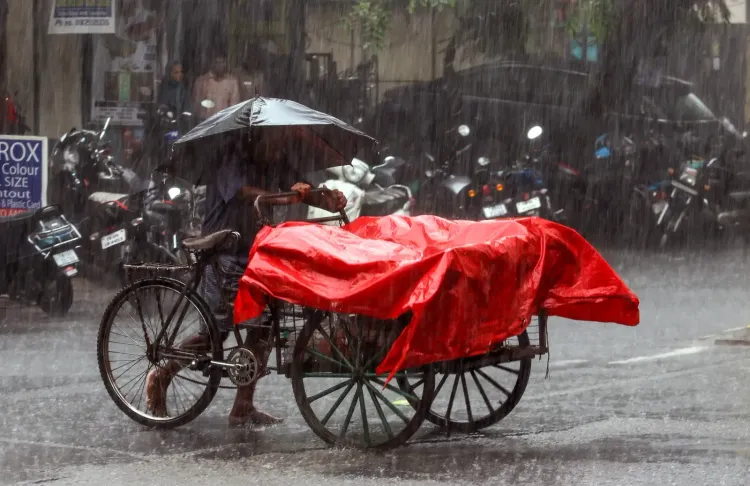
Northern parts of the city bore the brunt of the downpour, with Parrys recording the highest single-station total — 149.2 mm in the 24 hours ending at 6 a.m. on Monday, according to the Greater Chennai Corporation's Integrated Command and Control Centre. New Manali Town logged 141.6 mm and Manali measured 136.2 mm during the same period.
The corporation's rainfall report flagged very heavy rain at five monitoring locations and heavy rain at another 28, including sites in Madhavaram, Puzhal, Ennore, Basin Bridge, and parts of Tondiarpet. Moderate rainfall was simultaneously recorded at 25 locations — among them Korattur, Valasaravakkam, Alandur, Pallikaranai, and Sholinganallur — underlining the city-wide spread of the wet spell even as northern zones saw the highest totals.
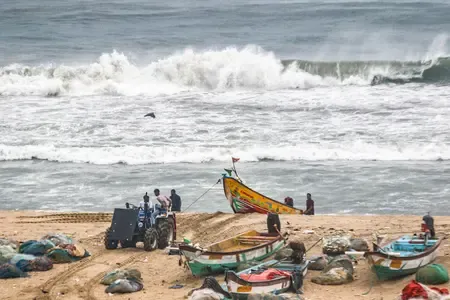
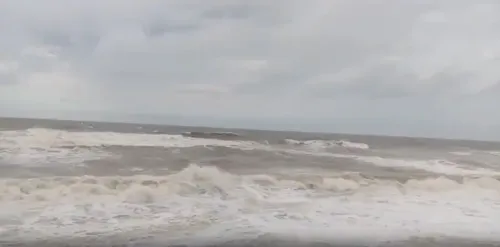
Rough waves lashed Chennai's beaches throughout Monday morning as the system intensified, adding further disruption along the coastline.
Civic Response on the Ground
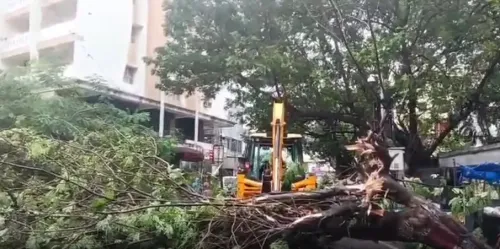
Greater Chennai Corporation Commissioner G.S. Sameeran personally inspected water stagnation on Besant Road in Triplicane and reviewed ongoing relief measures. He also visited the Integrated Command and Control Centre at the Ripon Building to assess monitoring operations. Senior corporation officials and field teams were deployed across affected neighbourhoods to drain waterlogged stretches and maintain essential services.
IMD Alert: Storm Track and Wind Speed
According to the IMD bulletin issued at 5 a.m. on Monday, Murasu had strengthened into a severe cyclonic storm. At 2.30 a.m., the storm's centre lay approximately 260 km east-northeast of Chennai and 290 km east-southeast of Nellore. The system was packing sustained winds of 100–110 kmph, gusting up to 120 kmph.
This comes barely weeks after Cyclone Arnab had already damaged electricity infrastructure in parts of Andhra Pradesh — a context that sharpened the urgency of preparations for Murasu's landfall.
Andhra Pradesh Seeks Neighbouring States' Help
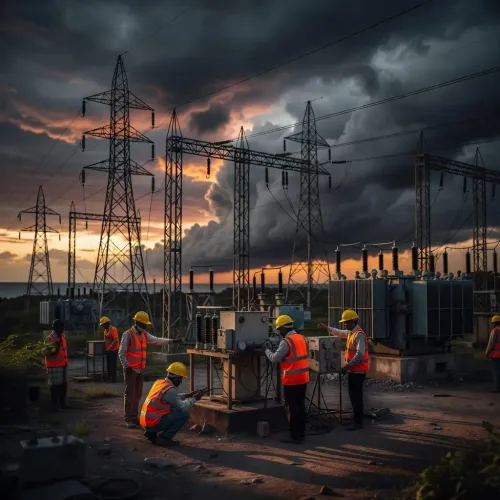
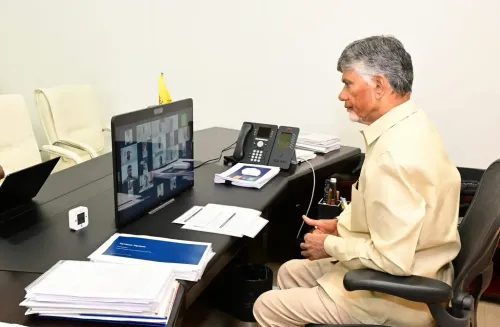
Anticipating large-scale damage to power infrastructure — including the uprooting of electricity poles — Andhra Pradesh Chief Minister N. Chandrababu Naidu on Sunday spoke to Tamil Nadu Chief Minister Vijay and Karnataka Chief Minister D.K. Shivakumar, requesting personnel and machinery for post-cyclone electricity restoration work. According to an official release issued late Sunday, both chief ministers responded positively and assured full assistance. Naidu confirmed that Andhra Pradesh officials would coordinate directly with counterparts in both states to facilitate deployment.
Personnel from Telangana are already conducting field-level restoration operations in areas affected by Cyclone Arnab. Electricity department teams that completed Arnab-related repair work have been kept on standby for rapid redeployment in zones expected to face Murasu's impact, the government said.
What Comes Next
With landfall projected within hours, coastal districts between Nellore and Narsapur remain on maximum alert. The focus now shifts from pre-emptive waterlogging management in Chennai to post-landfall damage assessment and infrastructure restoration along the Andhra coast. Further IMD updates are expected through the night as the storm approaches the shoreline.
Point of View
But they are reactive. The real question is whether India's coastal states will formalise standing inter-state disaster-response compacts rather than negotiating them in the hours before landfall. Chennai's rainfall numbers — 149.2 mm in a single station — also warrant scrutiny of urban drainage investments in northern neighbourhoods that consistently flood first.
NationPress
2 Nov 2026
Frequently Asked Questions
Where is Cyclone Murasu expected to make landfall?
Cyclone Murasu is forecast to cross the Andhra Pradesh coast between Nellore and Narsapur, close to Ongole, between midnight on 2 November and the early hours of 3 November 2026. The IMD issued this projection in its bulletin at 5 a.m. on Monday.
How strong is Cyclone Murasu?
The IMD classified Murasu as a severe cyclonic storm on Monday morning, with sustained winds of 100–110 kmph and gusts reaching 120 kmph. At 2.30 a.m. on Monday, its centre was about 260 km east-northeast of Chennai and 290 km east-southeast of Nellore.
How badly has Chennai been affected by the rain?
Heavy to very heavy rain lashed Chennai on Monday, with Parrys recording the highest total at 149.2 mm in 24 hours. The Greater Chennai Corporation reported very heavy rain at five monitoring locations and heavy rain at 28 others, concentrated mainly in the city's northern neighbourhoods.
Why did Andhra Pradesh seek help from Tamil Nadu and Karnataka?
AP CM Chandrababu Naidu reached out to both state governments on Sunday to arrange personnel and machinery for restoring electricity infrastructure expected to be damaged by Cyclone Murasu's winds. This follows the precedent set by Cyclone Arnab, which had already caused significant power-grid damage in the state — with Telangana teams still engaged in that restoration work.
What is the difference between Cyclone Murasu and Cyclone Arnab?
Cyclone Arnab was an earlier storm that struck Andhra Pradesh before Murasu, damaging electricity infrastructure that teams from Telangana are still repairing. Murasu is the current severe cyclonic storm now approaching the same coastline, prompting Andhra Pradesh to pre-position additional repair personnel to minimise the compounded impact.