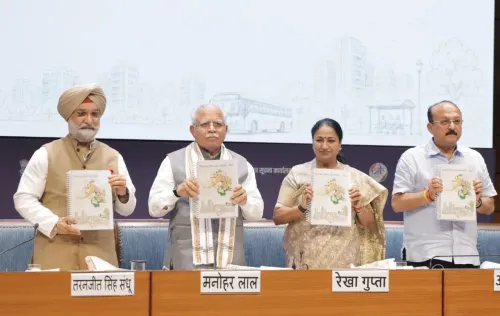
DDA's MPD-2047 plan: Metro to 695 km, 200 km cycle tracks for Delhi
Synopsis
Delhi's MPD-2047 is taking shape with an ambitious transport overhaul — Metro expansion from 416 km to 695 km, a near-fivefold growth in Namo Bharat rapid rail coverage, 200 km of cycle tracks, and a unified parking framework. The DDA's 11th stakeholder consultation signals the plan is moving closer to finalisation, with cross-agency buy-in now being locked in.
Key Takeaways
The DDA held its 11th stakeholder consultation on MPD-2047 on 24 October , chaired under Lt Governor T.S.
Sandhu's directions.
Delhi's Metro network is proposed to expand from 416 km to 695 km under the plan.
The Namo Bharat rapid rail network in the NCR is set to grow from 82 km to 383 km .
Multimodal transit hubs are planned at Sarai Kale Khan , Anand Vihar , and Kashmere Gate .
The plan proposes 200 km of dedicated cycle tracks to promote active travel.
A Unified Parking Planning Framework and Parking Management Areas are to be introduced in high-congestion zones.
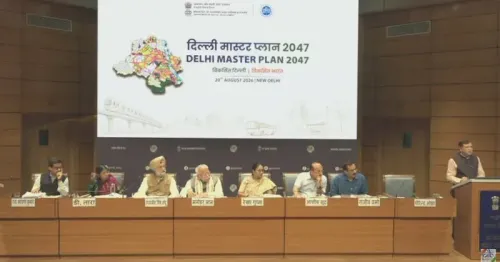
The Delhi Development Authority (DDA) held its 11th stakeholder consultation on the Master Plan for Delhi-2047 (MPD-2047) on Friday, 24 October, bringing together officials from civic bodies and transport authorities to deliberate on sustainable urban mobility and traffic decongestion strategies for the capital. The session was convened under the directions of Lieutenant Governor and DDA Chairperson T.S. Sandhu.
Key Agencies at the Table
The consultation drew representatives from a wide cross-section of urban governance institutions, including the Municipal Corporation of Delhi (MCD), Delhi Metro Rail Corporation (DMRC), Delhi Traffic Police, Public Works Department (PWD), New Delhi Municipal Council (NDMC), National Highways Authority of India (NHAI), National High Speed Rail Corporation Limited (NHSRCL), and the Asian Development Bank (ADB), among other government bodies. The breadth of representation signals the plan's ambition to coordinate across institutional silos — a persistent challenge in Delhi's urban governance.
Transport Expansion at the Core
The MPD-2047 envisages expanding Delhi's Metro network from 416 km to 695 km — an addition of 279 km — while the Namo Bharat rapid rail network in the National Capital Region (NCR) is proposed to grow from 82 km to 383 km. Multimodal transit hubs are planned at Sarai Kale Khan, Anand Vihar, and Kashmere Gate to improve interchange efficiency and last-mile connectivity through Intermediate Public Transport (IPT) and non-motorised transport options.
Active Travel and Cycling Infrastructure
A notable feature of the plan is its emphasis on active travel. The MPD-2047 proposes 200 km of dedicated cycle tracks to establish Delhi as a more walkable and cycle-friendly city. Provisions covering pedestrian safety, universal accessibility, and improved street design have been incorporated, recognising the health and environmental co-benefits of non-motorised mobility. This comes amid growing concern over Delhi's air quality and the need to reduce private vehicle dependency.
Parking Management and Decongestion Measures
On parking, the plan calls for rationalisation of existing norms, demand-based management of parking facilities, and the creation of comprehensive area-based parking plans. Parking Management Areas are to be identified in high-congestion localities, governed by a Unified Parking Planning Framework to ensure coordinated regulation. Physical decongestion measures outlined include new road networks, underpasses, elevated corridors, cross-corridors, improved junctions, and removal of bottlenecks — alongside efforts to bridge missing road links across the city.
What Comes Next
The consultation process for MPD-2047 is ongoing, with Friday's session being the 11th in the series, indicating that the DDA is methodically building stakeholder consensus before finalising the plan. The authority also briefed participants on provisions for improving access to newly urbanised areas and better integrating land-use planning with transport systems. As Delhi's population and vehicle count continue to rise, the plan's implementation timelines and funding mechanisms will be closely watched by urban planners, civic bodies, and residents alike.
Point of View
But the city's track record on coordinating DMRC, MCD, PWD, and NHAI on shared corridors is patchy at best. The inclusion of the Asian Development Bank in consultations hints at multilateral financing, which could improve accountability — but the plan's active-travel provisions, particularly 200 km of cycle tracks in a city that has repeatedly built and then neglected cycling infrastructure, will need enforceable design standards to avoid becoming another aspirational footnote.
NationPress
24 Oct 2026
Frequently Asked Questions
What is the Master Plan for Delhi-2047 (MPD-2047)?
The Master Plan for Delhi-2047 is a long-term urban development blueprint being prepared by the Delhi Development Authority (DDA) to guide land use, infrastructure, transport, and housing in the capital through 2047. It includes major proposals on Metro expansion, cycling infrastructure, multimodal connectivity, and parking management.
How much will Delhi's Metro network expand under MPD-2047?
The MPD-2047 proposes expanding Delhi's Metro network from the current 416 km to 695 km — an addition of 279 km. The Namo Bharat rapid rail network in the National Capital Region is also set to grow from 82 km to 383 km.
Which agencies participated in the 11th MPD-2047 consultation?
The consultation included representatives from MCD, DMRC, Delhi Traffic Police, PWD, NDMC, NHAI, NHSRCL, the Asian Development Bank, and the Transport Department of the Government of NCT of Delhi, among other bodies.
What does MPD-2047 propose for cycling and walking in Delhi?
The plan envisages 200 km of dedicated cycle tracks and emphasises pedestrian safety, universal accessibility, and improved street design to make Delhi more walkable and cycle-friendly. Active travel is framed as both a health and environmental priority.
How does MPD-2047 plan to address Delhi's parking and congestion problems?
The plan introduces a Unified Parking Planning Framework, area-based parking plans, and designated Parking Management Areas in high-congestion localities. Decongestion measures include new road networks, underpasses, elevated corridors, and removal of road bottlenecks.