Delhi MPD-2047: DDA's land pooling push to develop 200 sq km Urban Extension
Synopsis
Delhi's Urban Extension — long a patchwork of privately held, undeveloped land on the city's fringe — is finally showing signs of planned transformation. With 7,885 hectares pooled, 16 sectors past the 70% threshold and a new Town Planning Scheme model added under MPD-2047, the DDA's land pooling push is moving from policy to pipeline. Sector 8B is the first to cross the finish line.
Key Takeaways
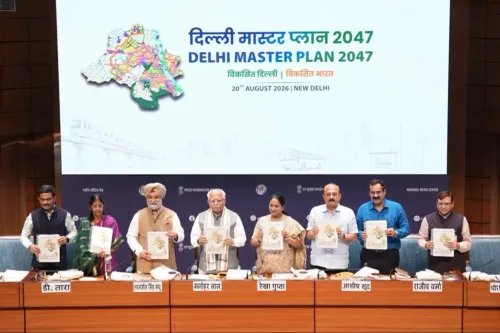
The DDA says MPD-2047 will facilitate planned development of nearly 200 sq km of Delhi's Urban Extension through a strengthened Land Pooling framework.
As of July 2026 , over 7,615 applications received and more than 7,885 hectares of land registered or pooled.
16 sectors have crossed the 70% contiguous pooled land threshold; provisional consortium notices have been issued for all 16.
Sector 8B, Planning Zone P-II (Gadi Khasro and Ibrahim Pur villages) is the first sector fully eligible for development.
MPD-2047 adds Town Planning Schemes (minimum 20 hectares ) and inclusive zoning as new development mechanisms.
The Plan envisages a 600 km road network as the connectivity backbone across Land Pooling areas.
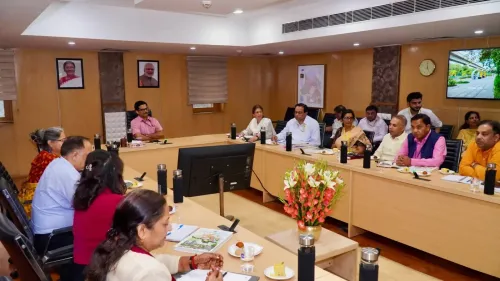
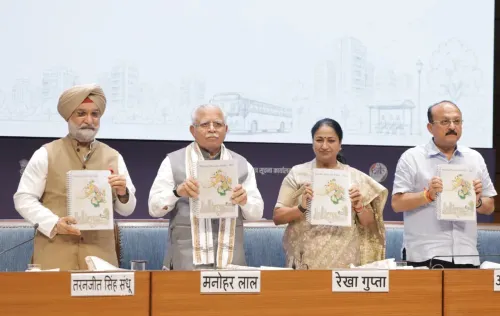
The Delhi Development Authority (DDA) on 22 August 2026 said the strengthened Land Pooling framework under the Master Plan for Delhi-2047 (MPD-2047) is designed to transform the city's Urban Extension into well-connected, infrastructure-ready and sustainable neighbourhoods — with housing, employment, public amenities and green spaces planned in an integrated manner. The announcement underscores Delhi's most ambitious planned urban expansion in decades, covering nearly 200 square kilometres.
What the Master Plan Introduces
MPD-2047 builds upon the existing Land Pooling Policy — originally notified with its Regulations in 2018 — by adding alternate development models, most notably the concept of Town Planning Schemes. These schemes require a minimum area of 20 hectares and are intended to facilitate integrated and contiguous planned development beyond the voluntary consortium route.
The Plan also introduces inclusive zoning, permitting a mix of residential, economic and essential-service activities within plots based on the Right of Way (RoW) of adjoining roads. According to the DDA, this is meant to encourage 'vibrant and self-sustaining neighbourhoods' by co-locating housing and livelihoods rather than separating them into single-use zones.
Scale and Coverage
The Land Pooling area spans 105 revenue villages across six Planning Zones — K-I, L, N, P-II, part of P-I and J — divided into 138 sectors. The Plan envisages a road network of approximately 600 km to serve as the connectivity backbone across these zones.
As of July 2026, more than 7,615 applications had been received and over 7,885 hectares of land registered or pooled under the policy, indicating substantial ground-level participation from private landowners.
Key Milestone: First Sector Clears Threshold
Sector 8B of Planning Zone P-II, covering Gadi Khasro and Ibrahim Pur villages, has become the first sector to achieve the required threshold of 70 per cent contiguous pooled land, making it eligible for development under the policy. In total, 16 sectors have now crossed this threshold and provisional notices for consortium formation have been issued by the DDA.
Beyond these 16, landowners in eight additional sectors have separately intimated the DDA about consortium formation, signalling further momentum towards on-ground implementation.
Broader Urban and National Context
The DDA framed the land pooling push as directly complementing India's Viksit Bharat 2047 vision, positioning planned urban expansion in Delhi as integral to the country's long-term development goals. This comes amid persistent pressure on Delhi's existing urban fabric — overcrowded infrastructure, housing shortfalls and unplanned peripheral growth — that MPD-2047 seeks to pre-empt in the Urban Extension belt.
Notably, the original 2018 Land Pooling Policy saw slow uptake for several years; the revised MPD-2047 framework's additional mechanisms are a direct response to that implementation lag. With 16 sectors now provisionally cleared and one sector fully eligible, the policy appears to be gaining traction, though large-scale physical development on the ground remains the next critical test.
Point of View
But the gap between land pooled and infrastructure delivered remains the real story. The original 2018 Land Pooling Policy stalled for years precisely because voluntary assembly without execution mechanisms produced registrations, not roads or housing. MPD-2047's Town Planning Scheme addition addresses that gap structurally, but Sector 8B being the sole fully eligible sector — out of 138 — eight years after the policy's notification reveals how slow the machine moves. The 600 km road network is the linchpin: without it, pooled land stays stranded. Whether DDA can fund and build that network at pace will determine if MPD-2047 is a genuine urban transformation or another well-designed plan that outpaces its own execution.
NationPress
7 Oct 2026
Frequently Asked Questions
What is the Land Pooling Policy under Delhi's Master Plan 2047?
The Land Pooling Policy, originally notified in 2018, allows private landowners in Delhi's Urban Extension to voluntarily pool their land for planned development, with the DDA acting as facilitator. MPD-2047 strengthens this framework by adding Town Planning Schemes and inclusive zoning to accelerate implementation.
How much land has been pooled under Delhi's Land Pooling Policy so far?
As of July 2026, over 7,885 hectares of land have been registered or pooled and more than 7,615 applications received. Sixteen sectors have crossed the required 70% contiguous pooled land threshold.
Which is the first sector eligible for development under Delhi's Land Pooling Policy?
Sector 8B of Planning Zone P-II, covering Gadi Khasro and Ibrahim Pur villages, is the first sector to achieve the 70% contiguous pooled land threshold and become eligible for development under the policy.
What are Town Planning Schemes under MPD-2047?
Town Planning Schemes are a new development model introduced under MPD-2047 to enable integrated and contiguous planned development. Each scheme requires a minimum area of 20 hectares and serves as an alternative to the voluntary consortium route.
How many villages and sectors does Delhi's Land Pooling area cover?
The Land Pooling area covers 105 revenue villages across six Planning Zones — K-I, L, N, P-II, part of P-I and J — divided into 138 sectors, with a planned road network of approximately 600 km to provide connectivity.