DDA plants 6.62 lakh saplings, hits 30% of 23 lakh target in July
Synopsis
Delhi's DDA has crossed the 6.62 lakh sapling mark in just days — hitting 30% of its ambitious 23 lakh target for the season. Backed by LG T.S. Sandhu and linked to Amit Shah's Mission 70 lakh drive, the campaign's real test will be sapling survival, not just the planting count.
Key Takeaways
DDA has planted over 6.62 lakh saplings — including 37,000+ trees and 6.25 lakh+ shrubs — achieving nearly 30% of its 23 lakh seasonal target.
The Mega Plantation Drive runs from the first week of July through mid-September 2026 , covering 675 DDA parks , four Ridge areas, and six biodiversity parks.
Union Home Minister Amit Shah launched the broader Mission 70 lakh plantation drive under the 'Ek Ped Maa ke Naam' campaign on 7 July 2026 .
Sandhu has mandated continuous monitoring to ensure sapling survival — addressing a longstanding weakness in past plantation drives.
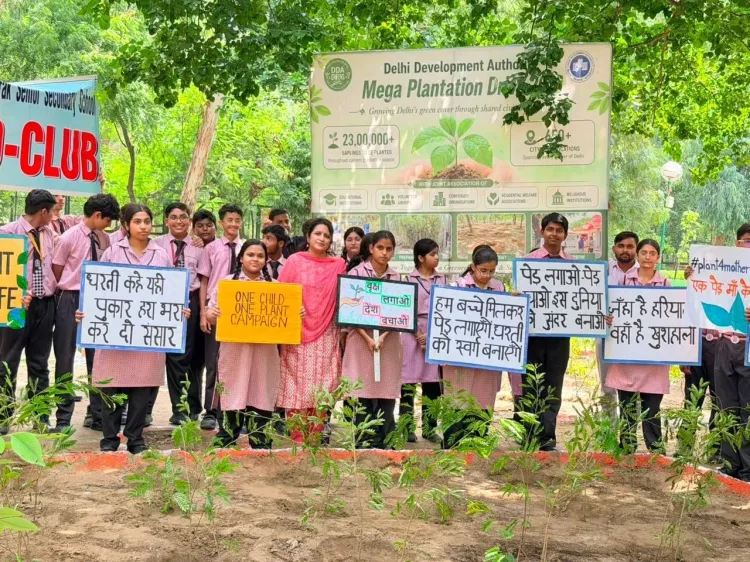
The drive focuses on native and climate-resilient species and involves RWAs, schools, religious bodies, and corporate partners for community ownership.
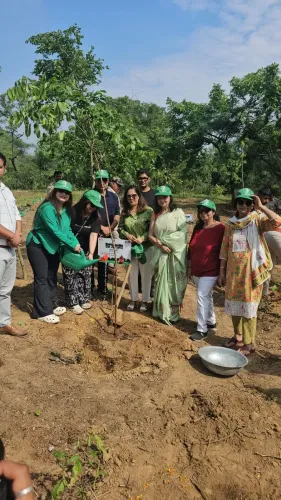
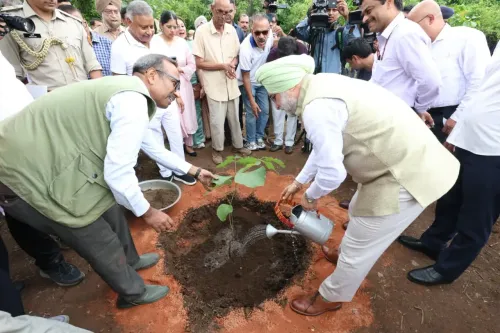
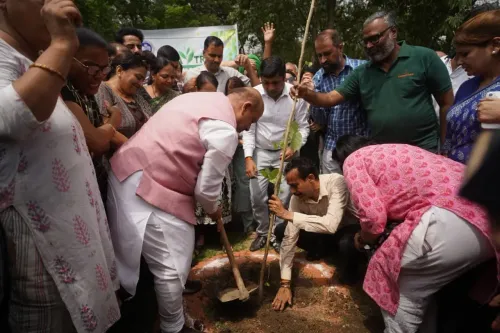
The Delhi Development Authority (DDA) has planted over 6.62 lakh saplings — including more than 37,000 trees and over 6.25 lakh shrubs — within days of launching its Mega Plantation Drive, achieving nearly 30 per cent of its seasonal target of 23 lakh plants, an official said on Sunday, 19 July. The drive is being conducted under the direction of Delhi Lieutenant Governor T.S. Sandhu, who also serves as Chairperson of the DDA.
Scale and Scope of the Drive
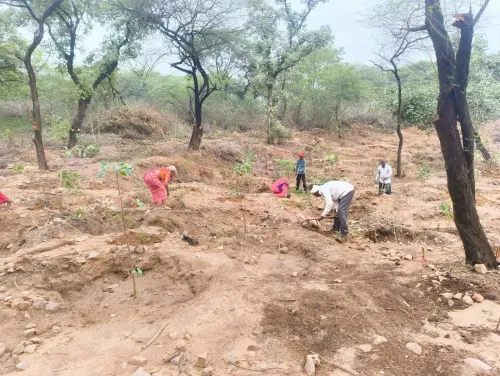
The plantation campaign, which commenced in the first week of July 2026 and is scheduled to run through mid-September 2026, is being carried out across 675 DDA parks, the four Ridge areas — South Central Ridge, Nanakpura Ridge, Central Ridge, and Northern Ridge — as well as six biodiversity parks and identified green corridors across the capital.
The drive prioritises native and climate-resilient species, a deliberate shift aimed at ensuring long-term ecological viability rather than mere numerical targets.
What the Government Said
Lieutenant Governor T.S. Sandhu has directed departments to ensure constant monitoring so that planted saplings survive beyond the planting phase — a concern that has historically undermined such drives. According to an official statement, Sandhu has emphasised ecological restoration, environmental sustainability, and the expansion of Delhi's green infrastructure as core objectives.
The DDA's stated goals extend beyond tree count: the drive aims to strengthen carbon sequestration, improve microclimatic regulation, enhance ecological connectivity, boost air quality, support groundwater recharge, and create urban wildlife habitat.
Linked to Mission 70 Lakh and 'Ek Ped Maa ke Naam'
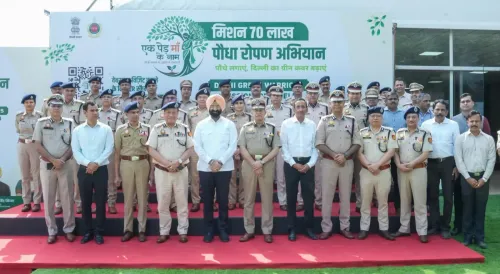
The DDA's 23 lakh plantation target forms part of a larger initiative. On 7 July, Union Home Minister Amit Shah formally launched the Mission 70 lakh plantation drive under the 'Ek Ped Maa ke Naam' campaign, of which the DDA's drive is a component. The campaign seeks to transform urban greening into a mass civic movement.
Notably, this is not a standalone government effort. The DDA has partnered with Resident Welfare Associations (RWAs), educational institutions, religious organisations, volunteer groups, and corporate bodies to encourage public participation and build a sense of shared ownership over Delhi's green assets.
Why It Matters for Delhi
Delhi consistently ranks among the world's most polluted capitals, with air quality deteriorating sharply each winter. Urban greening initiatives, when sustained, are recognised as one of the longer-term structural interventions for improving ambient air quality and urban heat island effects. This drive, if it meets its 23 lakh target by mid-September, would represent one of the largest single-season plantation efforts in the city's recent history.
The critical question, as officials themselves acknowledge, is survival rate — a metric that past Delhi plantation drives have struggled to demonstrate credibly. With monitoring now explicitly mandated by the L-G, authorities will be expected to report on sapling survival, not just saplings planted.
Point of View
Smaller numbers verified, survival rates rarely disclosed. The LG's explicit instruction to monitor sapling survival is a tacit acknowledgement of this pattern. The real metric to watch is not the 23 lakh target but what percentage of planted saplings are alive by October. Until Delhi publishes audited survival data, these drives risk being seasonal optics rather than durable green infrastructure. The Mission 70 lakh framing also raises a governance question: when a city with chronic air pollution needs structural intervention, is a campaign model — reliant on RWAs and volunteer groups — the right delivery mechanism, or does it substitute visibility for institutional capacity?
NationPress
18 Oct 2026
Frequently Asked Questions
How many saplings has DDA planted under the Mega Plantation Drive so far?
The DDA has planted over 6.62 lakh saplings as of 19 July 2026, comprising more than 37,000 trees and over 6.25 lakh shrubs. This represents nearly 30 per cent of the authority's seasonal target of 23 lakh plants.
When does the DDA Mega Plantation Drive run?
The drive commenced in the first week of July 2026 and will continue through mid-September 2026. It is being carried out across 675 DDA parks, four Ridge areas, six biodiversity parks, and identified green corridors in Delhi.
What is the 'Ek Ped Maa ke Naam' campaign and how does DDA's drive fit in?
'Ek Ped Maa ke Naam' is a nationwide plantation campaign under which Union Home Minister Amit Shah launched the Mission 70 lakh plantation drive in Delhi on 7 July 2026. The DDA's 23 lakh sapling target is a component of this larger mission.
Which areas of Delhi are covered under this plantation drive?
The drive covers 675 DDA parks, the South Central Ridge, Nanakpura Ridge, Central Ridge, and Northern Ridge, as well as six biodiversity parks and green corridors across the city.
What steps are being taken to ensure planted saplings survive?
Delhi Lieutenant Governor T.S. Sandhu has directed departments to ensure constant monitoring of planted saplings to improve survival rates. The drive also focuses on native and climate-resilient species, which are better suited to Delhi's conditions than non-native varieties.