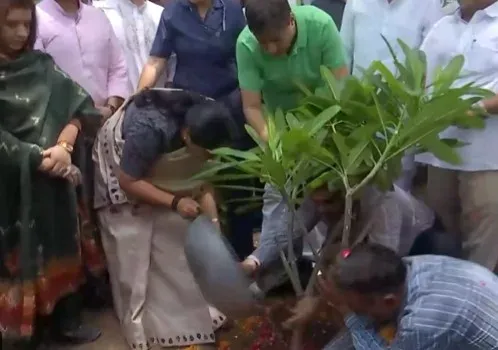
DDA to plant 23 lakh native saplings across Delhi from July 2025
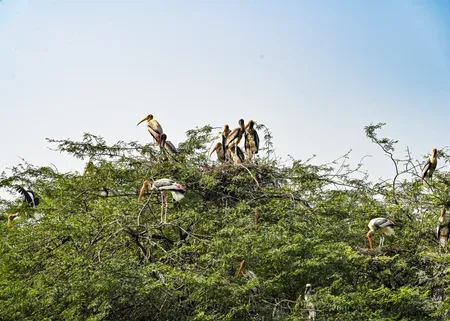
Synopsis
The DDA is set to plant nearly 23 lakh native saplings across 1,000 acres of Delhi — covering Ridge areas, biodiversity parks, and green corridors — in a monsoon-season drive running July to mid-September. It is one of the largest urban afforestation pushes the city has seen, directly overseen by Lieutenant Governor T.S. Sandu.
Key Takeaways
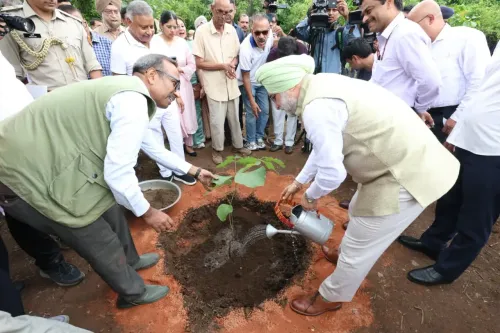
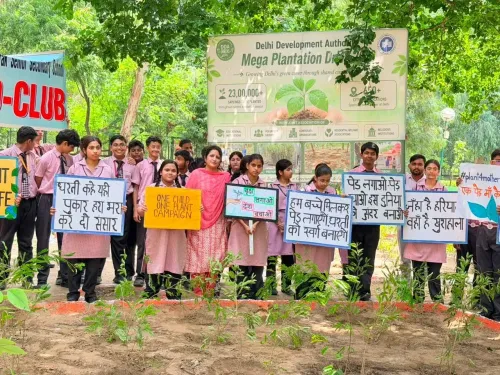
The Delhi Development Authority (DDA) plans to plant nearly 23 lakh native saplings across Delhi starting the first week of July 2025 .
The drive will cover approximately 1,000 acres (nearly 4 sq km ), including 675 DDA parks , four Ridge areas, and six biodiversity parks .
The initiative is expected to bring 2.9 per cent of Delhi's total geographical area under focused urban afforestation.
Species selection prioritises native and climate-resilient varieties to boost biodiversity, carbon sequestration, and air quality.
Plantation activities are scheduled to run through mid-September 2025 , with LG T.S.
Sandu personally overseeing progress.
The Delhi Development Authority (DDA) has launched an ambitious urban afforestation programme targeting nearly 23 lakh native saplings — comprising trees, shrubs, and bushes — across the National Capital, an official confirmed on Thursday, 11 June. The drive, set to begin in the first week of July, is being undertaken at the direction of Lieutenant Governor and DDA Chairperson T.S. Sandu.
Scale and Scope of the Drive
The plantation programme will span approximately 1,000 acres — equivalent to nearly 4 square kilometres — across multiple locations in Delhi. Sites include 675 DDA parks, four Ridge areas — South Central Ridge, Nanakpura Ridge, Central Ridge, and Northern Ridge — along with six biodiversity parks, urban forests, Yamuna floodplain areas, and roadside and drain-side green corridors.
The initiative is expected to bring nearly 2.9 per cent of Delhi's total geographical area under a focused urban afforestation and ecological restoration programme.
Species Selection and Ecological Goals
The drive places special emphasis on native and climate-resilient species, chosen for their capacity to enhance biodiversity, strengthen carbon sequestration, improve microclimatic regulation, and boost ecological connectivity across Delhi's green systems. According to the official statement, the plantation is also expected to contribute to improvements in air quality, groundwater recharge, and habitat creation.
Notably, particular attention is being directed toward protecting Delhi's Ridge ecosystem and Aravalli landscapes — ecologically sensitive zones that have faced sustained pressure from urbanisation over recent decades.
Preparatory Work Already Underway
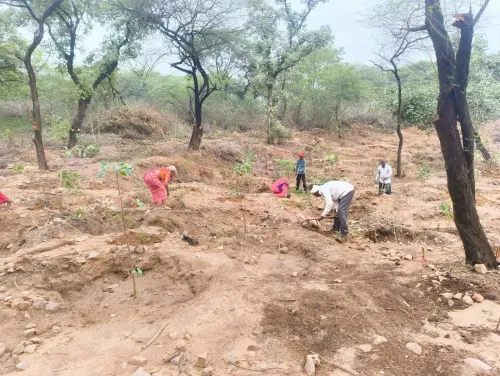
Groundwork for the drive is already in progress, including site identification and demarcation, soil preparation and pit digging, development of irrigation arrangements, and strengthening of nursery stocks. Species selection is being guided by ecological suitability assessments, and maintenance and monitoring mechanisms are being planned to ensure long-term survival of the plantations.
The plantation activities are scheduled to run from the first week of July through mid-September 2025, aligning with the monsoon season — the optimal window for sapling survival in Delhi's climate.
Oversight and Monitoring
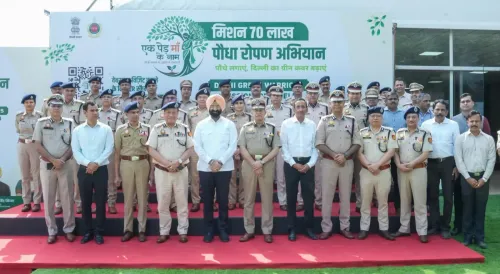
Lieutenant Governor T.S. Sandu has reportedly indicated that he and his office will personally monitor the drive as it progresses. The DDA has framed the initiative as part of a broader push to expand Delhi's green footprint and strengthen its ecological infrastructure under LG Sandu's direction.
This comes amid growing concern over Delhi's deteriorating air quality and shrinking green cover, with urban afforestation increasingly viewed as a structural, long-term complement to pollution-control measures. Whether the drive's survival and maintenance targets are independently verified will determine its real ecological impact.
Point of View
Which have historically been low without sustained post-monsoon maintenance. The DDA's emphasis on monitoring mechanisms is the right instinct, but the credibility of this drive will hinge on independent verification of survival outcomes, not just planting numbers. The focus on Ridge and Aravalli landscapes is ecologically sound, but these are also zones where encroachment pressure is highest. Announcing 23 lakh saplings is the easy part; ensuring 23 lakh trees a decade from now is the real test.
NationPress
24 Sept 2026
Frequently Asked Questions
What is the DDA plantation drive announced in June 2025?
The Delhi Development Authority has launched a programme to plant nearly 23 lakh native saplings — trees, shrubs, and bushes — across approximately 1,000 acres in Delhi, starting the first week of July 2025. The drive runs through mid-September and covers Ridge areas, biodiversity parks, and green corridors.
Where will the DDA plant the 23 lakh saplings?
The saplings will be planted across 675 DDA parks, four Ridge areas (South Central Ridge, Nanakpura Ridge, Central Ridge, and Northern Ridge), six biodiversity parks, Yamuna floodplain areas, and roadside and drain-side green corridors across Delhi.
Why is the DDA focusing on native and climate-resilient species?
Native species are better adapted to Delhi's soil and climate, requiring less water and maintenance while providing greater ecological benefit. The DDA has stated that these species will enhance biodiversity, improve carbon sequestration, support groundwater recharge, and strengthen microclimatic regulation across the city.
Who is overseeing the DDA's plantation drive?
The drive is being conducted at the direction of Lieutenant Governor and DDA Chairperson T.S. Sandu, who has reportedly indicated that he and his office will personally monitor progress as the plantation activities unfold.
How much of Delhi's area will the plantation drive cover?
The initiative is expected to bring nearly 2.9 per cent of Delhi's total geographical area under a focused urban afforestation and ecological restoration programme, spanning roughly 1,000 acres or about 4 square kilometres.