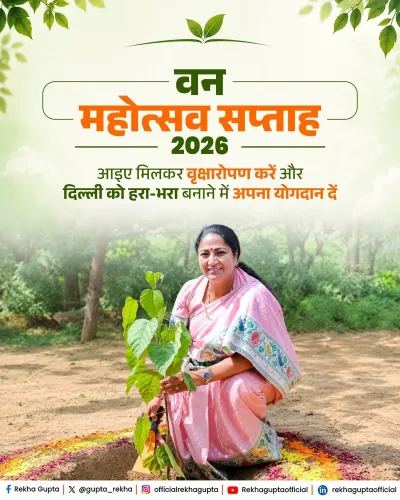
CM Rekha Gupta Kicks Off Delhi Ridge Afforestation Drive

Synopsis
Delhi Chief Minister Rekha Gupta has launched a three-year afforestation drive on the Delhi Ridge after 5,000 hectares were notified as forest area. Home Minister Amit Shah endorsed the move, calling for replacement of invasive species with native trees like peepal, banyan, and neem under the Ek Ped Maa Ke Naam campaign.
Key Takeaways
5,000 hectares of the Delhi Ridge have been officially notified as forest area, granting the zone statutory protection.
Union Home Minister Amit Shah endorsed the initiative and congratulated CM Rekha Gupta at the launch event on 7 July 2026 .
The drive targets replacement of invasive species such as vilayati babul with native trees including peepal, banyan, neem, gular, arjun, and jamun .
Native trees selected are capable of surviving for more than 100 years , chosen for long-term ecological benefit.
The full plantation rollout across the ridge is planned to be completed within three years .
The initiative is part of the national Ek Ped Maa Ke Naam campaign launched in 2024.
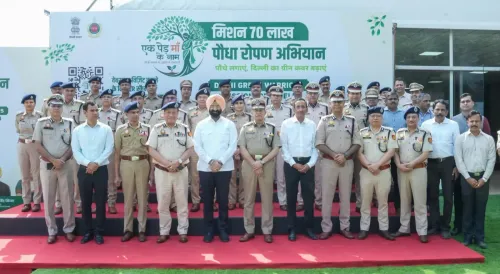
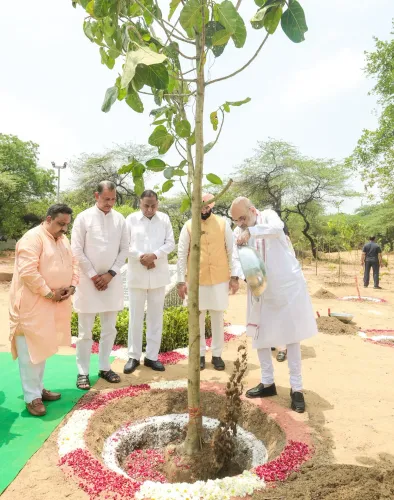
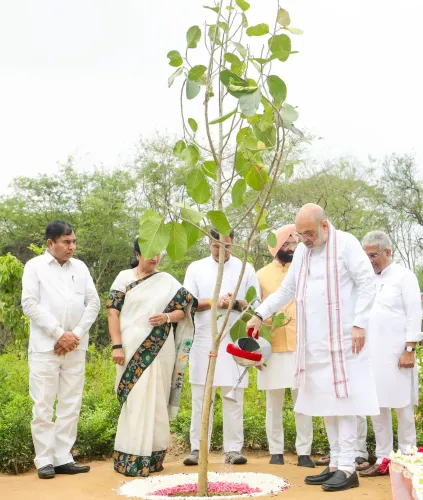
Delhi Chief Minister Rekha Gupta on Tuesday, 7 July 2026, launched a large-scale native-species afforestation drive on the Delhi Ridge, with Union Home Minister Amit Shah formally congratulating her and announcing that 5,000 hectares of the ridge has been notified as forest area. The initiative aims to replace invasive species with long-living native trees over a three-year period, positioning the ridge as a green lung for the national capital.
Context
Speaking at the launch event, Home Minister Amit Shah described the ridge's current vegetation as ecologically misleading. In his words: 'Rij ke andar zahrile babool aur kantile kai prakar ke vriksh dikhai padte hain' — 'Inside the ridge, toxic babul and thorny trees of various kinds are visible, which create the illusion of a green Delhi but are not suited to our environment.' Shah added that the drive to plant native species such as peepal, banyan, neem, gular, arjun, and jamun — trees capable of surviving for more than 100 years — had formally begun that day.
Shah specifically congratulated Chief Minister Rekha Gupta for the forest notification, calling it a significant step toward making the ridge a true ecological asset for Delhi.
Policy Backdrop
The Delhi Ridge is the northern extension of the ancient Aravalli range and has long been recognised as one of the capital's most critical ecological buffers. Successive administrations have attempted to protect it through notifications under the Indian Forest Act, designating sections as reserved or protected forests over several decades.
The current drive is linked to the national Ek Ped Maa Ke Naam campaign — launched in 2024 — which promotes the planting of native tree species across India. The hashtag #EkPedMaaKeNaam featured prominently in CM Gupta's post, anchoring the local initiative within the broader national programme. The eradication of invasive species such as vilayati babul (Prosopis juliflora) has been a recurring demand from environmental groups in Delhi for years.
Stakeholders and Impact
Delhi's residents stand to benefit most directly from the initiative, given the ridge's role in moderating air quality, temperature, and biodiversity in a city that routinely ranks among the world's most polluted. Environmental groups have long argued that replacing invasive, water-intensive species with deep-rooted native trees is essential for restoring the ridge's ecological function.
The 5,000-hectare forest notification gives the designated area statutory protection, making encroachment and felling legally more difficult. The three-year plantation timeline, if adhered to, would see the full ridge progressively covered with native canopy, potentially improving the city's air quality and groundwater recharge over the long term.
What's Next
Attention will now turn to implementation — specifically, how quickly invasive species are cleared, how the native saplings are sourced and maintained, and whether subsequent forest notifications extend protection to the remaining ridge area beyond the initial 5,000 hectares. Progress reports on the plantation rollout and any revisions to Delhi's master plan to accommodate the expanded forest zone will be closely watched by urban ecologists and civic bodies alike.
The initiative signals an alignment between the Delhi government and the Union government on urban environmental policy — a notable development given the historically contentious relationship between the two over governance of the capital.
Point of View
Signalling a deliberate effort to project Centre-state harmony on a governance front that has long been contested. By anchoring the drive to the national Ek Ped Maa Ke Naam campaign, the BJP simultaneously advances a local green-credibility narrative ahead of any future electoral cycle. The forest notification of 5,000 hectares is a concrete statutory step, but the real test lies in sustained implementation — past ridge-protection efforts have frequently stalled at the plantation and enforcement stage. If the three-year timeline holds, this could represent one of the more substantive urban forestry moves in Delhi's recent administrative history.
NationPress
6 Oct 2026
Frequently Asked Questions
What is the Delhi Ridge afforestation drive announced in July 2026?
Delhi Chief Minister Rekha Gupta launched a drive on 7 July 2026 to plant native trees — including peepal, banyan, neem, gular, arjun, and jamun — across the Delhi Ridge over three years, after 5,000 hectares of the ridge were officially notified as forest area.
What is Ek Ped Maa Ke Naam and how does it relate to this initiative?
Ek Ped Maa Ke Naam is a national tree plantation campaign launched in 2024 to promote native species planting across India. The Delhi Ridge afforestation drive is being carried out under this campaign, as indicated by CM Rekha Gupta's post.
Why are invasive species being removed from the Delhi Ridge?
Species like vilayati babul create the visual impression of green cover but are not ecologically suited to Delhi's environment. Replacing them with long-living native species is intended to restore the ridge's function as a genuine green lung for the city.
What is the significance of the 5,000-hectare forest notification?
Notifying 5,000 hectares of the Delhi Ridge as forest area gives it statutory protection under forest law, making encroachment and tree-felling legally more difficult and providing a formal basis for the afforestation programme.
What role did Amit Shah play in the Delhi Ridge tree plantation launch?
Union Home Minister Amit Shah spoke at the launch event, congratulated CM Rekha Gupta for the forest notification, and announced the start of the native tree plantation drive aimed at making the full ridge a green lung for Delhi within three years.