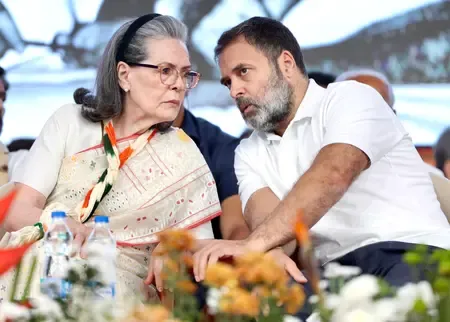
Will the Delhi HC Favor Sonia and Rahul Gandhi in the National Herald Case?

Synopsis
The Delhi High Court has postponed a significant hearing regarding the Enforcement Directorate's appeal against Congress leaders Sonia and Rahul Gandhi in the National Herald money laundering case. This case raises serious concerns about political influence and legal accountability in high-profile financial matters.
Key Takeaways
Delhi High Court adjourns hearing on ED's plea.
Sonia and Rahul Gandhi are involved in a high-profile case.
The ED contests a December 2025 trial court ruling.
Allegations involve Rs 2,000 crore asset acquisition.
Next hearing set for March 9 .
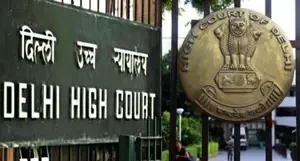
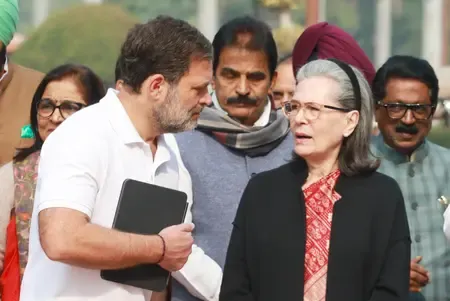
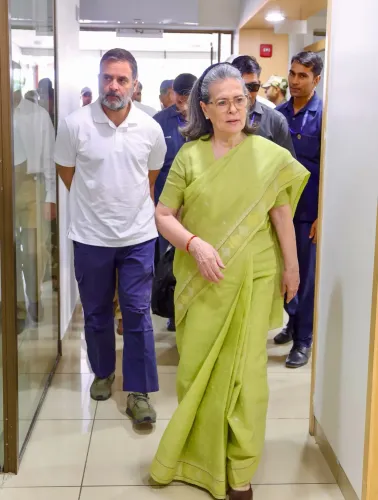
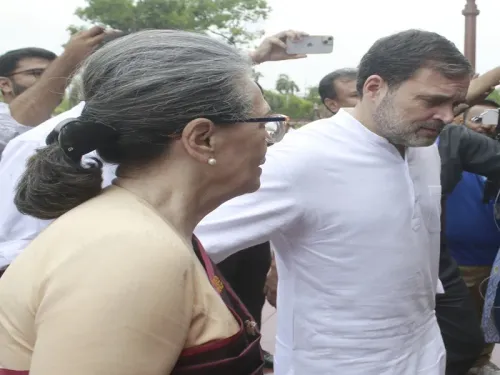
New Delhi, Feb 19 (NationPress) The Delhi High Court has postponed the proceedings regarding the Enforcement Directorate's request challenging a trial court's decision that declined to accept its prosecution complaint against Congress Parliamentary Party Chairperson Sonia Gandhi, Leader of Opposition in the Lok Sabha Rahul Gandhi, and others implicated in the National Herald money laundering case.
A single-judge Bench led by Justice Swarana Kanta Sharma has rescheduled the ED’s revision petition for discussions on March 9, emphasizing that this matter necessitates a thorough examination.
The federal anti-money laundering agency has contested the December 16, 2025 ruling made by a Special Judge at the Rouse Avenue Court, which dismissed its prosecution complaint under the Prevention of Money Laundering Act (PMLA) and refused to acknowledge the alleged crimes.
Previously, while acknowledging the ED's appeal, the Delhi High Court noted that “the matter requires consideration” and instructed the respondents, including the Gandhis, to submit their responses.
Solicitor General Tushar Mehta, representing the ED, contended that the trial court made a legal error by asserting that a prosecution complaint under the PMLA cannot stem from a scheduled offence resulting from a private complaint.
The ED argued that “the cognizance taken by the competent court on a private complaint holds more significance than an FIR registered by the police”.
It further stated that criminal proceedings can be initiated either through a police investigation or via a private complaint before a magistrate, hence the Special Judge should not have dismissed the prosecution complaint based solely on that rationale.
This high-profile case revolves around allegations that senior Congress leaders colluded to unlawfully acquire control over assets exceeding Rs 2,000 crore belonging to Associated Journals Ltd (AJL), the original publisher of the National Herald newspaper, by transferring a nominal sum of Rs 50 lakh through Young Indian, a company where Sonia and Rahul Gandhi hold majority shares.
The controversy regarding the assets of the National Herald surfaced in 2012 when BJP leader Subramanian Swamy lodged a private complaint in a trial court, alleging that Congress leaders engaged in fraud and breach of trust while acquiring AJL.
Point of View
This case underscores the ongoing tension between legal proceedings and political influence. While the Gupta's allegations raise critical questions about financial integrity, the outcome could significantly shape public trust in our political institutions. As the nation watches, it is essential that justice prevails, underlining the importance of accountability for all.
NationPress
13 Oct 2026
Frequently Asked Questions
What is the National Herald case?
The National Herald case involves allegations against senior Congress leaders, including Sonia and Rahul Gandhi, for illegally acquiring control over assets worth over Rs 2,000 crore belonging to Associated Journals Ltd.
What is the Enforcement Directorate's role?
The Enforcement Directorate (ED) is a financial law enforcement agency in India that investigates economic offenses, including money laundering and foreign exchange violations.
What does the trial court's decision mean?
The trial court's decision not to take cognizance of the ED's prosecution complaint means that the court found insufficient grounds to proceed with the case at that time.
When is the next hearing scheduled?
The next hearing for the ED's revision petition is scheduled for March 9.
What are the implications of this case?
The implications include potential impacts on the political landscape in India as well as issues of legal accountability among influential leaders.