How Should Bar Operations Balance Business Rights and Citizens' Right to a Peaceful Environment?
Synopsis
In a pivotal ruling, the Delhi High Court emphasizes the necessity for bars to harmonize their operational rights with citizens' need for a peaceful environment, while addressing the complaints of local residents.
Key Takeaways
Bars must respect community noise levels .
Citizen complaints need timely attention .
Regulatory authorities are responsible for enforcement .
Legal frameworks exist to protect citizens' rights .
Public trust relies on effective governance .
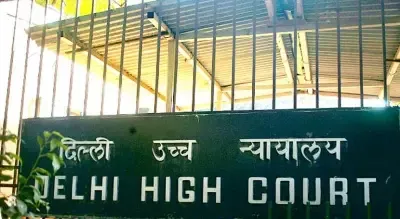
New Delhi, Feb 17 (NationPress) The Delhi High Court has remarked that while bars and pubs can operate legally, their business rights must be harmonized with the rights of citizens and children to enjoy a peaceful, noise-free, and orderly environment.
In response to a writ petition filed by a local resident against Bunon Bar and Lounge at R.K. Ashram Marg Metro Station for allegedly exceeding permissible operating hours, a single-judge Bench led by Justice Purushaindra Kumar Kaurav stated that regulatory bodies are obliged to investigate and address citizens' complaints as per the law.
Justice Kaurav highlighted, "The right to operate a bar or pub must be balanced with the citizens' and children's rights to a quiet, peaceful, and orderly environment."
The petitioner, who appeared via video conferencing, claimed that the bar operated until 2:12 a.m., and on some nights even as late as 4:30 a.m., despite regulations that prohibit such operations past 1 a.m.
He also accused the establishment of issuing handwritten slips instead of proper GST bills, and mentioned that his repeated complaints to authorities, including the Commissioner of Delhi Police and the Excise Department, went unanswered.
Justice Kaurav referred to the legal framework under the Delhi Excise Act, 2009, and the Delhi Excise Rules, 2010, noting that the sale hours for liquor are determined by the Excise Commissioner, while the District Magistrate handles complaints about public nuisances under the Bharatiya Nagarik Suraksha Sanhita, 2023.
In a strong statement regarding the accountability of public authorities, the Delhi High Court remarked: "In a civilized society governed by the rule of law, genuine complaints from citizens must not go unanswered. Authorities are bound to assess and respond to these complaints in accordance with existing rules and regulations."
The court emphasized that the rule of law necessitates not just the existence of laws but also their prompt and effective enforcement.
Justice Kaurav stated, "When authorities fail to respond to citizen complaints, it diminishes public trust in governance and leaves individuals feeling powerless within the nation."
Recognizing that not all citizens can easily access the courts, the Delhi High Court instructed that the writ petition be treated as a representation to the Excise Commissioner.
Justice Kaurav ordered the relevant Excise Commissioner to investigate the petitioner’s complaint and issue appropriate orders within two months of receiving the directive. Furthermore, if the matter requires the District Magistrate's attention, all authorities must coordinate to ensure the complaint is addressed effectively.
The Delhi High Court clarified that, while disposing of the petition, all rights and claims of the involved parties remain intact.
Point of View
They should not infringe upon the rights of citizens to enjoy a peaceful living environment. As such, public authorities must be diligent in responding to citizen complaints, ensuring that their governance is effective and accountable.
NationPress
12 Oct 2026
Frequently Asked Questions
What was the ruling of the Delhi High Court?
The Delhi High Court ruled that the rights of bars and pubs must be balanced with the citizens' right to a peaceful environment .
What was the complaint against Bunon Bar and Lounge?
The complaint alleged that Bunon Bar and Lounge operated beyond permitted hours, affecting the peace of the neighborhood.
What did the court say about public authorities?
The court emphasized that public authorities must respond to citizen complaints promptly, highlighting the importance of accountability.