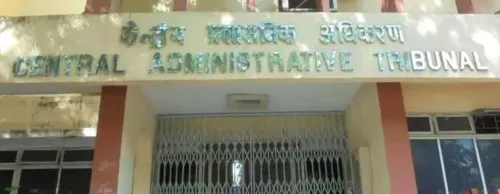
Delhi High Court Overturns CAT's Order for New Medical Exam in Constable Recruitment

Synopsis
In a significant ruling, the Delhi High Court has quashed the Central Administrative Tribunal's directive for a fresh medical examination of a candidate declared unfit during the Constable recruitment process, emphasizing the authority of medical boards in such determinations.
Key Takeaways
Delhi High Court overturned CAT's directive for a new medical exam.
Candidate was initially deemed unfit due to varicose veins .
Expert medical boards' opinions were upheld.
Court emphasized the integrity of the recruitment process.
General fitness certificates do not equate to specific job fitness.
New Delhi, March 17 (NationPress) The Delhi High Court has overturned a ruling from the Central Administrative Tribunal (CAT) which had instructed the Staff Selection Commission (SSC) to carry out a new medical evaluation for a candidate deemed medically unfit during the recruitment process for the Constable (Executive) position within the Delhi Police.
A Division Bench comprising Justices Anil Kshetrapal and Amit Mahajan granted a writ petition submitted by the SSC and additional authorities that contested CAT’s order dated August 20, 2024, which mandated the formation of a new medical board to assess Yashpal Singh, the respondent.
The candidate participated in the SSC recruitment process and passed earlier stages, but after undergoing a Detailed Medical Examination (DME) on January 25, 2024, the medical board found him unfit due to varicose veins in his left leg. Following this, he requested a Review Medical Examination (RME), which confirmed the DME’s conclusions, once again declaring him unfit for the position.
Later, the candidate presented a medical certificate from a government hospital issued on March 30, 2024, indicating he was medically fit for competitive or non-competitive exams. Relying on this certificate, he appealed to the CAT, challenging the DME and RME findings. The CAT accepted his appeal and ordered a new medical examination by a different medical board.
However, the Delhi High Court determined that the tribunal had overstepped its jurisdiction regarding medical fitness assessments in recruitment for disciplined services. Justice Kshetrapal’s Bench noted, “The established legal framework governing judicial review in medical fitness matters indicates that such determinations fall primarily within the expertise of Medical Boards.”
The bench emphasized that both medical boards had unanimously concluded regarding the respondent's medical condition. “There is clear agreement in the medical evaluations between the DME and the RME concerning the Respondent's condition,” the judgment stated.
Additionally, the court pointed out that the general fitness certificate provided by the candidate did not specifically affirm his fitness for the Constable (Executive) role in Delhi Police. “Allowing candidates to depend on independently obtained medical documents for repeated examinations would compromise the integrity and finality of the recruitment process,” the bench remarked.
The judgment underscored that courts should not replace the opinions of expert medical boards unless there is a procedural violation, discrepancies in assessments, or extraordinary circumstances. By nullifying the CAT’s order, the Delhi High Court concluded that directing a new medical examination based solely on the candidate's certificate represented an unwarranted interference with expert opinions.
The bench determined, “The Tribunal lacked justification in mandating a fresh medical examination solely based on the certificate dated 30.03.2024 presented by the candidate.” With this ruling, the Delhi High Court dismissed the CAT’s order and resolved the matter.
Point of View
This ruling by the Delhi High Court reinforces the critical role of expert medical evaluations in recruitment processes. It highlights the need for adherence to established medical standards, ensuring that fitness determinations are left to qualified professionals rather than judicial entities.
NationPress
17 Sept 2026
Frequently Asked Questions
What was the main issue in this case?
The Delhi High Court addressed the issue of whether the Central Administrative Tribunal (CAT) could mandate a new medical examination for a candidate deemed unfit by expert medical boards.
What did the Delhi High Court decide?
The court quashed the CAT's order, stating that the tribunal had exceeded its authority by directing a new medical examination based on a general fitness certificate.
Why was the candidate declared medically unfit?
The candidate was declared unfit due to varicose veins in his left leg, as confirmed by both the Detailed Medical Examination (DME) and the Review Medical Examination (RME).
What did the candidate use to challenge the medical findings?
The candidate presented a medical certificate from a government hospital claiming he was fit for competitive examinations.
What is the significance of this ruling?
The ruling emphasizes the importance of expert medical evaluations in recruitment and establishes that courts should not interfere unless there are procedural errors or contradictory medical opinions.