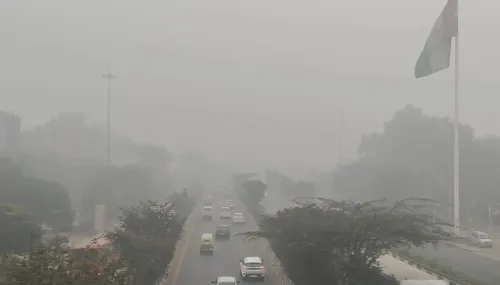
Is Delhi-NCR's Air Quality in the 'Very Poor' Category? Winter Chill Eases!
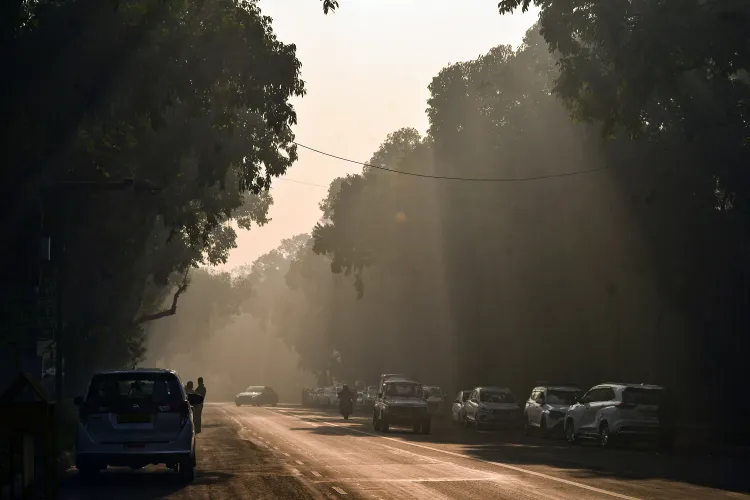
Synopsis
The air quality crisis in Delhi-NCR is being highlighted again as pollution levels climb to alarming heights. With temperatures beginning to rise, the struggle against poor air quality continues, impacting the health of millions. Discover the latest AQI figures and what they mean for residents facing these persistent challenges.
Key Takeaways
Delhi-NCR continues to experience critically high air pollution levels.
The AQI has reached a dangerous level of 380.
Several areas report 'very poor' air quality, including Jahangirpuri and Rohini .
Restrictions under the Graded Response Action Plan remain in effect.
The winter chill is gradually easing, providing some relief from cold temperatures.
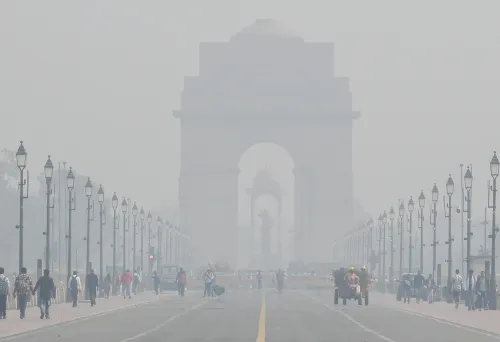
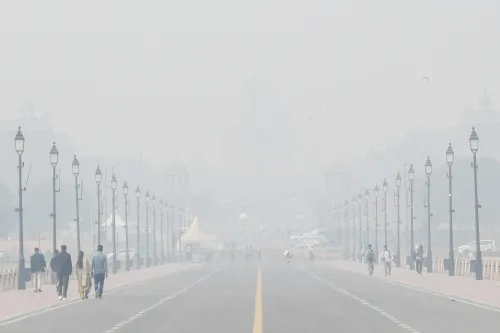
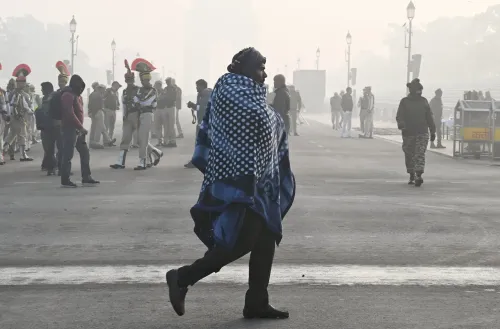
New Delhi, Jan 21 (NationPress) Air quality across Delhi-NCR remains critically high, as pollution levels persist on Wednesday with the overall Air Quality Index (AQI) at 380 as of 8:00 a.m., firmly categorizing the region in the 'very poor' bracket, according to the Central Pollution Control Board (CPCB).
Most areas in the national capital are experiencing 'very poor' air quality, with a few spots dipping into the 'poor' category, providing minimal relief to residents enduring prolonged pollution challenges.
Jahangirpuri reported an AQI of 395, while both Rohini and Anand Vihar followed closely behind at 391.
Wazirpur registered an AQI of 388, and Bawana came in at 384, indicating persistently high pollution levels across north and northwest Delhi.
Several other areas also report 'very poor' air quality, such as Mundka at 381, R K Puram at 378, Punjabi Bagh at 377, and Dwarka Sector-8 also at 377.
Central and east Delhi remain heavily polluted, with ITO and Vivek Vihar each logging an AQI of 372.
Chandni Chowk and Patparganj are not far behind, both recording an AQI of 370, highlighting ongoing pollution in densely populated areas.
According to CPCB standards, an AQI between 0 and 50 is considered 'good', 51 to 100 as 'satisfactory', 101 to 200 as 'moderate', 201 to 300 as 'poor', 301 to 400 as 'very poor', and 401 to 500 as 'severe'.
Previously, the Commission for Air Quality Management (CAQM) lifted Stage IV of the Graded Response Action Plan (GRAP) across Delhi-NCR on January 20 due to a slight improvement in air quality.
Nonetheless, restrictions under Stages I, II, and III of GRAP remain active in the area.
The ban on older BS-IV diesel trucks and heavy goods vehicles entering Delhi has been removed, providing some operational relief, although air quality continues to be a major issue.
Meanwhile, the winter chill in the city has started to ease.
The maximum temperature is around 24 degrees Celsius, and the minimum hovers near 7 degrees Celsius, offering some comfort from the cold while pollution still presents significant health hazards.
Point of View
I recognize that the persistent issue of air pollution in Delhi-NCR poses significant health risks to the populace. Our reporting aims to provide accurate information while raising awareness about the need for immediate action to address this environmental crisis. We stand committed to delivering the most relevant news and insights to our readers.
NationPress
24 Sept 2026
Frequently Asked Questions
What does an AQI of 380 mean?
An AQI of 380 signifies 'very poor' air quality, which can pose serious health risks, particularly for sensitive groups.
What measures are being taken to improve air quality in Delhi?
The Commission for Air Quality Management has implemented various stages of the Graded Response Action Plan to combat pollution, though restrictions are still in place.
How can residents protect themselves from poor air quality?
Residents are advised to limit outdoor activities, use air purifiers, and wear masks when pollution levels are high.