Is Delhi-NCR Facing Another Thick Smog Crisis as AQI Reaches 'Severe' Levels?
Synopsis
Delhi and the NCR grapple with a thick smog crisis as the Air Quality Index (AQI) soars back into the 'severe' category. This alarming situation raises serious health concerns for residents, prompting the government to enforce new regulations aimed at combating pollution. Discover the details and the latest measures taken to address this pressing issue.
Key Takeaways
Delhi's AQI reached 356, indicating severe pollution.
Dense smog continues to disrupt daily life and visibility.
New government regulations aim to mitigate air quality issues.
Wind patterns may help disperse fog but not improve air quality significantly.
Health risks are heightened for vulnerable populations.
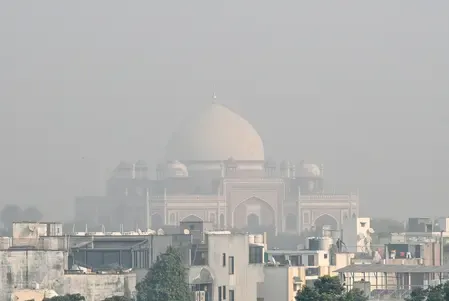
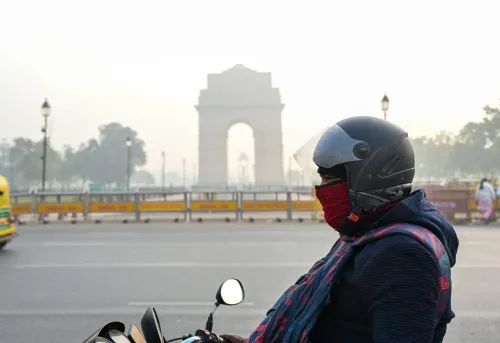
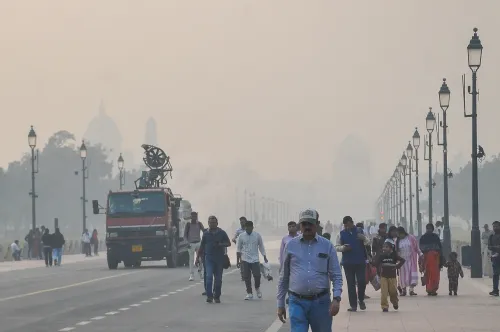
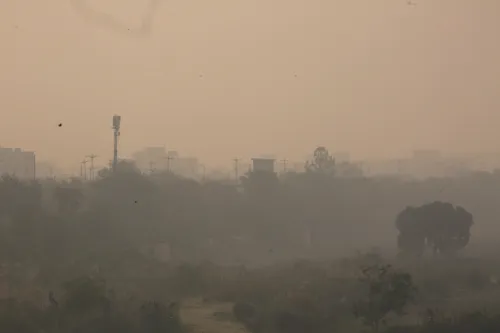
New Delhi, Dec 18 (NationPress) A dense layer of smog persisted over Delhi and the National Capital Region (NCR) on Thursday morning, leading to a significant decline in air quality. The Air Quality Index (AQI) registered a troubling 356, based on readings from the Central Pollution Control Board (CPCB).
Among the 39 monitoring stations across Delhi, four indicated 'severe' AQI levels, while numerous others remained perilously close, highlighting the ongoing hazardous air conditions plaguing the city.
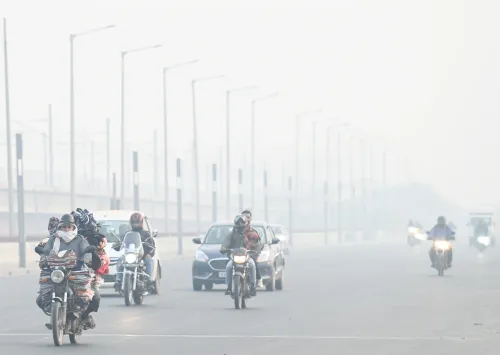
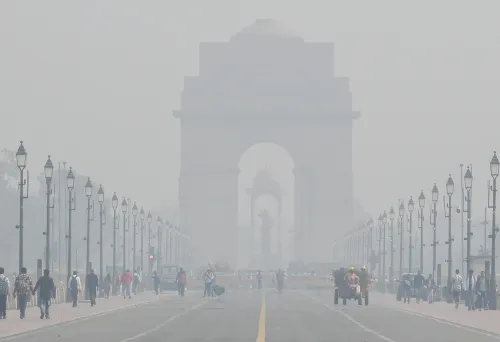
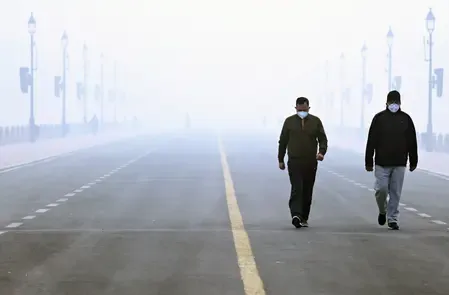
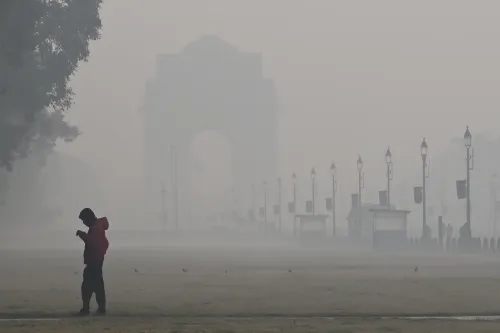
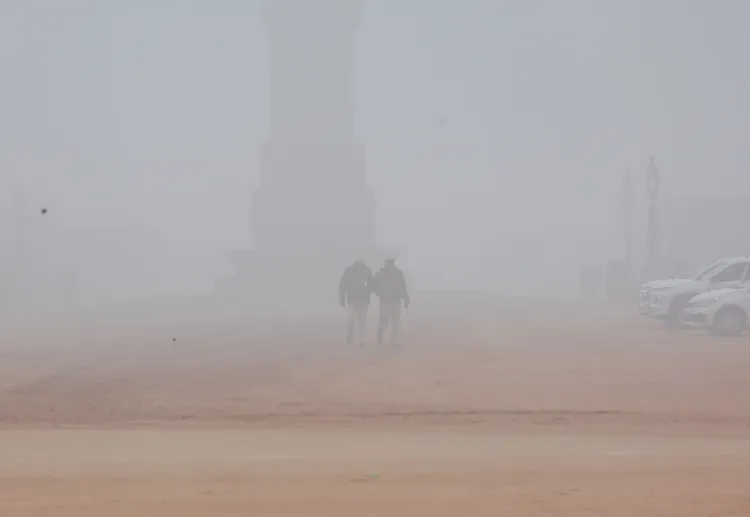
Footage from various locations in Delhi and NCR illustrated drastically reduced visibility, as thick smog enveloped thoroughfares, residential neighborhoods, and public spaces, hampering daily activities and heightening health risks for residents.
According to the Commission for Air Quality Management's SAMEER app, the AQI was noted at 358 at 7 a.m. on Thursday.
This represented a setback from the slight improvement observed the previous day when the AQI had dropped to 334 from 354, aided by comparatively stronger winds in the area.
The India Meteorological Department (IMD) had predicted foggy conditions for the early hours of Thursday.
Nevertheless, the agency also mentioned that the presence of surface winds throughout the day was likely to prevent extended fog formation, gradually enhancing visibility as the day moved forward.
As per the IMD, the main surface winds are expected to blow from the northwest at speeds reaching up to 10 kmph during the morning. In the afternoon, these speeds could increase to around 15 kmph before tapering off to below 10 kmph from the west in the evening and night.
This variation in wind patterns is anticipated to assist in dispersing the fog and contributing to clearer conditions during daylight hours, even as overall air quality remains a pressing issue.
In response to the ongoing pollution crisis, the Delhi government has implemented new measures to combat air quality deterioration. The 'No PUC, No Fuel' regulation will take effect from Thursday.
Additionally, only BS-VI compliant vehicles registered outside Delhi will be permitted entry into the city starting Thursday, while the ban on trucks carrying construction materials will remain in place. Construction activities are still prohibited under the GRAP norms, with strict penalties promised for violators.
As the national capital struggles with severe pollution levels, the Delhi government has announced an extensive package of emergency and long-term strategies aimed at tackling vehicular emissions, dust, waste, and traffic congestion.
Point of View
It is imperative to highlight that the recurring air quality crises in Delhi are a significant concern for public health and safety. The government's measures, while necessary, must be evaluated for their effectiveness and implementation. Continuous monitoring and community involvement are essential to combat this persistent challenge in urban air quality management.
NationPress
26 Sept 2026
Frequently Asked Questions
What is the current AQI level in Delhi?
As of December 18, the AQI in Delhi has reached 356, indicating severe pollution levels.
What measures is the Delhi government taking to combat air pollution?
The Delhi government has implemented the 'No PUC, No Fuel' rule and restrictions on non-BS-VI compliant vehicles entering the city.
How does smog affect daily life in Delhi?
The dense smog reduces visibility, disrupts transportation, and raises health risks for residents, particularly those with respiratory issues.
What role do winds play in air quality in Delhi?
Winds can help disperse fog and improve visibility, although they may not significantly alter the overall air quality.
What are GRAP norms?
GRAP stands for Graded Response Action Plan, which outlines measures to control pollution levels during emergencies.