Did Putin Call EU's Seizure of Russian Assets a 'Robbery'?
Synopsis
In a recent press conference, Russian President Vladimir Putin condemned the EU's attempts to seize Russian assets as 'robbery'. As tensions rise, the implications of these actions could strain international relations and trust within the Eurozone. Discover the full effects of these developments on global politics and economics.
Key Takeaways
Putin denounces EU's asset seizure as robbery.
Trust in the Eurozone may be jeopardized.
EU leaders failed to secure a reparations loan for Ukraine.
90 billion euros raised in joint debt for Ukraine's support.
Hungary and others opted out of the reparations loan scheme.
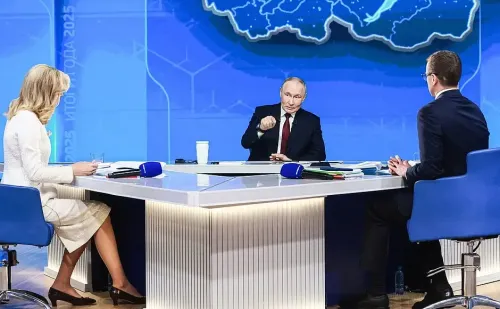
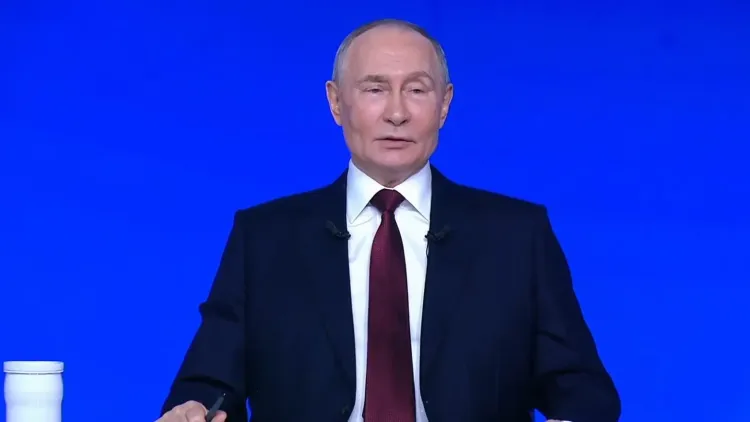
Moscow, Dec 19 (NationPress) Russian President Vladimir Putin has labeled the European Union's (EU) actions to confiscate Russian assets as "robbery."
According to Putin, "Theft is an inappropriate definition. Theft implies a covert taking of property. However, in this instance, they are attempting to do it openly. That's robbery," he stated during his annual Q&A and year-end press conference titled 'Results of the Year', as reported by Russia's state-owned news agency, Tass.
He expressed that the appropriation of Russian assets in Europe would jeopardize confidence in the Eurozone, as several countries, including Russia, maintain their gold and currency reserves there.
Moreover, Putin cautioned, "There would also be more severe consequences for those attempting this. It’s not merely a hit to their reputation; it damages trust in the Eurozone, particularly since many other nations also safeguard their gold and currency reserves in Europe, along with those possessing surplus resources," he added.
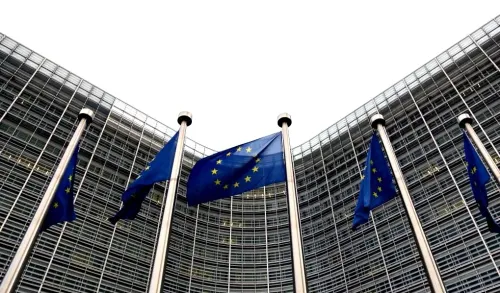
In a related development, EU leaders could not finalize a reparations loan for Ukraine, resulting in a collective debt of 90 billion euros instead of a financing loan. Hungary, the Czech Republic, and Slovakia have chosen not to participate, as reported by Euro News.
The EU's leaders have decided to raise 90 billion euros in joint debt to support Ukraine for the next two years after their initial plan for a reparations loan fell through. They opted for joint debt to ensure Ukraine's stability in 2026 and 2027, using the bloc's common budget, after facing a deadlock over Belgium's demand for unlimited guarantees before utilizing immobilized Russian assets.
Leading up to the Brussels summit on Thursday, EU leaders had indicated that there was no alternative and sought to provide a reparations loan to Ukraine, backed by the immobilized assets of the Russian Central Bank. Despite efforts led by German Chancellor Friedrich Merz, he failed to secure the loan due to Belgium's strict requirements for unlimited guarantees.
Post-summit, European Commission President Ursula von der Leyen, along with Danish Prime Minister Mette Frederiksen, confirmed that the primary objective of funding Ukraine had been achieved.
Frederiksen remarked to reporters, "The bottom line, after today, is that our support for Ukraine is guaranteed."
Before the summit, Hungary had indicated its refusal to support the EU's reparations loan plan for Ukraine. Prime Minister Viktor Orban has consistently criticized European leaders for their management of the Russia-Ukraine situation.
Point of View
The ongoing tensions between Russia and the EU reflect a critical moment in international relations. While Putin's remarks emphasize the serious implications of asset seizures, it's essential for nations to navigate these waters carefully to maintain diplomatic ties and economic stability.
NationPress
19 Oct 2026
Frequently Asked Questions
What did Putin say about the EU's actions?
Putin referred to the EU's attempts to seize Russian assets as 'robbery', distinguishing it from theft by emphasizing that it is done openly.
What are the potential consequences of seizing Russian assets?
Putin warned that such actions could undermine trust in the Eurozone, affecting not only Russia but also other nations that keep their reserves there.
What is the current situation regarding Ukraine's funding?
EU leaders have agreed to raise 90 billion euros in joint debt to support Ukraine after failing to finalize a reparations loan.
How did Hungary respond to the EU's plans?
Hungary, along with the Czech Republic and Slovakia, decided not to participate in the EU's reparations loan scheme for Ukraine.
What did EU leaders confirm after the summit?
European Commission President Ursula von der Leyen confirmed that the primary goal of funding Ukraine has been achieved.