Are Strong Winds Bringing Relief to Delhi-NCR Despite Poor Air Quality?
Synopsis
Despite some improvements in air quality due to strong winds, the residents of Delhi-NCR continue to face challenges with pollution. The IMD reports slight reductions, but concerns remain as fog sets in. Discover how weather changes are impacting air quality in this critical region.
Key Takeaways
Strong winds have provided slight relief in air quality.
Most monitoring stations reported an AQI below 300 .
Fog is expected to impact visibility and air quality.
Health risks increase with higher AQI levels.
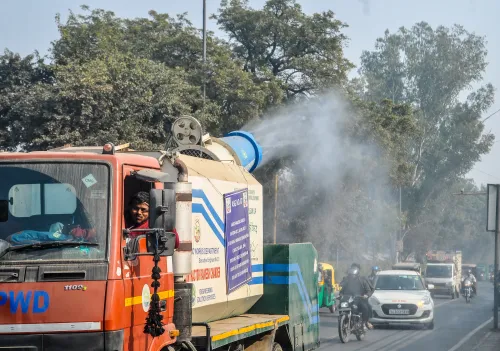
Proactive measures are essential to combat pollution.
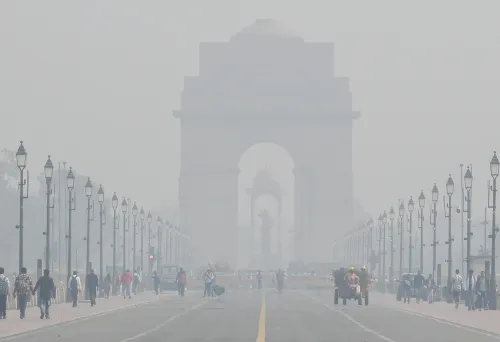
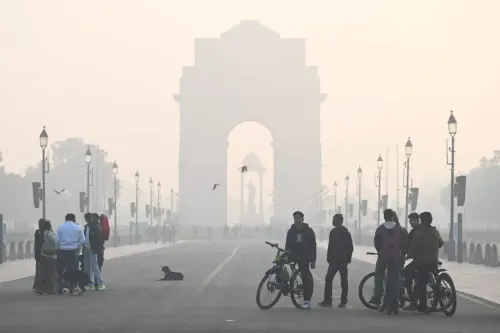
New Delhi, Dec 9 (NationPress) Residents in the Delhi-NCR region felt a slight alleviation on Tuesday morning after enduring days of severely polluted air. The India Meteorological Department (IMD) reported that surface winds, reaching speeds of 15 to 25 km per hour, have contributed to a modest reduction in air pollution levels.
The heightened wind speeds have facilitated the dispersion of suspended pollutant particles into the upper atmosphere, positively influencing the Air Quality Index (AQI). While pollution levels in the city have been consistently categorized as ‘very poor’ to ‘severe’, several monitoring stations indicated readings below 300.
In Noida, the AQI also showed improvements, with some stations reporting levels around 255. According to monitoring points from the CPCB and UP Pollution Control Board, Sector 62 recorded an AQI of 255, Sector 125 had 313, and Sector 116 noted 307.
Similarly, various locations in Delhi exhibited better air quality. Data shows that Pusa recorded an AQI of 270, Shadipur 239, Vivek Vihar 323, Wazirpur 320, and RK Puram 313.
The IMD's forecast for December 9 predicts light fog, with maximum temperatures reaching 24 degrees Celsius and a minimum of 9 degrees Celsius. Morning wind speeds are expected to remain in the range of 15 to 25 km/h.
On December 10, shallow fog is anticipated, with temperatures expected to hover around 24 degrees Celsius (maximum) and 8 degrees Celsius (minimum). Dense fog is predicted for December 11, with temperatures forecasted at 24 degrees Celsius and 7 degrees Celsius.
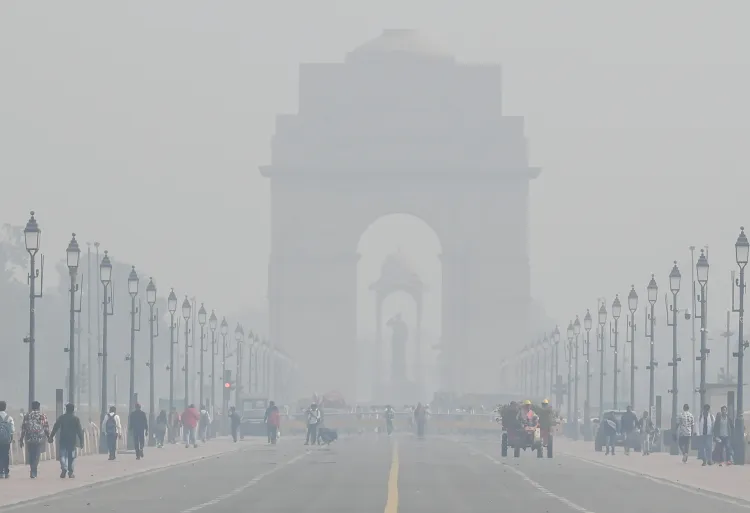
IMD officials have indicated that fog intensity may rise starting Wednesday morning, which could lead to reduced visibility. Pollution levels are also anticipated to increase again as wind speeds dwindle.
The AQI classifications range from 0-50 as 'good', indicating minimal health impacts, to levels between 401-500, classified as 'severe', where air quality poses a danger to everyone.
Point of View
It is essential to recognize the ongoing air quality crisis in Delhi-NCR. While the recent winds have provided temporary relief, the underlying issues contributing to pollution remain critical. Continuous monitoring and proactive measures are necessary to ensure the health and wellbeing of the residents in this densely populated area.
NationPress
5 Oct 2026
Frequently Asked Questions
What has caused the recent improvement in air quality in Delhi-NCR?
The recent improvement in air quality in Delhi-NCR can be attributed to strong surface winds blowing at speeds of 15 to 25 km per hour, which have helped disperse suspended pollutant particles.
What is the significance of the Air Quality Index (AQI)?
The Air Quality Index (AQI) is a measure used to communicate how polluted the air currently is or how polluted it is forecast to become. It helps the public understand the level of health risk associated with air quality.
What are the health implications of different AQI levels?
AQI levels range from 'good' (0-50) to 'severe' (401-500). Higher levels can cause respiratory issues, particularly for sensitive groups, while severe levels pose health risks to everyone.
Is there a forecast for fog in the coming days?
Yes, the IMD has forecast shallow fog for December 10 and dense fog for December 11, which may impact visibility and air quality.
How can residents protect themselves from air pollution?
Residents can protect themselves by staying indoors during high pollution days, using air purifiers, and wearing masks when going outside.