Delhi Police serves notice to Mamata Banerjee in 2013 Banga Bhavan heckling case

Synopsis
Thirteen years after a violent protest outside New Delhi's Banga Bhavan, Delhi Police have served a witness notice on former West Bengal CM Mamata Banerjee. The 2013 case involves the alleged assault of then Finance Minister Amit Mitra by SFI activists — and the summons, arriving at Banerjee's Kolkata home in a white envelope, is set to ignite fresh political controversy.
Key Takeaways
Delhi Police served a witness notice on former West Bengal CM Mamata Banerjee on 9 November 2026 at her Kolkata residence.
The summons is under Section 160 CrPC — Banerjee is sought as a witness , not an accused.
The underlying case dates to 9 April 2013 , when SFI activists allegedly heckled and assaulted then Finance Minister Amit Mitra outside Banga Bhavan in New Delhi .
The protest was led by then SFI General Secretary Ritabrata Banerjee , now Leader of the Opposition in the West Bengal Legislative Assembly .
Banerjee was reportedly present in New Delhi alongside Amit Mitra at the time of the incident, making her a potential witness.
The notice was received by Subhasish Chakraborty on Banerjee's behalf at 30B Harish Chatterjee Street , South Kolkata.
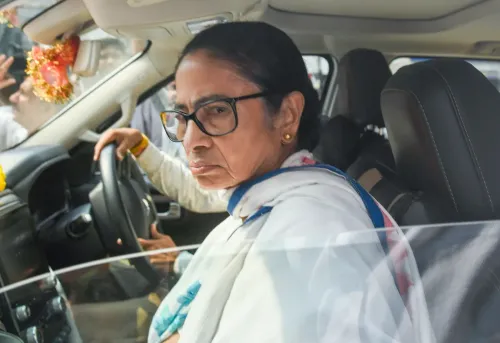
The Delhi Police on Monday, 9 November 2026, served a formal notice for interrogation to former West Bengal Chief Minister Mamata Banerjee in connection with a 2013 criminal case registered at the Parliament Street Police Station in New Delhi. Investigators seek to question Banerjee as a witness — not as an accused — under Section 160 of the Code of Criminal Procedure (CrPC).
How the Notice Was Delivered
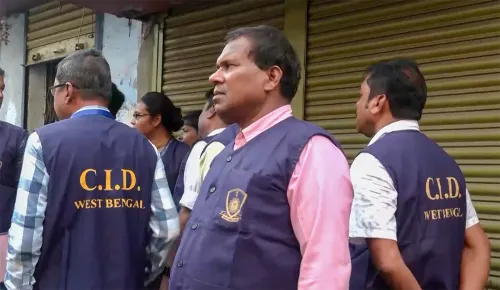
A Delhi Police team, accompanied by personnel from the local Kalighat Police Station, arrived at Banerjee's official residence at 30B Harish Chatterjee Street in South Kolkata to deliver the summons. The document, handed over in a white envelope, was received by Subhasish Chakraborty on her behalf.
According to sources familiar with the development, the notice asks Banerjee to travel to New Delhi at her convenience to meet investigating officers. The summons is issued under Section 160 CrPC, which allows police to call a person as a witness for questioning — a provision that carries no immediate custodial implication.
The 2013 Banga Bhavan Incident
The case traces back to April 2013, when activists of the Students' Federation of India (SFI) — the student wing of the Communist Party of India (Marxist) — staged a protest outside Banga Bhavan, West Bengal's official guest house in New Delhi. The demonstration followed the death of SFI activist Sudipta Gupta in Kolkata earlier that year.
During the protest, the then West Bengal Finance Minister Amit Mitra was reportedly heckled and physically assaulted by demonstrators. The agitation was led by the then SFI General Secretary Ritabrata Banerjee, who currently serves as the Leader of the Opposition in the West Bengal Legislative Assembly. A formal complaint was registered at the Parliament Street Police Station on 9 April 2013.
Why Mamata Banerjee Has Been Summoned
Investigators note that Mamata Banerjee was present in New Delhi alongside Amit Mitra when the assault allegedly occurred, making her a potential witness to the events. The notice, issued thirteen years after the incident, signals a renewed push by Delhi Police to close out witness statements in the long-pending case.
Notably, the timing of the summons — arriving when Banerjee's Trinamool Congress (TMC) is in a charged political environment ahead of local elections — is likely to draw scrutiny from opposition parties in West Bengal, who may characterise it as politically motivated. The Delhi Police, however, has framed the action as routine witness examination under established legal provisions.
Political and Legal Context
The use of Section 160 CrPC to summon a sitting or former chief minister as a witness is not unprecedented, but it invariably carries political weight. This comes amid a broader pattern of central agencies issuing notices to opposition leaders in multiple states, a trend that critics argue reflects the Centre's deployment of investigative machinery for political ends — an allegation that government spokespersons have consistently denied.
Legal observers note that Banerjee is under no obligation to appear in New Delhi immediately; she may respond through legal counsel or negotiate the terms of her statement. How her legal team and the TMC respond is expected to shape the next phase of this long-dormant case.
Point of View
But of the timing. Section 160 CrPC notices carry no immediate legal jeopardy, yet their political weight is well understood by all sides. The pattern of central investigative agencies resurfacing dormant cases against opposition figures at electorally sensitive moments is now a recurring feature of Indian politics, and critics will read this as another instance of that playbook. What matters legally is whether Delhi Police can establish a credible investigative rationale for why Banerjee's witness statement — unavailable for over a decade — has suddenly become necessary.
NationPress
9 Nov 2026
Frequently Asked Questions
Why has Delhi Police issued a notice to Mamata Banerjee?
Delhi Police has summoned former West Bengal Chief Minister Mamata Banerjee as a witness in a 2013 criminal case registered at Parliament Street Police Station. Investigators say she was present in New Delhi alongside then Finance Minister Amit Mitra when SFI activists allegedly assaulted him outside Banga Bhavan.
What is the Banga Bhavan heckling case?
The case relates to an April 2013 protest by Students' Federation of India (SFI) activists outside Banga Bhavan, West Bengal's official residence in New Delhi. During the demonstration, then Finance Minister Amit Mitra was reportedly heckled and physically assaulted; a formal complaint was filed on 9 April 2013.
Is Mamata Banerjee an accused in this case?
No. Delhi Police has summoned Banerjee strictly as a witness under Section 160 of the Code of Criminal Procedure (CrPC), which carries no custodial implication. She is required only to give a statement to investigating officers.
Who led the 2013 SFI protest at Banga Bhavan?
The protest was led by then SFI General Secretary Ritabrata Banerjee, who currently serves as the Leader of the Opposition in the West Bengal Legislative Assembly. The SFI is the student wing of the Communist Party of India (Marxist).
Does Mamata Banerjee have to travel to New Delhi immediately?
No. The notice asks her to visit New Delhi at her convenience to meet investigating officers, and she may also respond through legal counsel. Section 160 CrPC does not compel immediate appearance and allows the witness to negotiate the terms of their statement.