Delhi SIR 2026: Special voter camp held in Ranjit Nagar, roll updates till Oct 30
Synopsis
Delhi's SIR voter camp in Ranjit Nagar is a microcosm of a national exercise that has already sparked controversy in West Bengal and four other states. With the claims window extended to 30 October and the final roll due 4 December, the ECI is in a race against both the calendar and public scepticism about voter exclusions.
Key Takeaways
A Special Intensive Revision (SIR) voter assistance camp was held in Ranjit Nagar, New Delhi on 6 October 2026 .
The claims-and-objections window has been extended by one month to 30 October 2026 , covering Forms 6, 7, 8, and 8B .
Disposal of claims and objections continues until 13 November 2026 ; the final electoral roll is due on 4 December 2026 .
BLOs , BLO supervisors, and AERO officers are present at the camp to assist with form-filling and document verification.
The SIR exercise drew political controversy in West Bengal, Assam, Kerala, Tamil Nadu , and Puducherry , with opposition parties alleging exclusion of eligible minority voters.
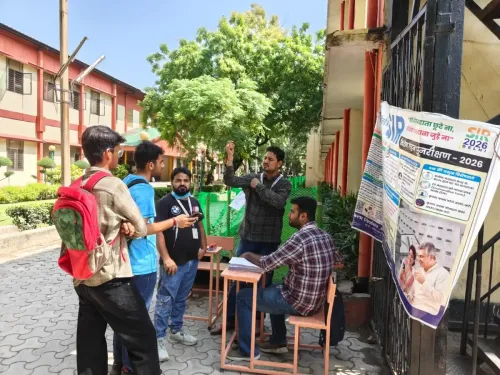
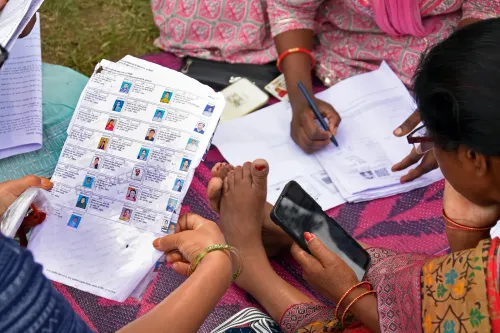
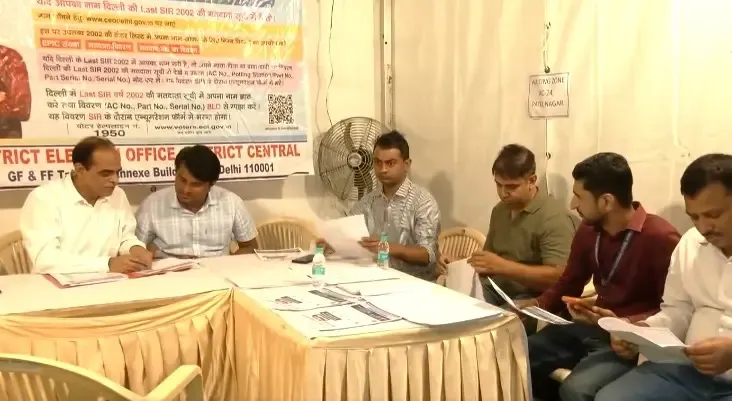
A special camp was organised in Ranjit Nagar, New Delhi, on Monday, 6 October 2026, to assist residents with the ongoing Special Intensive Revision (SIR) of electoral rolls — the Election Commission of India's (ECI) periodic exercise to clean up voter lists by removing duplicate, deceased, relocated, or otherwise ineligible entries. The camp offered on-the-spot help with corrections to names, addresses, and other voter details.
What Is Happening at the Camp
Booth Level Officers (BLOs) and other electoral officials were present at the camp to verify documents and guide residents through the process. Officials explained the purpose of various forms, the documents required for each application, and the overall SIR procedure.
Shiv Kumar Sharma, Assistant Electoral Registration Officer (AERO) for the area, confirmed that the claims-and-objections window — initially scheduled from 31 August to 30 September 2026 — has been extended by one month and is now valid until 30 October 2026. The extension covers Forms 6, 7, 8, and 8B, which handle new voter registration, deletions, corrections, and transpositions respectively.
Key Dates to Know
According to Sharma, the disposal of claims and objections will continue until 13 November 2026, after which the final electoral roll for the area is scheduled to be published on 4 December 2026. Anyone wishing to register as a new voter for the first time must submit Form 6 before the 30 October deadline.
Sharma noted that the pre-exercise enumeration phase — during which field staff visited households — had already been completed, with all forms digitised and recorded. 'Names of individuals who had died, relocated, remained absent, or appeared more than once were removed accordingly,' he said.
Ground Situation and Voter Participation
Sharma said the exercise in Ranjit Nagar had proceeded without major disruptions. 'Voters are actively coming forward,' he noted, adding that BLOs, BLO supervisors, principals, and AERO officers are available at the camp and at other designated locations to provide end-to-end assistance with form-filling and document requirements.
National Context: SIR's Chequered History
The SIR exercise was first conducted in Bihar ahead of the 2025 Assembly elections and has since been rolled out across most states and union territories. However, it drew significant political controversy when implemented ahead of the 2026 Assembly elections in Assam, Kerala, Tamil Nadu, West Bengal, and Puducherry.
Opposition parties alleged that the process risked excluding eligible voters, particularly from minority communities. In West Bengal, a large number of names were initially dropped from revised electoral rolls, with some subsequently restored after verification. As of May 2026, the exercise had been completed in most states, while Himachal Pradesh, Jammu and Kashmir, and Ladakh saw it postponed due to weather-related considerations.
With the final Delhi roll due on 4 December 2026, residents have until 30 October to ensure their details are accurate — after which corrections will have to wait for the next revision cycle.
Point of View
But it sits within a national SIR exercise that has already been contested in courts and legislatures across five states. The ECI's decision to extend the Delhi window by a month signals either genuine outreach or a quiet acknowledgement that earlier timelines were insufficient. What remains unresolved is the broader question the West Bengal controversy exposed: whether the SIR's deletion logic — removing names based on absence or non-response during enumeration — adequately protects voters in dense urban wards where door-to-door contact is unreliable. The December final roll will be the proof.
NationPress
5 Oct 2026
Frequently Asked Questions
What is the Special Intensive Revision (SIR) of electoral rolls?
The Special Intensive Revision (SIR) is an exercise conducted by the Election Commission of India to update electoral rolls by removing duplicate, deceased, relocated, or ineligible entries and adding eligible new voters. It involves a door-to-door enumeration phase followed by a claims-and-objections window during which voters can apply for corrections or new registrations.
What is the deadline to update voter details in Delhi's SIR 2026?
The deadline for submitting claims and objections — including new registrations via Form 6 — has been extended to 30 October 2026. The disposal of those claims will continue until 13 November 2026, and the final electoral roll is scheduled for publication on 4 December 2026.
Which forms are accepted during the SIR process?
Voters can submit Form 6 for new registration, Form 7 for deletion of an entry, Form 8 for corrections to existing details such as name or address, and Form 8B for transposition within the same constituency. Officials at the camp are available to assist with all four forms.
Why did the SIR exercise become controversial in other states?
Opposition parties in Assam, Kerala, Tamil Nadu, West Bengal, and Puducherry alleged that the SIR process risked excluding eligible voters, particularly from minority communities. In West Bengal, a large number of names were initially dropped from revised rolls, with some later restored after verification — raising questions about the deletion criteria used during the enumeration phase.
Who can voters contact for help with the SIR process in Delhi?
Residents can approach Booth Level Officers (BLOs), BLO supervisors, or Assistant Electoral Registration Officer (AERO) officials at designated camp locations such as the one organised in Ranjit Nagar. Officials assist with form-filling and clarify the specific documents required for each type of application.