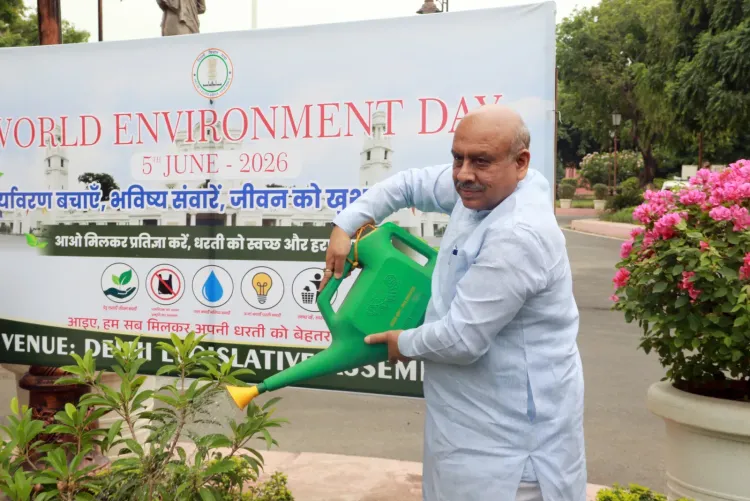
Delhi Speaker Vijender Gupta plants saplings on World Environment Day
Synopsis
Delhi Assembly Speaker Vijender Gupta turned the Vidhan Sabha campus into an environmental statement on World Environment Day, planting indigenous saplings and demanding that every Delhi household adopt a tree. In a city ranked among the world's most polluted, the call for legislature-led greening is a rare instance of a political institution putting its grounds where its policies are.
Key Takeaways
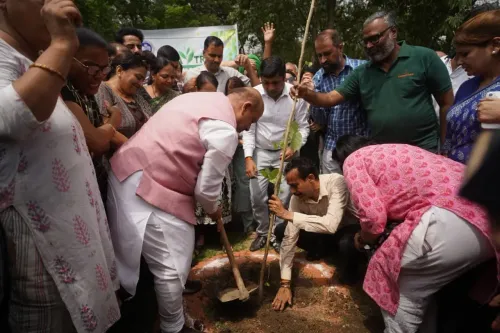
Delhi Assembly Speaker Vijender Gupta led a plantation drive at the Delhi Vidhan Sabha on 5 June , World Environment Day .
Gupta planted indigenous saplings and urged every Delhi household to adopt at least one tree.
He called for dense urban mini-forests to combat the heat-island effect and improve air quality across the capital.
The Speaker emphasised that public institutions must lead environmental action by example, not just policy directives.
Gupta called on youth and community leaders to commit to year-round environmental stewardship, not just single-day observances.
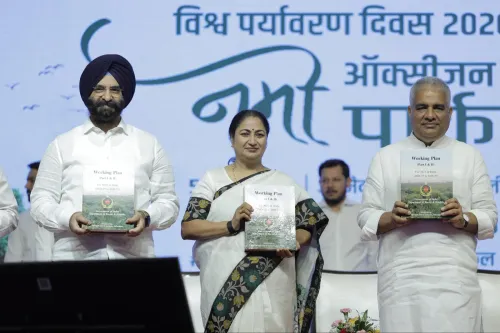
Delhi Assembly Speaker Vijender Gupta on Friday, 5 June led a mega plantation drive at the Delhi Vidhan Sabha premises, planting indigenous saplings to mark World Environment Day. Gupta described environmental protection as an existential necessity for urban landscapes, calling on citizens and institutions alike to take ownership of the capital's ecological future.
What Gupta Said
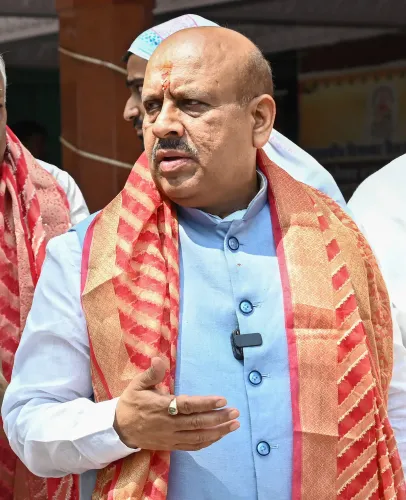
'True governance is not just about passing laws for the present, but planting roots for our future generations; a green capital begins with a single sapling,' said Gupta during the event. He urged Delhi residents to move beyond passive observation and become active 'guardians of nature,' adding that every household in the city should adopt at least one tree.
Delhi's Pollution Crisis as Context
The Speaker's remarks carried particular weight given Delhi's persistent struggle with severe seasonal air pollution and rising urban temperatures. Gupta argued that the city must pivot toward aggressive, community-driven greening to secure a breathable and sustainable ecosystem. He specifically highlighted the role of dense urban mini-forests in combating the heat-island effect, enriching local biodiversity, and creating clean-air pockets across the capital.
Institutions Must Lead by Example
Gupta emphasised that public institutions cannot limit themselves to issuing policy directives — they must model the behaviour they seek to promote. He stated that the Delhi Vidhan Sabha aims to pioneer this transformation, converting political spaces into centres of environmental awareness. Escalating plantation efforts within institutional campuses, he argued, sends a powerful signal to communities across the city.
A Call for Year-Round Stewardship
Addressing individual responsibility, Gupta asserted that environmental stewardship must not be confined to a single calendar day. He envisioned a future where Delhi's architectural heritage and natural beauty coexist seamlessly, and called on youth, community leaders, and all stakeholders to commit to turning the national capital into a model of climate resilience. Institutional efforts, he said, succeed only when they spark a mass social movement where citizen pride is tied directly to the health of the local environment.
Point of View
And this one follows that pattern. What is marginally different is the venue — the legislature itself — and the Speaker's explicit argument that institutions must model behaviour rather than merely legislate it. Whether the Delhi Vidhan Sabha follows through with a verifiable urban-forestry programme, or whether this remains a one-day photo opportunity, will determine its actual impact. Delhi's air quality crisis is structural, rooted in vehicular emissions, stubble burning, and industrial activity; saplings planted on institutional grounds, however well-intentioned, are a rounding error against that challenge. The more consequential test is whether the Assembly translates this symbolism into binding green-infrastructure mandates for public buildings across the capital.
NationPress
21 Oct 2026
Frequently Asked Questions
What did Delhi Assembly Speaker Vijender Gupta do on World Environment Day?
Vijender Gupta led a mega plantation drive at the Delhi Vidhan Sabha premises on 5 June , planting indigenous saplings to mark World Environment Day . He called on citizens and institutions to take active ownership of Delhi's environmental future.
Why is a tree plantation drive significant for Delhi?
Delhi battles severe seasonal air pollution and rising urban temperatures, making greening initiatives particularly relevant. The Speaker argued that dense urban mini-forests can help combat the heat-island effect, boost biodiversity, and create clean-air pockets across the city.
What did Vijender Gupta ask Delhi residents to do?
Gupta urged every household in Delhi to adopt at least one tree and called on citizens to become active 'guardians of nature' rather than passive observers. He stressed that environmental stewardship must be a year-round commitment, not a single-day observance.
What role did Gupta say public institutions should play in environmental protection?
Gupta said public institutions must lead by example rather than confining themselves to issuing policy directives. He stated that the Delhi Vidhan Sabha aims to transform political spaces into centres of environmental awareness and community-driven climate action.
What is the broader goal of the Delhi Vidhan Sabha's green initiative?
The initiative aims to inspire structural and behavioural change across the capital, ultimately positioning Delhi as a model of environmental sustainability and community-driven climate resilience. Gupta envisioned a future where the city's architectural heritage and natural beauty coexist seamlessly.