What Did Delhi Speaker Present to PM Modi About the Assembly’s Legacy?

Synopsis
Prime Minister Narendra Modi received a specially curated coffee table book from Delhi Assembly Speaker Vijender Gupta, highlighting the assembly's rich parliamentary history. This publication not only honors Vithalbhai Patel but also encapsulates crucial milestones in India's democratic evolution. Discover the transformative initiatives that are shaping Delhi's legislative future.
Key Takeaways
Historical Significance: The coffee table book chronicles the evolution of India's democracy.
Legacy Honored: It pays tribute to Vithalbhai Patel as a pivotal figure in Indian legislative history.
Modern Initiatives: The Assembly is transitioning to digital and sustainable practices.
Public Access: Plans to open the Assembly as a heritage site for citizens.
Real-time Monitoring: Delhi leads with its comprehensive audit system.
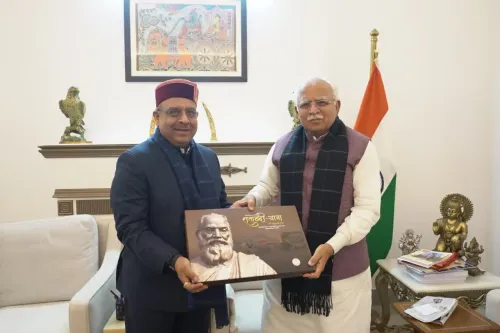
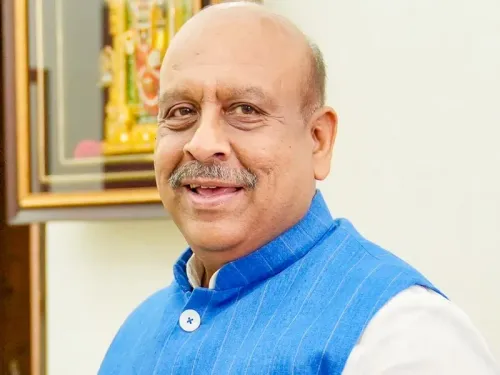
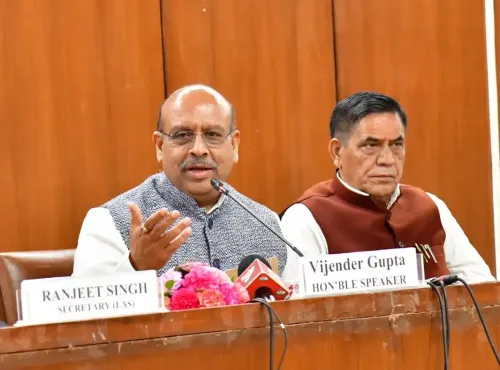
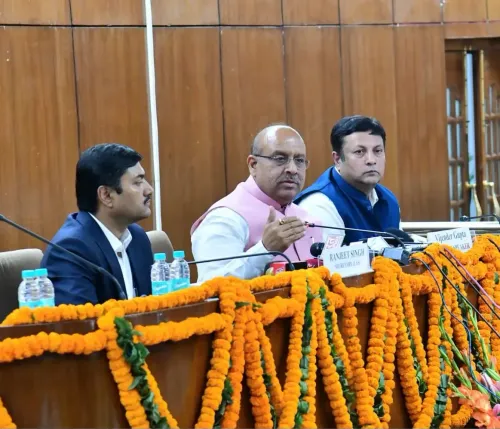
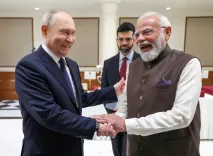
In New Delhi, on December 12 (NationPress), Prime Minister Narendra Modi engaged with Delhi Assembly Speaker Vijender Gupta, who presented a specially crafted coffee table book that celebrates the city legislature’s parliamentary heritage.
The volume titled ‘Delhi Legislative Assembly presents Shatabdi-Yatra, Veer Vithalbhai Patel’ honors Vithalbhai Patel, recognized as the first Indian elected Speaker of the Central Legislative Assembly.
This book serves as a historical account detailing India’s parliamentary evolution from 1925 to 2025, dedicated to Vithalbhai Patel.
Gupta explained that this Coffee Table Book captures a century-long narrative of India’s legislative and democratic evolution.
The publication features rare archival images, significant documents, and pivotal moments that have influenced Indian democracy since the early 20th century.
A major highlight of the coffee table book is its comprehensive documentation of the 2025 All India Speakers’ Conference, which will celebrate 100 years since Vithalbhai Patel was elected as the first Indian Speaker of the Central Legislative Assembly—a key milestone that laid the groundwork for modern parliamentary practices in India.
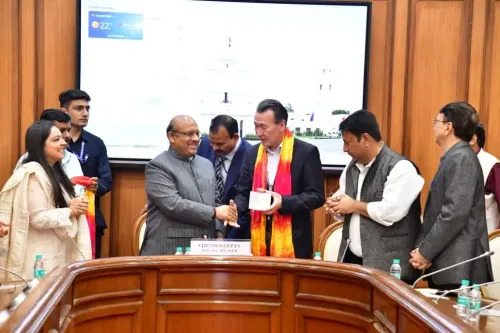
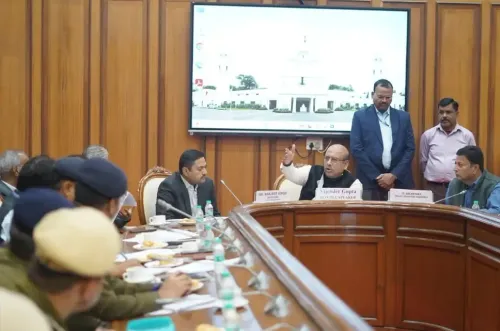
During their discussion, Gupta informed PM Modi that the Assembly’s Audit Para Monitoring System (APMS) is now fully functional within the Government of the National Capital Territory of Delhi, making it possibly the first State Assembly in the country to implement such a detailed real-time audit monitoring system.
He also briefed the Prime Minister on transformative initiatives like NeVA (National e-Vidhan Application), which has enabled the Delhi Legislative Assembly to evolve into a fully digital and paperless entity, along with the successful transformation of the Assembly into a completely solar-powered green legislature.
Furthermore, Gupta informed PM Modi that the Delhi Legislative Assembly is on track to become a distinguished Heritage Site, preserving its rich democratic legacy for future generations.
This initiative will allow the historic site to open its doors to the public, enabling citizens to witness firsthand the institution’s extraordinary journey and its lasting contributions to India’s democratic framework.
Point of View
I believe this event underscores the importance of acknowledging historical legacies while embracing modern governance. The initiatives presented by Delhi Assembly Speaker Gupta illustrate a commitment to transparency and innovation in the legislative process, which is vital for the democratic fabric of our nation.
NationPress
2 Oct 2026
Frequently Asked Questions
What is the significance of the coffee table book presented to PM Modi?
The coffee table book celebrates the history of the Delhi Legislative Assembly and honors Vithalbhai Patel, marking important milestones in India's parliamentary journey.
Who is Vithalbhai Patel?
Vithalbhai Patel was the first Indian elected Speaker of the Central Legislative Assembly, playing a crucial role in India's legislative history.
What initiatives were discussed during the meeting?
Speaker Gupta discussed the implementation of the Audit Para Monitoring System and the National e-Vidhan Application, along with plans to convert the assembly into a heritage site.