Why Does Delhi Face AQI Levels Above 450?
Synopsis
As Delhi grapples with a severe air quality crisis, emergency measures have been enforced under GRAP-4. With AQI levels reaching hazardous limits, the city faces significant challenges. This article delves into the implications of these measures and the alarming air quality situation in the capital.
Key Takeaways
Delhi's AQI has surpassed 450 , triggering GRAP-4 measures.
Hybrid learning is now in effect for schools.
Government and private offices have mandated work-from-home policies.
Essential services remain exempt from these restrictions.
Areas like Rohini and Bawana are experiencing critical pollution levels.
New Delhi, Dec 14 (NationPress) With the implementation of tougher pollution regulations under the Graded Response Action Plan (GRAP) Stage 4, emergency measures have been enforced throughout Delhi as the air quality continues to decline. The Commission for Air Quality Management (CAQM), the central body's pollution control panel, initially activated GRAP-3 restrictions for Delhi and surrounding areas on Saturday afternoon, later escalating to GRAP-4 later that evening due to a significant drop in air quality.
Shortly after this decision, Delhi's Air Quality Index (AQI) was recorded at 431 around 4 p.m. on Saturday, and it rose to 441 by 6 p.m., which led to the announcement of the most stringent set of measures under the GRAP framework.
"Considering the current trend of air quality and to avert further deterioration in the region, the CAQM Sub-Committee on GRAP has decided to implement all actions outlined under Stage-IV of the existing GRAP -- 'Severe+' Air Quality (DELHI AQI > 450), with immediate effect, across the entire NCR. This is in addition to the measures under Stages I, II & III of the existing GRAP already in effect in NCR," stated the CAQM.
In light of this decision, the Delhi government instructed all government and private schools to conduct classes up to Class 11, except for Class 10, in a hybrid mode, combining physical and online education.
Additionally, 50 percent of personnel in government and private offices have been mandated to work from home.
"The remaining staff must also work from home," the order specified, urging all private establishments to adopt staggered working hours wherever possible.
Private offices have been directed to ensure strict adherence to work-from-home protocols and to reduce vehicle movement related to office commuting.
However, certain essential services are exempt from these directives.
"Hospitals and other public/private health facilities, fire services, prisons, public transport, electricity, water, sanitation, and related municipal services, disaster management and related services, as well as forest and environment agencies involved in air pollution control, monitoring, and enforcement activities (such as teams deployed to tackle biomass burning, dust control, GRAP measures, etc.), and other essential/emergency services shall be exempt from these directives," the order emphasized.
Under the graded response mechanism, GRAP-1 restrictions activate when the AQI is between 201 and 300, classified as 'Poor'. GRAP-2 is enforced when the AQI ranges from 301 to 400, categorized as 'Very Poor'. GRAP-3 restrictions come into play when the AQI is between 401 and 450, labeled 'Severe', while GRAP-4, the most stringent stage, is triggered when the AQI exceeds 450, marking the 'Severe Plus' category.
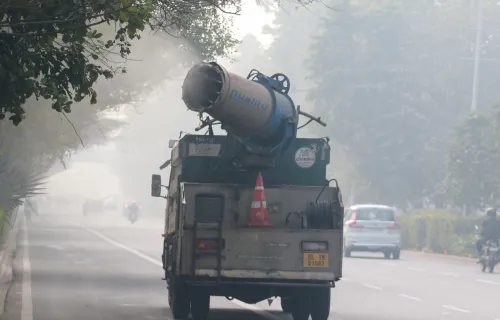
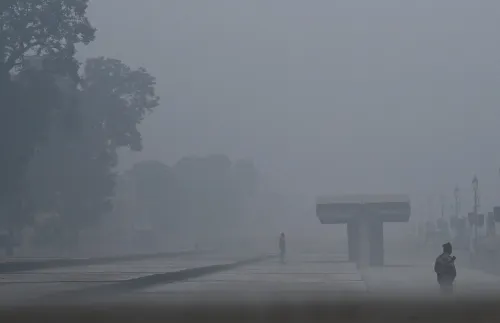
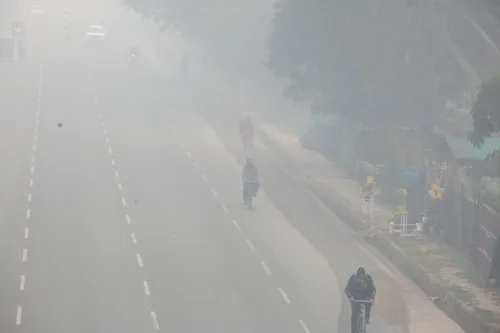
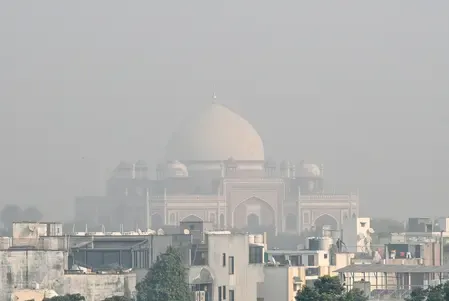
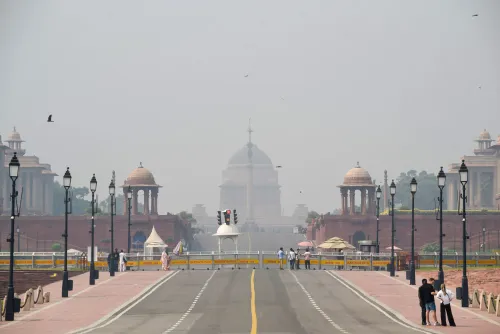
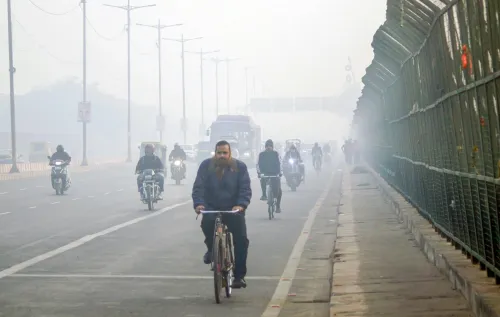
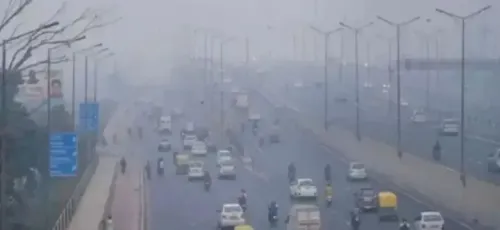
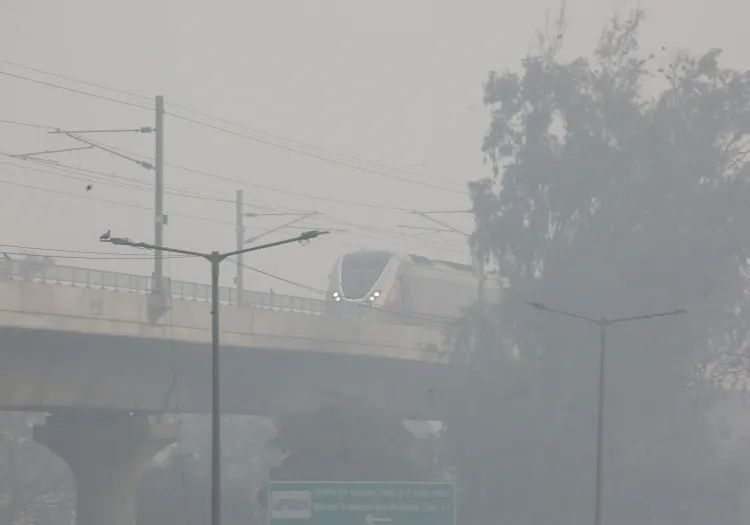
Meanwhile, air pollution in the national capital, which had already reached the 'severe' category, further deteriorated on Sunday as a thick veil of toxic smog engulfed the city, pushing air quality to hazardous levels and impairing visibility in various regions.
According to data published by the CPCB, Delhi's average AQI soared to 461 at 7 a.m. on Sunday, up from 431 recorded the previous day.
All 40 air quality monitoring stations across Delhi reported 'severe' category readings, with several locations nearing the maximum measurable limit. Rohini emerged as one of the most affected areas, recording an AQI of 499, closely followed by Bawana at 498. Vivek Vihar reported 495, while both Ashok Vihar and Wazirpur documented AQI levels of 493 each. Narela recorded 492, and Anand Vihar stood at 491.
Other areas in the city also remained heavily polluted. ITO recorded an AQI of 485, Mundaka 486, Punjabi Bagh 478, Nehru Nagar 476, and both Chandni Chowk and Okhla registered readings of 470, indicating widespread and persistent pollution throughout the Capital.
Point of View
I believe it's crucial for the nation to understand the severity of Delhi's air quality crisis. The enforcement of GRAP-4 restrictions highlights a significant public health concern that requires immediate attention and action from both the government and citizens alike.
NationPress
29 Sept 2026
Frequently Asked Questions
What is the current AQI level in Delhi?
As of the latest reports, Delhi's average AQI has reached 461, indicating a severe level of air pollution.
What measures are being taken under GRAP-4?
Under GRAP-4, emergency restrictions include hybrid classes for schools and work-from-home mandates for government and private offices.
What areas in Delhi are most affected by pollution?
Areas like Rohini, Bawana, and Vivek Vihar are among the worst affected, with AQI levels nearing 500.
Are there any exemptions from the restrictions?
Yes, essential services such as hospitals, public transport, and fire services are exempt from these restrictions.
What is the purpose of the Graded Response Action Plan?
The GRAP is designed to implement specific measures based on the severity of air quality to protect public health.