Is Delhi Really Processing Only 64% of Its Daily Waste?
Synopsis
Delhi's waste management crisis deepens as the CPCB reveals alarming statistics. Only 64% of the city's daily waste is processed, leaving over 4,000 tonnes to languish at landfills. The NGT's attention underscores the urgency for effective waste management reforms in the capital.
Key Takeaways
Delhi generates 11,852 tonnes of waste daily.
Only 7,611 tonnes is processed, leaving 4,241 tonnes unprocessed.
Unprocessed waste is sent to Bhalswa and Ghazipur landfills.
Proposed increase in processing capacity by 7,750 tonnes per day.
The MCD is primarily responsible for waste management.
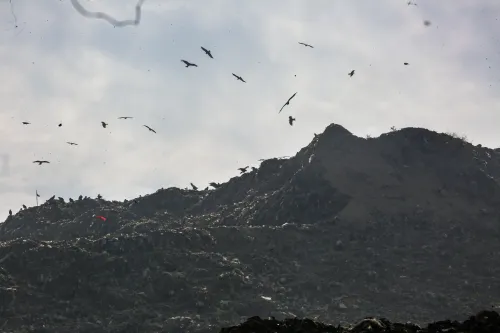
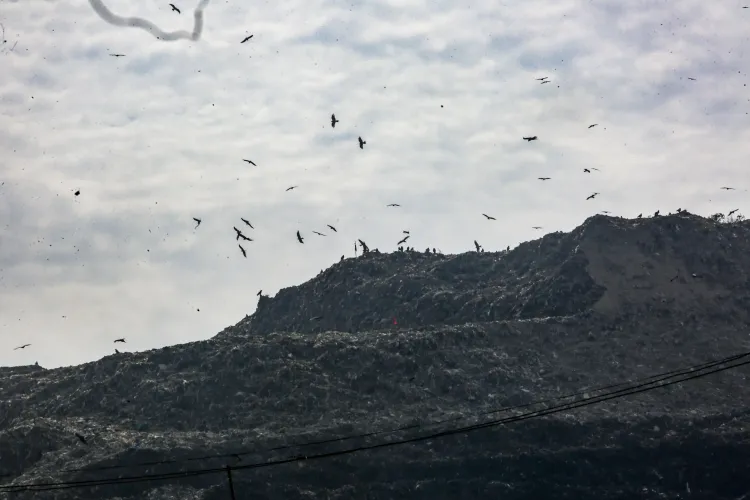
New Delhi, Jan 1 (NationPress) The Central Pollution Control Board (CPCB) has informed the National Green Tribunal (NGT) that Delhi produces 11,852 tonnes of municipal solid waste each day but is only able to process 7,611 tonnes. This creates a significant gap of 4,241 tonnes that is ultimately sent to landfills in Bhalswa and Ghazipur.
This data was disclosed in an affidavit submitted by the CPCB in a suo motu case initiated by the green tribunal following a media report titled, “We can smell it even inside our homes: Southeast Delhi localities choke on garbage,” which emphasized the severe waste issue and unpleasant odors in neighborhoods such as Shaheen Bagh and Sarita Vihar.
According to the annual report provided by the Delhi Pollution Control Committee (DPCC) for 2024–25, the processing capability in Delhi is 8,173 tonnes per day, while the actual processing is 7,611 tonnes per day, indicating only 64.2 percent efficiency.
“Due to the discrepancy between waste generation and processing, approximately 4,241 TPD (or 35.8 percent) of waste is disposed of at dumpsites in Bhalswa and Ghazipur,” the CPCB reported.
The CPCB has proposed an increase of an additional 7,750 tonnes per day of processing capacity to address this gap during the period of 2025–2028 to fulfill the future requirements of the national capital.
As per the Solid Waste Management Rules, 2016, the CPCB informed the NGT that the primary responsibilities for collecting, segregating, transporting, and processing municipal waste rest with the Municipal Corporation of Delhi (MCD), while enforcement of the rules is the duty of the DPCC.
“According to Rule 15 of these regulations, the local authorities, namely the Municipal Corporation of Delhi, are charged with the essential tasks of collecting, segregating, transporting, storing, and treating municipal solid waste, as well as maintaining and operating processing sites and dumpsites,” the affidavit stated.
The CPCB pointed out that on February 16, 2023, the NGT established a Solid Waste Monitoring Committee for Delhi, chaired by the Lieutenant Governor, to oversee all aspects of solid waste management, including new processing facilities and the remediation of legacy dumpsites.
The NGT recognized this issue in July this year after a media report indicated that garbage had not been collected for several days in Southeast Delhi, leading to “unpleasant odors and health issues.”
Noting that this situation seemed to invoke provisions of the Environment (Protection) Act, 1986, the Solid Waste Management Rules, 2016, and the Air (Prevention and Control of Pollution) Act, 1981, the green tribunal issued notices to the CPCB, DPCC, MCD, and the District Magistrate of Southeast Delhi.
Point of View
I believe that the alarming statistics presented by the CPCB highlight a critical challenge for Delhi. The persistent waste management issues not only affect the environment but also impact the health and quality of life for residents. It’s imperative for authorities to take immediate and effective action to address this pressing concern.
NationPress
30 Sept 2026
Frequently Asked Questions
What is the daily waste generation in Delhi?
Delhi generates approximately 11,852 tonnes of municipal solid waste every day.
How much waste is actually processed?
Currently, only about 7,611 tonnes of waste is processed daily.
What happens to the unprocessed waste?
The unprocessed waste, approximately 4,241 tonnes, is dumped at landfills in Bhalswa and Ghazipur.
What measures are being proposed to improve waste processing?
The CPCB plans to increase processing capacity by an additional 7,750 tonnes per day between 2025 and 2028.
Who is responsible for waste management in Delhi?
The Municipal Corporation of Delhi (MCD) is primarily responsible for waste collection and management, while the Delhi Pollution Control Committee (DPCC) oversees enforcement.