Is the Timeline for Electoral Roll Revision in West Bengal Unreasonable?
Synopsis
Trinamool Congress leader Derek O'Brien has challenged the Election Commission of India's practices regarding the electoral roll revision in West Bengal. He argues the timeline is unreasonable and raises concerns over procedural irregularities. This legal move could significantly impact the voting rights of many citizens.
Key Takeaways
Derek O’Brien challenges the ECI in the Supreme Court.
Allegations of procedural irregularities are serious.
A significant number of voters have been removed without notice.
Concerns over informal communication methods impacting electoral fairness.
Potential implications for the democratic process in West Bengal.
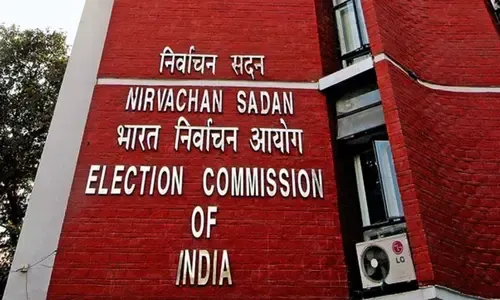
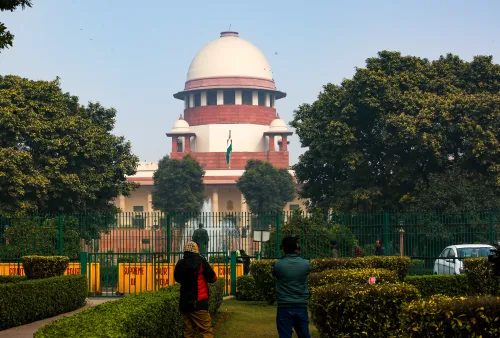
New Delhi, Jan 6 (NationPress) Trinamool Congress leader Derek O’Brien has approached the Supreme Court requesting immediate directives against the Election Commission of India (ECI). He alleges significant procedural irregularities, arbitrariness, and a “wholly unreasonable” timeline concerning the ongoing Special Intensive Revision (SIR) of electoral rolls in West Bengal.
In an interlocutory application submitted to the top court, O’Brien is seeking an extension of the January 15 deadline for filing claims and objections, arguing that the draft electoral roll published on December 16, 2025, has “substantially aggravated the difficulties” faced by eligible and bona fide electors.
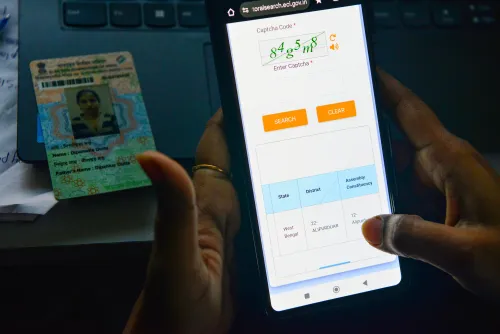
The application claims that nearly 58.2 lakh names were removed from the draft roll without notice or personal hearings, violating statutory procedures and the poll body’s own standard operating protocols.
It further states that there has been a sharp decline in the electorate, from 7.66 crore voters to 7.08 crore, due to “backend, centralised, and software-driven deletions”, with minimal involvement of Electoral Registration Officers (EROs).
O’Brien raised serious concerns regarding the issuance of more than 50 instructions via informal channels like WhatsApp and verbal directions, alleging that the ECI has effectively replaced formal statutory communication with these informal messages. “The ECI has, in effect, substituted its formal system of statutory communication with what is being informally described at the field level as a ‘WhatsApp Commission’,” the application asserts.
It further contends that such practices lack legal legitimacy, authenticity, and an audit trail, undermining accountability in a process that significantly impacts the right to vote.
“The ECI cannot act arbitrarily or capriciously, nor can it replace legally prescribed procedures with ad hoc or informal mechanisms,” the plea emphasizes, arguing that directions to field officials through messaging platforms have led to administrative chaos and a loss of procedural fairness.
O’Brien also criticized the introduction of a new category called “logical discrepancies”, under which over 1.3 crore voters are being flagged for hearings without any written orders, published guidelines, or statutory basis.
The application alleges that these discrepancies are being generated through undisclosed algorithms, disproportionately impacting women voters and minorities due to spelling variations and post-marriage surname changes.
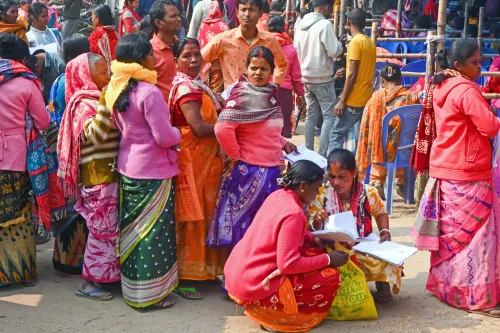
Highlighting the challenges faced by senior citizens, persons with disabilities, and migrant workers, the plea asserts that the insistence on physical hearings imposes an undue burden on vulnerable groups. “Requiring mandatory physical hearings in such instances risks disenfranchising the very citizens most reliant on constitutional protections,” it states.
The application calls for an extension of the January 15 deadline for filing claims and objections, a halt to the issuance of instructions via informal channels, the withdrawal of the “logical discrepancy” category, the restoration of the exclusive statutory role of EROs, and the postponement of the publication of the final electoral roll, which is scheduled for February 14.
The plea warns that finalizing the electoral roll under the current conditions would “sacrifice legality, accuracy, and fairness at the altar of speed” and lead to the “irreversible exclusion of genuine electors without effective remedy.”
Point of View
The issues raised by Derek O’Brien reflect crucial concerns about the electoral process in India. The integrity of the electoral roll is fundamental to democracy, and any procedural irregularities must be addressed to ensure fair representation. The ongoing legal proceedings will be closely watched, as they may set precedents for future electoral practices.
NationPress
30 Sept 2026
Frequently Asked Questions
What is the main issue with the electoral roll revision in West Bengal?
The main issue revolves around allegations of procedural irregularities and an unreasonable timeline set by the Election Commission of India.
Why is Derek O'Brien seeking an extension of the deadline?
He argues that the current deadline of January 15 is insufficient and has exacerbated difficulties for eligible voters.
What are 'logical discrepancies'?
'Logical discrepancies' refer to a new category under which over 1.3 crore voters are flagged for hearings without clear guidelines or basis.
How have procedural changes affected voters?
Changes such as the reliance on informal communication methods have led to confusion and may disenfranchise vulnerable groups.
What actions is O'Brien advocating for?
He is calling for an extension of the deadline, a halt to informal instructions, and the restoration of formal procedures.