Will the SC Extend the January 15 Deadline for West Bengal Electoral Roll Revision?
Synopsis
In a significant legal development, the Supreme Court has sought the Election Commission's response to a plea from Trinamool Congress MPs for an extension of the January 15 deadline for electoral roll claims in West Bengal. The case highlights serious concerns over procedural irregularities and the rights of eligible voters.
Key Takeaways
Supreme Court seeks ECI’s response on electoral roll deadline extension.
Trinamool Congress MPs allege procedural irregularities.
Request made for a safe environment for eligible voters.
Concerns about reliance on informal communication methods.
Significant implications for electoral integrity in West Bengal .
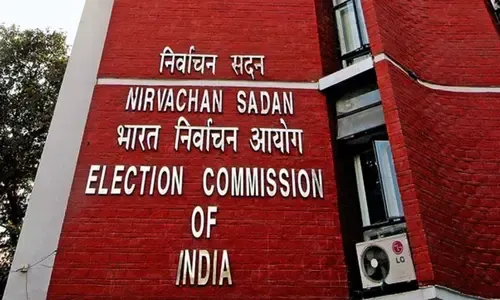
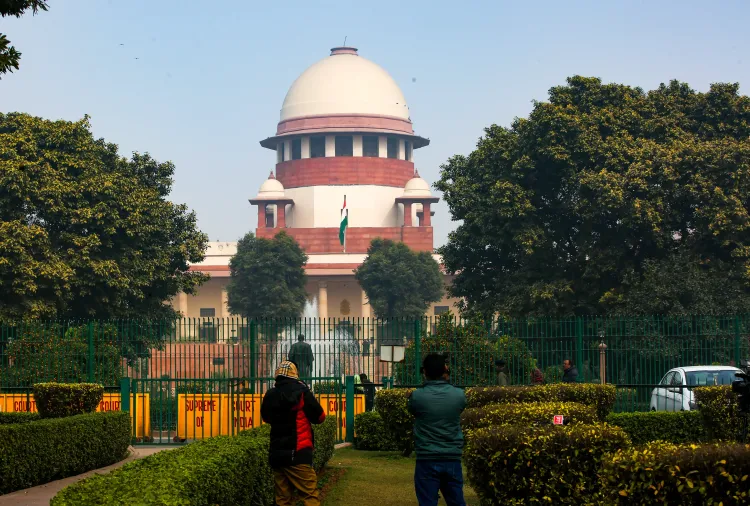
New Delhi, Jan 12 (NationPress) The Supreme Court has requested a response from the Election Commission of India (ECI) regarding petitions from Trinamool Congress MPs who are asking for an extension of the January 15 deadline for submitting claims and objections during the ongoing Special Intensive Revision (SIR) of electoral rolls in West Bengal.
A Bench led by Chief Justice of India (CJI) Surya Kant and Justice Joymalya Bagchi was addressing the applications put forth by MPs Derek O’Brien and Dola Sen, who expressed concerns about alleged procedural irregularities in the SIR process conducted by the poll body in the Trinamool-governed state.
During the proceedings, the counsel for the ECI requested a two-week period to prepare a counter-affidavit.
Nevertheless, the Supreme Court granted the ECI one week for its response and directed it to submit a unified reply concerning both applications filed by the Trinamool MPs.
The Bench presided over by CJI Kant also scheduled the matter for further hearing next Monday.
Previously, Trinamool leader Derek O’Brien approached the apex court requesting immediate orders against the ECI, alleging significant procedural irregularities, arbitrariness, and an “entirely unreasonable” timeline in the ongoing SIR of electoral rolls in West Bengal.
In his interlocutory application, he sought a delay in the January 15 deadline for claims and objections, arguing that the draft electoral roll published on December 16, 2025, had severely complicated issues for eligible and genuine voters.
The application stated that approximately 58.2 lakh names were removed from the draft roll without prior notice or personal hearings, violating statutory procedures and the ECI's own Standard Operating Procedures.
It further claimed that there has been a precipitous drop in the electorate from 7.66 crore to 7.08 crore due to “backend, centralized, and software-driven deletions” without the adequate engagement of Electoral Registration Officers (EROs).
O’Brien raised serious concerns regarding the issuance of over 50 instructions via informal mediums such as WhatsApp messages and verbal directives, asserting that the ECI has effectively replaced its formal communication system with these informal channels.
The application stated, “The ECI has, in effect, swapped its formal system of statutory communication for what is informally referred to at the field level as a ‘WhatsApp Commission,’ where significant instructions, warnings, and repercussions for alleged non-compliance are communicated solely via messaging platforms.”
It further contended that these practices are “lacking in legal validity, authenticity, or any audit trail” and hinder accountability within a process that directly affects the right to vote.
“The ECI cannot act in a whimsical manner or substitute legally mandated procedures with makeshift or informal practices,” the plea asserted, indicating that directives to field officers via messaging platforms have resulted in administrative chaos and a decline in procedural fairness.
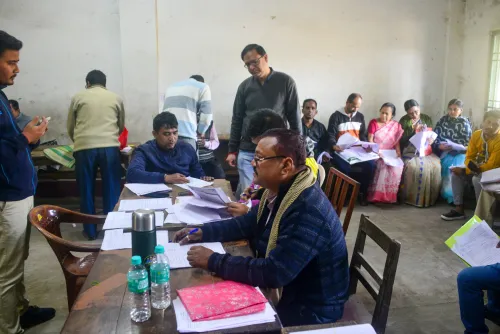
O’Brien also criticized the introduction of an extra-statutory category labeled “logical discrepancies,” under which more than 1.3 crore voters are reportedly being flagged for hearings without any documented order, published guideline, or statutory basis.
The application alleged that such discrepancies arise from undisclosed algorithms, disproportionately impacting women voters and minorities due to variations in spelling and surname changes after marriage.
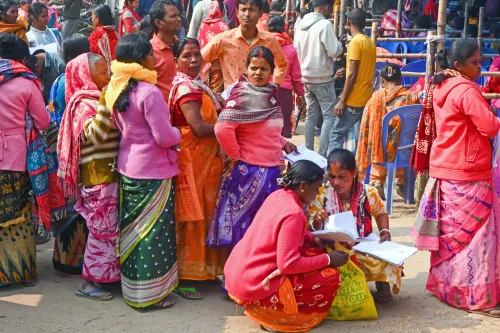
Highlighting the challenges faced by seniors, individuals with disabilities, and migrant workers, the plea stated that the insistence on physical hearings imposes an undue burden on these vulnerable populations.
“Requiring mandatory physical hearings in such cases jeopardizes the enfranchisement of those citizens most reliant on constitutional protections,” it concluded.
The application requested an extension of the January 15 deadline for filing claims and objections, a halt on issuing instructions through informal channels, the withdrawal of the “logical discrepancy” category, the restoration of the exclusive statutory role of EROs, and the postponement of the final electoral roll publication scheduled for February 14.
The plea warned that finalizing the electoral roll under the current conditions would “compromise legality, accuracy, and fairness for the sake of expedience” and could lead to the “irreversible exclusion of genuine electors without recourse.”
Point of View
The ongoing legal discourse surrounding the electoral roll revision in West Bengal raises vital questions about the integrity of the electoral process. The Supreme Court's inquiry reflects a commitment to ensuring that all eligible voters have a fair opportunity to participate in the democratic process. Upholding transparency and accountability in electoral procedures is essential for maintaining public trust in democratic institutions.
NationPress
14 Oct 2026
Frequently Asked Questions
What is the Supreme Court's role in electoral roll revisions?
The Supreme Court can intervene in electoral matters to ensure that the processes adhere to legal standards and protect voter rights.
Why are Trinamool Congress MPs seeking an extension for the deadline?
They allege that the current timeline for filing claims and objections is unreasonable and may disenfranchise eligible voters.
What concerns have been raised regarding the electoral roll revision?
Concerns include procedural irregularities, arbitrary deletions of voter names, and reliance on informal communication methods by the Election Commission.
How many voters are reportedly affected by the deletion of names?
Approximately 58.2 lakh names have been removed without proper procedures, according to the Trinamool Congress MPs.
What risks are associated with requiring physical hearings?
Mandatory physical hearings may disproportionately affect vulnerable populations, including seniors and disabled individuals, risking their enfranchisement.