What are the latest updates on Uttar Pradesh's voter rolls?
Synopsis
Uttar Pradesh's electoral revision reveals critical data: over 12.55 crore eligible voters and the removal of nearly 2.89 crore names. Discover the implications of these changes and the timeline for the final publication of the voters’ list.
Key Takeaways
Over 12.55 crore eligible voters in Uttar Pradesh.
Approximately 2.89 crore names removed during revision.
Deadline for claims and objections is February 6, 2026 .
Final publication of the voters’ list on March 6, 2026 .
Voters need to fill Form 6 if names are missing.
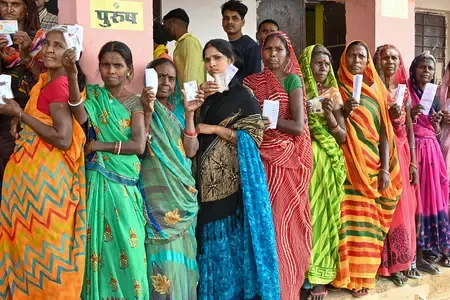
Lucknow, Jan 6 (NationPress) The Election Commission has released the draft electoral rolls for Uttar Pradesh as part of the Special Intensive Revision initiative, revealing that the state has over 12.55 crore eligible voters. In this current revision, approximately 2.89 crore names have been removed.
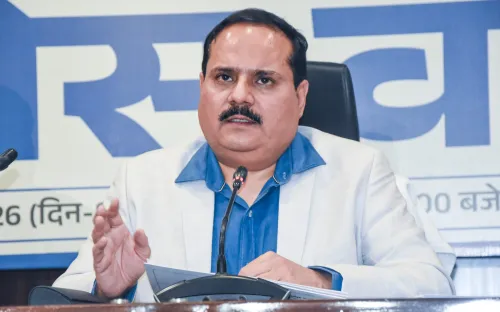
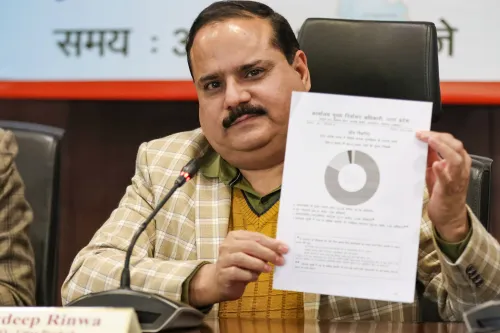
According to Navdeep Rinwa, the Chief Electoral Officer of Uttar Pradesh, around 2.17 crore voters were identified as either missing or having changed their registered addresses during this revision.
Additionally, it was noted that 25.47 lakh electorates were found registered at multiple locations.
The CEO urged voters whose names are absent from the draft list to complete Form 6, stating that claims and objections could be submitted until February 6.
He also mentioned that 46.23 lakh voters have been recorded as deceased since the last exercise.
Furthermore, 18.70 percent of voter signatures were not received during the Special Intensive Revision.
Earlier, the Election Commission of India announced revised timelines for the ongoing Special Intensive Revision of electoral rolls in Uttar Pradesh, with the qualifying date set as January 1, 2026. The final voters’ list is now expected to be published on March 6, 2026.
In a social media statement, the CEO confirmed that the draft electoral roll would be published on January 6.
The timeline for submitting claims and objections is fixed from January 6 to February 6, 2026. The notice phase, decision on counting forms, and handling of claims and objections will take place between January 6 and February 27, 2026, with the final publication of the electoral roll on March 6, 2026.
On December 12, the Election Commission of India appointed Special Roll Observers for intensive electoral roll revision in Uttar Pradesh and several other states.
The Special Roll Observers were tasked with overseeing the Special Intensive Revision of electoral rolls in West Bengal, Tamil Nadu, Uttar Pradesh, Gujarat, Kerala, Madhya Pradesh, Chhattisgarh, and Rajasthan.
Point of View
It is crucial to recognize the significance of the Election Commission's latest findings in Uttar Pradesh. The updates on voter registration are not just numbers; they reflect the democratic engagement of millions. The transparency in the electoral process is vital for the integrity of our democracy, and it is imperative that citizens actively participate in ensuring their rightful place in the electoral rolls.
NationPress
27 Sept 2026
Frequently Asked Questions
How can voters check if their names are included in the electoral rolls?
Voters can check their names in the draft electoral rolls published by the Election Commission and can fill out Form 6 if their names are missing.
What is the deadline for submitting claims and objections?
The deadline for submitting claims and objections is February 6, 2026.
What happens during the Special Intensive Revision?
During the Special Intensive Revision, the electoral rolls are updated, and efforts are made to identify missing voters and remove duplicate registrations.
When will the final electoral rolls be published?
The final electoral rolls will be published on March 6, 2026.
What should voters do if they are registered at multiple addresses?
Voters registered at multiple addresses should ensure they update their information to reflect their current residence.