FairPoint: Did Congress Cross a Parliamentary Line?
Synopsis
On February 4, a shocking incident unfolded in the Indian Parliament, raising serious questions about the conduct of Congress MPs and the implications for democratic norms. With the Speaker advising the Prime Minister to stay away due to security concerns, the episode calls for urgent reflection on the state of political discourse in India.
Key Takeaways
The February 4 incident marks a troubling breach in democratic norms.
Speaker Om Birla's warnings indicate serious security concerns.
Public perception is influenced by video evidence and official statements.
Congress must introspect on its conduct and commitment to constitutional values.
The normalization of disruptive tactics poses risks to parliamentary integrity.
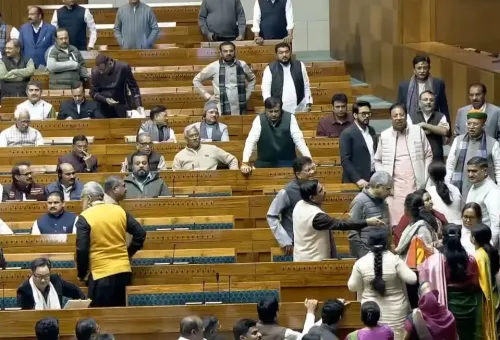
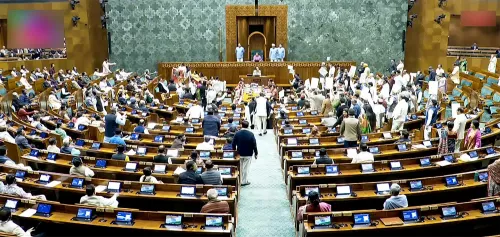
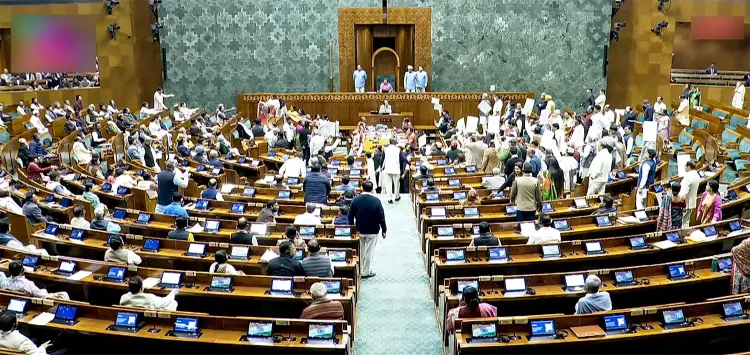
New Delhi, Feb 8 (NationPress) The Parliament, revered as a sacred institution in Indian democracy, is intended to resolve political disputes through debate rather than coercion. However, a recent incident where the Speaker of the Lok Sabha suggested that a sitting Prime Minister refrain from attending due to security threats posed by fellow MPs indicates a systemic failure.
The events of February 4 represent more than just a parliamentary disturbance; they signal a troubling breach in democratic principles that warrant serious introspection, particularly from the Congress party.
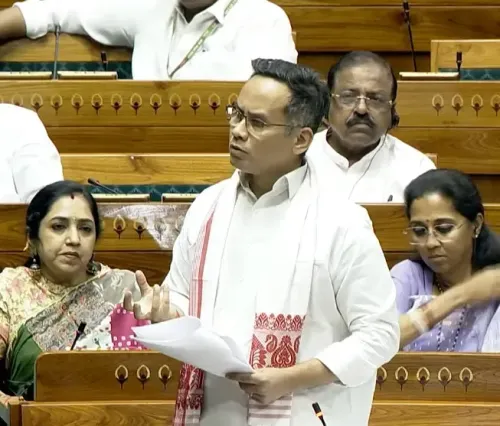
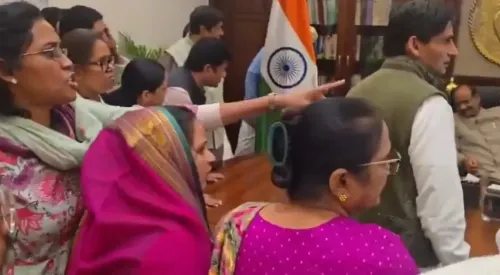
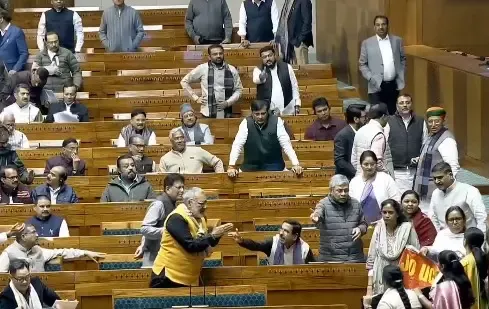
Despite Congress leader Priyanka Gandhi Vadra labeling the accusations of a February 4 attack on Prime Minister Narendra Modi as “blatant falsehoods,” the footage from the Lok Sabha and the pronouncement by Speaker Om Birla paint a concerning picture.
Together, these elements raise profound questions not only about a protest that spiraled out of control but also about the political mindset currently shaping Congress's leadership.
The first thought that crosses the minds of concerned citizens wishing for Congress to challenge the BJP's dominance and pose pertinent questions is: What has become of Congress? This is not merely a political struggle or a clash of ideologies. It is an incident so unprecedented that it will be etched in the annals of parliamentary history as a significant low.
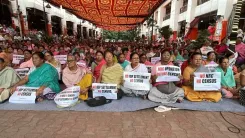
Priyanka Gandhi’s defense was succinct and unequivocal. She asserted that the narrative of an attack on the Prime Minister was entirely fabricated and insisted that Congress MPs were merely engaged in protests. She further accused the Prime Minister of “hiding behind the Speaker” to avoid scrutiny. Other opposition leaders echoed this sentiment, framing the situation as legitimate dissent, which they believe was unfairly characterized as violence.
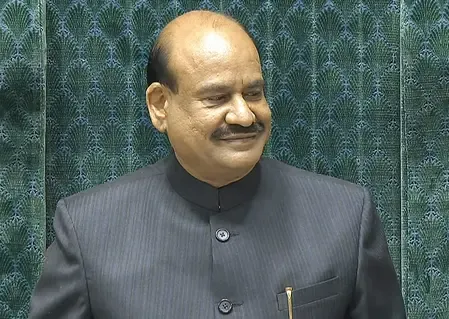
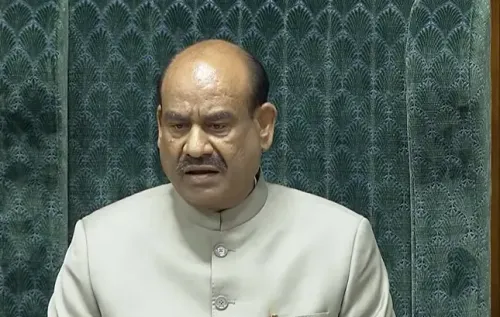
Typically, such justifications might have garnered some sympathy; however, this time, they have not. The rationale is straightforward: the public has witnessed the videos and, crucially, has listened to the Speaker of the Lok Sabha himself. Om Birla articulated that he had personally advised the Prime Minister against entering the House on February 4 to respond to the Motion of Thanks. His reasoning was stark—he claimed to possess credible information indicating that Congress MPs intended to encircle the Prime Minister’s seat and potentially instigate an unforeseen incident.
When the constitutional leader of the House employs such language, it transcends partisan interpretation. Birla went further, labeling the actions of the protesting MPs as a “black spot” in Parliament's history. Such a description should have triggered deep reflection within Congress; instead, the party opted for denial.
While criticism of the government, even vehement criticism, is not just acceptable in a democracy—it is vital—when protests devolve into physical intimidation or attempts to disrupt the functioning of the House, they cease to be democratic dissent.
Parliament operates under a framework of rules, traditions, and codes of conduct specifically because passions can escalate. Lawmakers are expected to uphold these standards, not push the boundaries of how far they can be tested.
Rahul Gandhi has often been seen theatrically carrying a red-bound copy of the Constitution, presenting himself as its chief guardian. If constitutional values truly underpin his politics, unsettling questions arise. Why was such a protest strategy allowed on February 4? Why was the potential for chaos—indeed, danger—allowed to loom over the House?
Social media, as expected, has been awash with speculation and unverified claims regarding the nature of the information received by the Speaker. Responsible discourse must distinguish fact from conjecture. What can be confirmed is that several senior BJP leaders, including Union ministers, have asserted that there was a concerted attempt to physically obstruct the Prime Minister from addressing the House.
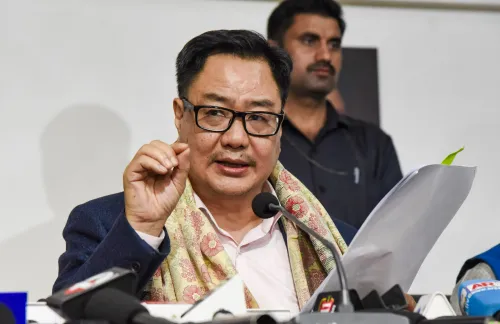
Union Minister Giriraj Singh alleged that opposition members aimed to target treasury bench MPs, while Coal and Mines Minister G. Kishan Reddy directly accused Rahul Gandhi of orchestrating the disruption.
In a post on X, Reddy claimed that Congress leaders intended to halt the Prime Minister “at any cost” and suggested that women MPs were utilized as a shield to carry out their plan.
The Congress has dismissed these allegations; however, the damage has been done—not only due to the statements from BJP leaders but also because the Speaker's intervention adds institutional credibility to concerns regarding safety and order.
This incident fits into a broader pattern. Over the last decade, Rahul Gandhi has repeatedly promised “significant exposes” against the Modi government. Most of these have failed to yield tangible results. Accusations are made with flair, headlines are generated, but there is a lack of follow-through. The outcome is a spectacular politics—what could be termed a shoot-and-scoot approach—that briefly excites supporters but ultimately undermines credibility.
In a flourishing democracy, lawmakers are expected to engage in heated yet responsible debate. When those charged with crafting laws are perceived as violating the very norms that govern Parliament, it sends a profoundly damaging message to citizens. If rules do not bind elected representatives, why should they bind anyone else?
The occurrences in the Lok Sabha on February 4 were not merely a fleeting lapse. They illustrate a deeper malaise in Indian politics: the increasing normalization of ‘personalized’ disruption as a political strategy. Once norms are disregarded, reinstating them becomes remarkably challenging. Today it may be an endeavor to encircle the Prime Minister’s chair; tomorrow it could escalate to something far worse.
Parliament deserves a higher standard from all parties. The Congress, in particular, must consider whether such actions are in line with its professed commitment to constitutionalism.
Dissent is the lifeblood of democracy—but when dissent forsakes discipline, it culminates in a shocking situation like February 4—a significant blow to democracy. Rahul Gandhi ought to contemplate this reality, though he may or may not.
(Deepika Bhan can be contacted at deepika.b@ians.in)
Point of View
My commitment is to provide an unbiased perspective while staying aligned with the nation's democratic values. The recent incident in Parliament reflects a concerning trend that must be addressed to maintain the integrity of our democratic process.
NationPress
2 Sept 2026
Frequently Asked Questions
What happened in the Lok Sabha on February 4?
On February 4, the Speaker advised Prime Minister Modi to stay away from the House due to security concerns regarding the conduct of Congress MPs, leading to widespread speculation about an attempted disruption.
What was the Congress party's response?
Congress leader Priyanka Gandhi Vadra dismissed allegations of an attack as false, asserting that the MPs were merely protesting.
What did the Speaker say regarding the incident?
Speaker Om Birla stated he had credible information that Congress MPs planned to encircle the Prime Minister, calling their actions a 'black spot' on Parliament's history.
How does this incident impact democracy?
The incident raises concerns about the normalization of aggressive political tactics and the importance of maintaining decorum in parliamentary proceedings.
What should Congress reflect on after this event?
Congress must consider whether their actions align with the principles of constitutionalism and whether they are effectively holding the government accountable.