DRI busts Bangladesh-Kolkata-Hyderabad gold smuggling route near Vijayawada, 5 arrested

Synopsis
The DRI has cracked a cross-border gold pipeline running from Bangladesh through Kolkata to Hyderabad — twice in the same month. The latest bust near Vijayawada netted ₹5.84 crore in gold and foreign currency and five arrests; combined with an earlier ₹8.98 crore seizure near Visakhapatnam, the two October operations have stripped nearly ₹14.82 crore from one of India's more active smuggling corridors.
Key Takeaways
DRI seized 3,147.1 grams of gold , USD 60,000 , and Euro 21,500 — valued at ₹5.84 crore — near Vijayawada, Andhra Pradesh on 21 October 2026 .
Five persons were arrested; all have been remanded to judicial custody .
The gold was smuggled from Bangladesh into India and transported via Kolkata to Hyderabad .
Foreign currency worth USD 60,000 and Euro 21,500 was found hidden in a secret cavity in an SUV; gold bars were concealed in waist pouches on a bus.
This is the second DRI operation in Andhra Pradesh in October 2026 — an earlier bust near Visakhapatnam on 8–9 October yielded ₹8.98 crore in gold and two arrests .
The two October operations combined account for nearly ₹14.82 crore in seized assets.
The Directorate of Revenue Intelligence (DRI) has dismantled a cross-border gold smuggling network operating along the Bangladesh–Kolkata–Hyderabad corridor, seizing foreign-origin gold and foreign currency valued at approximately ₹5.84 crore near Vijayawada in Andhra Pradesh. The operation, announced on Wednesday, 21 October 2026, resulted in the arrest of five individuals and marks the second major DRI action in Andhra Pradesh this month.
How the Operation Unfolded
Officials from the DRI Hyderabad Unit and the Vijayawada Regional Unit conducted a coordinated interception based on intelligence inputs about the smuggling network. In the first leg of the operation, agents stopped a four-wheeler on the outskirts of Vijayawada and discovered USD 60,000 and Euro 21,500 concealed inside a secret cavity built into the SUV.
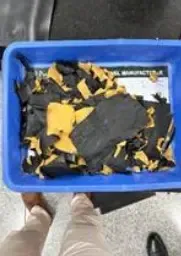
The two occupants of the vehicle reportedly admitted to having delivered gold and acknowledged that the recovered foreign currency represented part of the sale proceeds from the smuggled consignment. Acting on this disclosure, officials intercepted a bus bound for Hyderabad and arrested three additional individuals who were carrying three gold bars weighing approximately 3.1 kilograms, concealed in pouches strapped around their waists.
What Was Seized
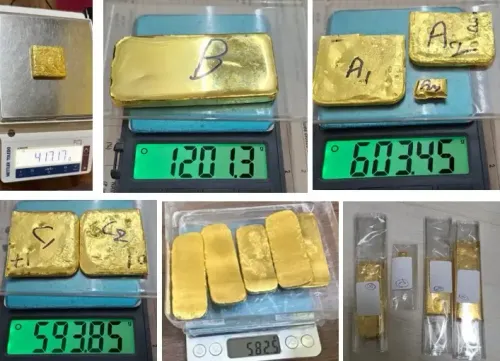
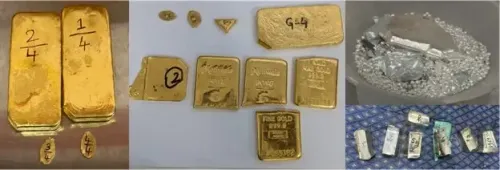
In total, the DRI recovered 3,147.1 grams of foreign-origin gold, USD 60,000, and Euro 21,500 — with the combined haul valued at roughly ₹5.84 crore. All five accused, allegedly involved in procuring and transporting the contraband, were produced before a court, which remanded them to judicial custody. The DRI confirmed that further investigation is underway.
The Smuggling Route
According to the DRI, the gold was being smuggled from Bangladesh into India through the India-Bangladesh border and transported onward through Kolkata to Hyderabad. The route exploits the overland connectivity between the eastern border and southern metros, with Andhra Pradesh serving as a transit corridor. Notably, law enforcement sources indicate that foreign-origin gold is increasingly being routed through this eastern corridor to avoid tighter surveillance at traditional western entry points.
Second DRI Strike This Month in Andhra Pradesh
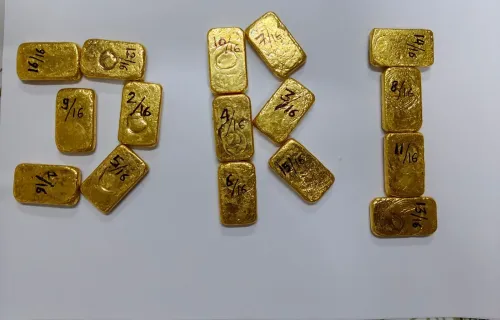
This latest seizure follows an earlier DRI operation in Andhra Pradesh earlier this month. On the night of 8–9 October, DRI officials pursued and searched a car travelling from Kolkata to Hyderabad near Visakhapatnam, seizing 5,832.90 grams of gold worth ₹8.98 crore hidden under a car seat. Two persons were arrested in that case and subsequently remanded to judicial custody. In both operations, the recovered gold was seized under the provisions of the Customs Act, 1962.
Enforcement Significance
The two operations together account for nearly 9 kilograms of smuggled gold and over ₹14.82 crore in seized assets within a single month in one state. Critics argue that the recurrence of large-scale hauls along the same corridor suggests an organised, well-funded network that warrants sustained multi-agency monitoring beyond individual seizures. The DRI has said investigations are continuing, leaving open the question of whether the broader supply chain and financiers have been identified.
Point of View
Both tracing the same Bangladesh–Kolkata–Hyderabad pipeline, point to a structured smuggling operation rather than opportunistic trafficking. The DRI's field interceptions are effective, but they raise a harder question: if the same corridor is being used repeatedly, is the enforcement response disrupting the network or merely taxing it? With financiers and kingpins rarely named in such releases, each bust risks being a cost of doing business for the syndicate rather than a decisive blow. The sustained use of Andhra Pradesh as a transit state also signals that smuggling networks are deliberately routing contraband through lower-vigilance inland highways rather than traditional ports of entry — a pattern that demands a coordinated, intelligence-led response rather than reactive interceptions.
NationPress
21 Oct 2026
Frequently Asked Questions
What did the DRI seize near Vijayawada in October 2026?
The DRI seized 3,147.1 grams of foreign-origin gold, USD 60,000, and Euro 21,500 — all valued at approximately ₹5.84 crore — near Vijayawada, Andhra Pradesh, on 21 October 2026. Five persons were arrested in the operation.
What is the Bangladesh-Kolkata-Hyderabad gold smuggling route?
It is a cross-border smuggling corridor through which gold is illegally brought into India from Bangladesh, transported overland to Kolkata, and then carried south toward Hyderabad. According to the DRI, the route exploits limited surveillance on inland highways passing through Andhra Pradesh.
How was the gold concealed during transport?
In this operation, foreign currency was hidden inside a secret cavity built into an SUV, while three gold bars weighing about 3.1 kilograms were concealed in pouches strapped around the waists of individuals travelling on a bus headed to Hyderabad.
Is this the first such DRI operation in Andhra Pradesh recently?
No — this is the second DRI operation in Andhra Pradesh in October 2026 alone. On the night of 8–9 October, the DRI seized 5,832.90 grams of gold worth ₹8.98 crore from a car travelling from Kolkata to Hyderabad near Visakhapatnam, arresting two persons in that case.
What action was taken against those arrested?
All five accused from the Vijayawada operation were produced before a court, which remanded them to judicial custody. The DRI has stated that further investigation is underway to trace the broader network. Seized gold and currency were confiscated under the provisions of the Customs Act, 1962.