Army Chief Dwivedi pushes India's 'Smart Power' amid global volatility
Synopsis
India's Army Chief has put a name to the country's strategic challenge: the same forces — trade, supply chains, semiconductors — that were meant to bind nations together are now weapons of coercion. General Dwivedi's call to expand India's 'Smart Power' is a frank admission that hard power is back, and that India's response must be smarter, not just stronger.
Key Takeaways
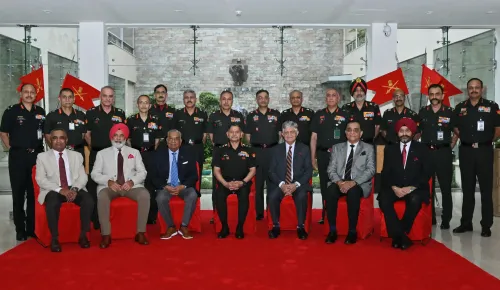
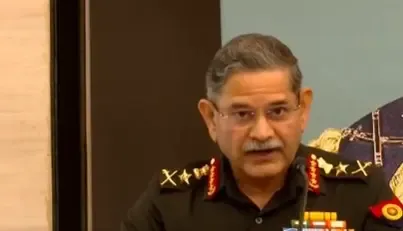
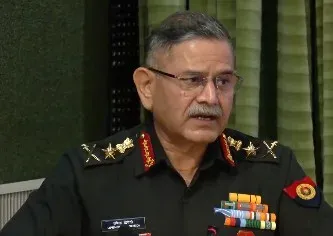
Army Chief General Upendra Dwivedi addressed a national seminar on 'Security to Prosperity: Smart Power for Sustained National Growth' in New Delhi on Tuesday .
He cited the Strait of Hormuz and semiconductor supply chains as live examples of economic tools being weaponised for strategic leverage.
General Dwivedi called for the traditional DIME (Diplomatic, Informational, Military, Economic) framework to be expanded with technology and a 'whole of nation' approach.
He described security as 'the precondition for prosperity' , reframing defence spending as an enabler rather than a cost.
The Army Chief warned that forces of trade and connectivity, once seen as conflict-preventers, have become 'instruments of coercion' in the current global order.
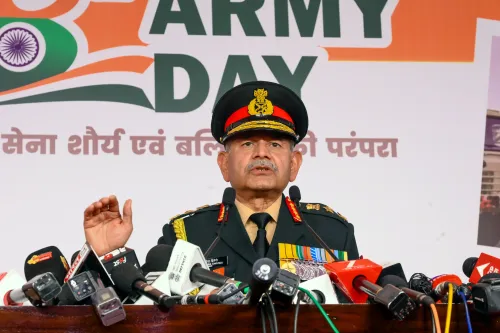
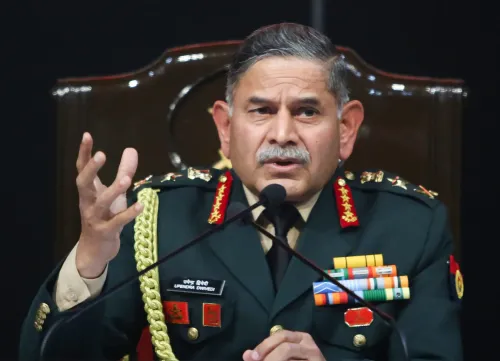
Indian Army Chief General Upendra Dwivedi on Tuesday led a high-level national seminar in New Delhi, calling for India to integrate military, diplomatic, economic and technological instruments into a unified 'Smart Power' framework to navigate an increasingly fractured global order. The seminar, titled 'Security to Prosperity: Smart Power for Sustained National Growth,' brought together strategic thinkers to examine how India can convert national strength into geopolitical influence.
Key Developments at the Seminar
General Dwivedi opened by pointing to flashpoints reshaping global trade and security. 'Semiconductors and their selective availability have become tools of strategic leverage. The Strait of Hormuz has become a zone of active contestation,' he said. The remarks signal a sharpened awareness within the Indian Army of how economic instruments are being weaponised by rival powers.
He stressed that the boundary between security and prosperity has effectively dissolved, arguing that the vision of collective global progress has been overtaken by narrower national interests. In this environment, he said, India must urgently expand its 'Smart Power' — the capacity to deploy the right instrument at the right intensity toward the right strategic end.
Rethinking the DIME Framework
General Dwivedi called for the traditional DIME framework — covering Diplomatic, Informational, Military and Economic elements — to be supplemented with technology and a 'whole of nation' approach. He cited expert definitions of Smart Power as 'the strategic intelligence to know which instrument to deploy at what intensity and towards what end.'
'For India, it means using national strength with strategic wisdom to secure peace, accelerate growth and shape the global environment in our favour,' he said. This framing positions Smart Power not as a soft alternative to hard power, but as its intelligent orchestration alongside it.
Hard Power Returns to Centre Stage
The Army Chief offered a pointed assessment of the post-Cold War liberal order. He argued that the 21st century began with confidence that trade, supply chains and digital connectivity would make nations too interdependent for large-scale conflict — but that this assumption has been proven wrong.
'Paradoxically, the same forces that were expected to bind nations together have progressively become instruments of coercion,' he said. Contemporary conflicts, he noted, now impose sustained demands not just on armed forces but on industrial production, research systems and governance structures — a direct challenge to India's current state capacity.
Security as a Precondition for Prosperity
In one of his sharpest formulations of the day, General Dwivedi reframed the conventional relationship between security spending and economic growth. 'Security is no longer a cause that prosperity must bear. It is the precondition for prosperity to commence its progressive journey,' he said, describing the umbrella of hard power as the new normal in global affairs.
This comes amid India's ongoing efforts to modernise its defence industrial base, reduce import dependence and position itself as a net security provider in the Indo-Pacific. The seminar's conclusions are expected to feed into ongoing doctrinal and strategic planning within the Army.
Point of View
Semiconductors and supply chains are now coercive instruments — not just economic ones — marks a doctrinal shift worth tracking. The call to go beyond DIME is not new in strategic literature, but hearing it from the Army Chief in a formal setting suggests it is moving from think-tank discussion to institutional planning. The harder question, unaddressed at the seminar, is whether India's governance structures and industrial base can actually operationalise a 'whole of nation' Smart Power approach — or whether this remains aspirational framing in a country where civil-military coordination has historically been uneven.
NationPress
3 Oct 2026
Frequently Asked Questions
What is 'Smart Power' as described by Army Chief General Dwivedi?
Smart Power, as described by General Dwivedi, is the strategic intelligence to know which instrument — military, diplomatic, economic or technological — to deploy at what intensity and toward what end. For India, he said, it means using national strength with strategic wisdom to secure peace, accelerate growth and shape the global environment in India's favour.
Why did General Dwivedi refer to the Strait of Hormuz at the seminar?
General Dwivedi cited the Strait of Hormuz as a live example of how critical trade and energy routes have become zones of active contestation. It illustrated his broader point that economic and geographic chokepoints are now instruments of strategic leverage, not merely commercial arteries.
What is the DIME framework and why does the Army want to expand it?
DIME stands for Diplomatic, Informational, Military and Economic elements — a traditional framework for national power. General Dwivedi argued it must now be supplemented with technology and a 'whole of nation' approach to address the complexity of modern conflicts that strain industrial production, research systems and governance structures, not just armed forces.
What was the key message of the seminar on Smart Power?
The central message was that the boundary between security and prosperity no longer exists — security is the precondition for economic growth, not a burden on it. General Dwivedi stressed that India must read the world as it is, not as it wishes it to be, and build integrated national power accordingly.
How does this seminar connect to India's broader defence strategy?
The seminar's themes align with India's ongoing push to modernise its defence industrial base, reduce import dependence and position itself as a net security provider in the Indo-Pacific. The Army Chief's remarks are expected to inform doctrinal and strategic planning within the Indian Army going forward.