Chhattisgarh: Has the ED Attached Rs 38.21 Crore Assets in a Major Liquor Scam Investigation?
Synopsis
In a significant development, the Enforcement Directorate has provisionally attached assets worth Rs 38.21 crore linked to a major liquor scam in Chhattisgarh. This scandal not only involves high-ranking officials but has also led to the loss of billions to the state exchequer. The implications of this investigation could reshape the governance of the state's excise system.
Key Takeaways
ED's action underscores the gravity of corruption .
High-ranking officials involved in the scam face serious allegations .
The estimated loss to the state is colossal, surpassing Rs 2,800 crore .
Transparency and accountability in governance are crucial .
Public awareness is essential for systemic reform .
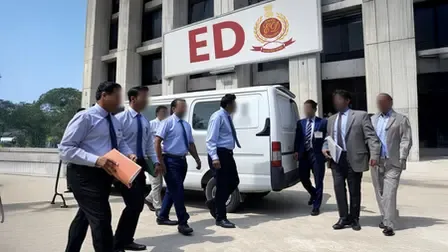
Raipur, Dec 30 (NationPress) The Enforcement Directorate (ED) from the Raipur Zonal Office has provisionally seized both movable and immovable assets valued at around Rs 38.21 crore. These assets belong to former IAS officer Niranjan Das, who was the Excise Commissioner, along with 30 other excise officials, according to an official statement.
Niranjan Das is accused of having personally gained over Rs 18 crore from criminal activities, which included monthly bribes amounting to Rs 50 lakh for facilitating the fraudulent operations. In total, the group of 31 officials allegedly amassed Rs 89.56 crore in unlawful profits, as noted by the agency.
The enforcement action, carried out under the Prevention of Money Laundering Act (PMLA), 2002, further escalates the investigation into the extensive Chhattisgarh Liquor Scam, which is estimated to have inflicted a revised loss of over Rs 2,800 crore on the state’s treasury.
The seized properties comprise immovable assets worth Rs 21.65 crore, which include 78 luxurious bungalows, flats in prestigious complexes, commercial shops, and expansive agricultural lands. Additionally, movable assets valued at Rs 16.57 crore consist of 197 items such as high-value fixed deposits, bank balances, life insurance policies, equity shares, and mutual funds, the statement elaborated.
Investigations by the ED have unveiled a criminal syndicate involving high-ranking bureaucrats and political figures who allegedly manipulated the Chhattisgarh Excise Department.
Niranjan Das, along with Arun Pati Tripathi (the former MD of Chhattisgarh State Marketing Corporation Limited - CSMCL), is accused of creating an alternative excise framework that bypassed official regulations to yield illicit profits.
The core of the scam revolved around the “Part-B” scheme, which involved manufacturing and selling unaccounted country liquor through government-operated shops using counterfeit holograms and unregistered bottles.
This illegal liquor was reportedly transported directly from distilleries to retail outlets, circumventing state warehouses.
The operation allegedly had the active complicity of excise officials, who earned fixed commissions of Rs 140 per case for authorizing Part-B sales in their areas.
Point of View
It's essential to recognize the gravity of the situation unfolding in Chhattisgarh. The allegations against high-ranking officials and the resulting financial implications underscore the need for transparency and accountability in governance. Such incidents highlight systemic issues that demand public attention and reform.
NationPress
10 Oct 2026
Frequently Asked Questions
What assets have been attached by the ED?
The ED has provisionally attached assets worth approximately Rs 38.21 crore, including luxury bungalows, commercial shops, and high-value financial instruments.
Who is Niranjan Das?
Niranjan Das is a former IAS officer who served as the Excise Commissioner and is alleged to have played a key role in the Chhattisgarh Liquor Scam.
What is the estimated loss to the state due to this scam?
The Chhattisgarh Liquor Scam is estimated to have caused a loss exceeding Rs 2,800 crore to the state exchequer.
What laws is the ED using for this investigation?
The ED is conducting this investigation under the Prevention of Money Laundering Act (PMLA), 2002.
What does the 'Part-B' scheme entail?
The 'Part-B' scheme involved the illegal manufacturing and selling of unaccounted country liquor using counterfeit holograms and unregistered bottles.