Major ED Raids Hit Liquor Smuggling Network Across Arunachal Pradesh

Synopsis
The ED raided 9 wholesale liquor premises across Arunachal Pradesh on April 23, exposing a 25-entity smuggling syndicate run through benami licences and forged excise seals. With Rs 40 lakh in unexplained cash seized and 173 FIRs now linked to the case, the crackdown reveals deep systemic rot in the Northeast's inter-state liquor trade.
Key Takeaways
The ED's Guwahati Zonal Office conducted raids on 9 wholesale liquor premises across 7 cities in Arunachal Pradesh on April 23, 2025 , under the PMLA, 2002 .
Approximately Rs 40 lakh in unexplained cash was seized, along with 14 forged excise department seals used to fabricate transport permits for smuggled liquor.
The PMLA investigation now encompasses 173 FIRs registered by Assam Police related to illegal liquor transportation from Arunachal Pradesh into Assam.
Three alleged kingpins are believed to control over 25 entities , all operated through benami licences held by local residents to conceal true ownership.
Bank accounts of wholesalers showed 51% to 90% of total credits as unexplained cash deposits , with over 200 identical invoices of Rs 1,99,554 raised at one outlet in a single month.
Earlier raids on February 4, 2025 had already targeted the three principal manufacturers; the April 23 action significantly widened the net across the downstream supply chain.
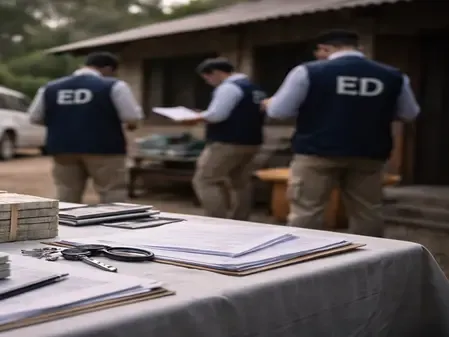
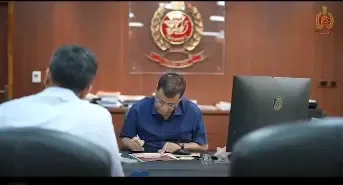
The Enforcement Directorate (ED) has launched a sweeping crackdown on an alleged large-scale illegal liquor smuggling network in Arunachal Pradesh, conducting search operations at nine premises linked to wholesale liquor businesses on April 23, 2025. The raids, carried out by the ED's Guwahati Zonal Office under the Prevention of Money Laundering Act (PMLA), 2002, unearthed a sophisticated syndicate exploiting inter-state excise duty differentials to illegally funnel liquor into Assam and other states. Approximately Rs 40 lakh in unexplained cash was seized during the operation.
Raids Span Seven Locations Across the State
The search operations were conducted simultaneously across Itanagar, Naharlagun, Seppa, Ziro, Daporijo, Namsai, and Roing — covering a broad geographic spread that underscores the scale of the alleged smuggling network. The ED confirmed the development on Saturday, April 25, 2025, stating that the action forms part of an ongoing and expanding investigation.
The probe was originally triggered by multiple FIRs registered by the Assam Police concerning illegal transportation of liquor from Arunachal Pradesh into Assam, further bolstered by a formal reference from the Assam Excise Department. A case was formally recorded on October 17, 2024, and has since been expanded through an addendum to incorporate 173 additional FIRs — a figure that signals the sheer breadth of the alleged criminal enterprise.
How the Syndicate Operated: Benami Licences and Dummy Partners
Earlier search actions on February 4, 2025 had already targeted the premises of three principal liquor manufacturers in Arunachal Pradesh, believed to be the kingpins of the network. Investigators found that the syndicate exploited the inter-state excise duty differential — liquor is significantly cheaper in Arunachal Pradesh due to lower state taxes — to divert stock meant for local consumption into Assam and beyond, where it fetches higher black-market prices.
The modus operandi involved a layered chain of manufacturers, bonded warehouses, and wholesalers, with beneficial ownership deliberately concealed behind tribal partnerships and dummy licence holders. The ED's PMLA investigation has revealed that the three kingpins collectively control over 25 entities, each run on a benami licence held in the name of a local resident while actual financial and managerial control remained firmly with the masterminds.
Each wholesaler was found to procure liquor exclusively from one or two bonded warehouses owned by its own beneficial controller — a structure designed to create plausible deniability while maintaining tight operational control.
Financial Trail: Suspicious Cash Deposits and Invoice Manipulation
A forensic examination of wholesale bank accounts revealed a damning financial pattern: between 51 per cent and 90 per cent of total credits in these accounts consisted of unexplained cash deposits. This was accompanied by systematic invoice-splitting below Rs 2 lakh — a threshold commonly used to evade scrutiny under financial monitoring regulations.
In one particularly striking instance, investigators found over 200 bills of an identical Rs 1,99,554 raised at a single outlet within a single month — a textbook structuring technique used to keep individual transactions just below regulatory radar. On-site managers of the wholesale outlets confirmed the kingpins' beneficial ownership during questioning.
Books of accounts, stock registers, and daily cash proceeds were found to be physically routed to the kingpins' central offices, further cementing the chain of command. The seizure of Rs 40 lakh in unexplained cash from the premises adds a tangible dimension to the money laundering allegations.
Forged Excise Seals Point to Systemic Corruption
Among the most alarming findings was the seizure of 14 official-looking seals — including seals bearing the insignia of the "Excise Department, Government of Arunachal Pradesh" — from a single premises. The ED stated these seals were prima facie used to fabricate transport permits, enabling the undocumented physical movement of liquor across state borders into Assam.
This discovery raises serious questions about potential insider complicity within state excise machinery — a dimension that investigators are expected to probe further. The use of forged government seals to generate fake permits suggests the syndicate had sophisticated operational support, possibly including corrupt officials.
Broader Implications and What Comes Next
This crackdown is part of a broader national pattern of the ED targeting inter-state liquor smuggling networks that exploit India's fragmented state-level excise regimes. Arunachal Pradesh's relatively liberal and low-tax liquor policy has historically made it a source state for smuggled liquor flowing into Assam, Nagaland, and other Northeastern states with stricter or higher-tax regimes.
Notably, the 173 FIRs now encompassed in this investigation represent one of the largest single PMLA cases linked to excise violations in the Northeast. Critics argue that the structural problem — the wide excise duty differential between states — creates a near-permanent incentive for smuggling, and that enforcement alone cannot resolve the issue without policy harmonisation.
The ED has indicated that further investigation is underway, with the agency expected to issue summons to the identified kingpins and potentially move toward asset attachment proceedings under PMLA. Arrests cannot be ruled out as the probe matures. The case is likely to put pressure on both the Arunachal Pradesh state government and the Assam government to tighten inter-state border checks and excise monitoring frameworks.
Point of View
This is one of the most significant financial crime investigations in the Northeast in recent memory — yet the structural fix, harmonising inter-state excise duties, remains a political conversation no government wants to have. Enforcement without policy reform is a revolving door.
NationPress
28 Sept 2026
Frequently Asked Questions
What did the ED find during the Arunachal Pradesh liquor raids in April 2025?
The ED seized approximately Rs 40 lakh in unexplained cash and 14 forged excise department seals during raids on 9 wholesale liquor premises across Arunachal Pradesh on April 23, 2025. Investigators also uncovered benami ownership structures, suspicious bank deposits, and systematic invoice manipulation designed to evade financial scrutiny.
How many FIRs are linked to the Arunachal Pradesh liquor smuggling case?
The PMLA case, originally registered on October 17, 2024, has been expanded through an addendum to include 173 additional FIRs registered by Assam Police concerning illegal liquor transportation from Arunachal Pradesh into Assam. This makes it one of the largest consolidated excise-linked money laundering investigations in the Northeast.
Who are the alleged kingpins in the Arunachal Pradesh liquor smuggling network?
The ED has identified three principal liquor manufacturers in Arunachal Pradesh as the alleged masterminds of the network, whose premises were first raided on February 4, 2025. These three individuals are believed to collectively control over 25 entities, all operated through benami licences held by local residents.
Why is liquor smuggled from Arunachal Pradesh into Assam?
Arunachal Pradesh has significantly lower excise duties on liquor compared to Assam, creating a large price differential that makes cross-border smuggling highly profitable. The syndicate allegedly exploited this gap by diverting liquor officially meant for Arunachal Pradesh consumers into Assam and other states for illegal sale at higher prices.
What is the significance of the forged excise seals seized by the ED?
The ED seized 14 seals, including those bearing the insignia of the Excise Department, Government of Arunachal Pradesh, from a single premises — indicating they were used to fabricate fake transport permits for smuggled liquor. This finding raises serious concerns about potential complicity within state excise authorities and is a key focus of the ongoing investigation.