ED Takes Action Against Former MP Health Director in Money Laundering Probe
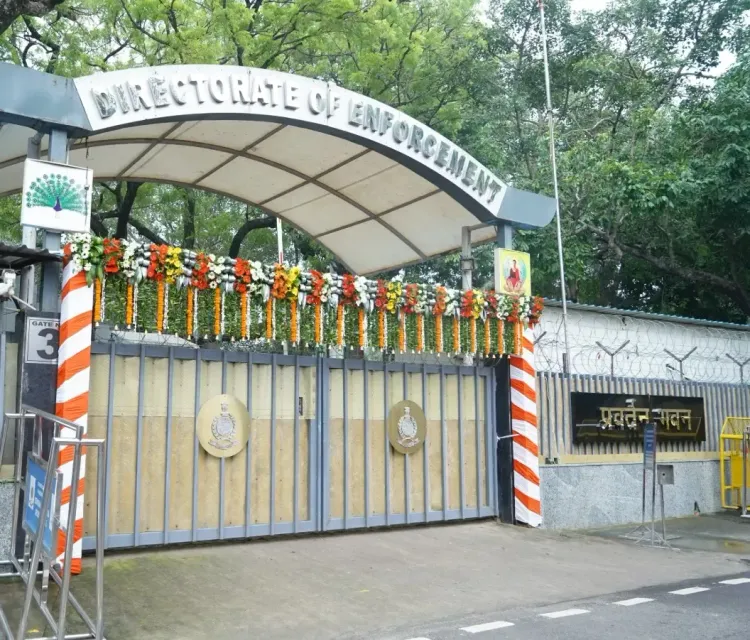
Synopsis
In a significant move against corruption, the Enforcement Directorate has filed a chargesheet against Dr. Amarnath Mittal, former Director of Health Services, Madhya Pradesh, under the PMLA. The case involves allegations of disproportionate asset acquisition and money laundering linked to corrupt practices. The ED's relentless investigation continues.
Key Takeaways
ED has filed a chargesheet against Dr.
Amarnath Mittal for money laundering.
Allegations involve assets worth Rs 2.38 crore exceeding known income.
The investigation is part of broader efforts against corruption in India.
Provisional attachment of properties worth Rs 9.78 crore has been enacted.
The case is set for trial in the special PMLA court.
Bhopal, March 28 (NationPress) The Enforcement Directorate (ED) has intensified its efforts against corruption by submitting a chargesheet against Dr. Amarnath Mittal, the former Director of Health Services for the Government of Madhya Pradesh, along with several others, under the Prevention of Money Laundering Act (PMLA), 2002. The charges were officially filed before the Special Court (PMLA) in Bhopal on March 26.
This case originates from a First Information Report (FIR) lodged by the Lokayukta of Bhopal, citing violations under Sections 13(1)(e) and 13(2) of the Prevention of Corruption Act, 1988 (as amended). Allegations suggest that Dr. Mittal amassed assets that greatly exceed his legitimate income while in public office.
The total value of these assets is around Rs 2.38 crore, which indicates an astonishing 396.67% increase over his verified earnings.
During their investigation, ED officials revealed that the accused had laundered proceeds derived from corrupt activities by investing them in both movable and immovable properties located in Bhopal and Raisen districts of Madhya Pradesh.
The inquiry uncovered a complex plan to disguise illicit funds as legitimate investments in real estate and other valuable assets.
In January 2026, the ED had already provisionally seized properties worth Rs 9.78 crore, which represented the full value of assets where the illicit funds were hidden and layered. This included various residential and agricultural lands, alongside other movable properties.
This attachment order effectively froze these assets to prevent any further misappropriation of the proceeds from the crimes.
This case underscores the Enforcement Directorate’s firm approach towards public officials involved in corruption and money laundering. Dr. Mittal’s alleged misconduct not only breached anti-corruption statutes but also eroded public confidence in Madhya Pradesh's health administration, which plays a crucial role in public welfare.
Reports suggest that the investigation is still active, with the ED continuing to trace further connections or beneficiaries. The submission of the prosecution complaint signifies a critical step forward, setting the stage for a trial in the special PMLA court.
If found guilty, the accused may face severe sanctions, including imprisonment and confiscation of the seized properties. This development aligns with broader initiatives by central agencies to combat corruption within government bodies across India.
Frequently Asked Questions
What is the main allegation against Dr. Amarnath Mittal?
Dr. Amarnath Mittal is accused of acquiring assets that are disproportionate to his known sources of income while serving as a public servant.
What is the significance of the chargesheet filed by the ED?
The chargesheet represents a critical step in the legal process aimed at addressing corruption and money laundering, paving the way for a trial in the special PMLA court.
What actions has the ED taken regarding Dr. Mittal's assets?
The ED has provisionally attached properties worth Rs 9.78 crore, freezing these assets to prevent further dissipation of the proceeds of crime.
Under what act has Dr. Mittal been charged?
Dr. Mittal has been charged under the Prevention of Money Laundering Act (PMLA), 2002.
Is the investigation still ongoing?
Yes, the investigation remains active as the ED continues to trace any additional links or beneficiaries involved.