Will the EU's Adjustment on GSP Affect India's Exports?
Synopsis
The European Union's latest changes to the Generalised Scheme of Preferences (GSP) will minimally impact India's exports, affecting only 2.66%. This adjustment highlights India's increasing export competitiveness. Learn how the EU's regulations shape trade dynamics and what it means for India’s economic future.
Key Takeaways
The EU's GSP adjustments will impact only 2.66% of India's exports.
India graduated from 12 major product categories .
New regulations take effect from January 1, 2026 .
Suspension affects various sectors, including textiles and machinery.
The GSP is a unilateral trade preference scheme.
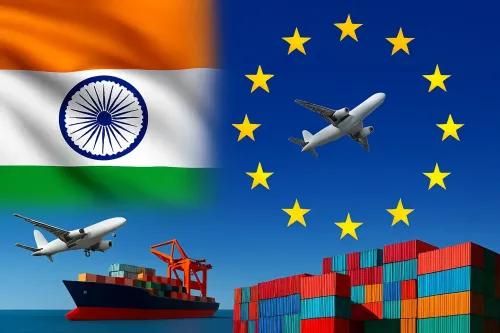
New Delhi, Jan 23 (NationPress) The recent adjustment by the European Union regarding the Generalised Scheme of Preferences (GSP) is projected to affect a mere 2.66 per cent of India's total exports to the EU, as stated by the Commerce Ministry on Friday.
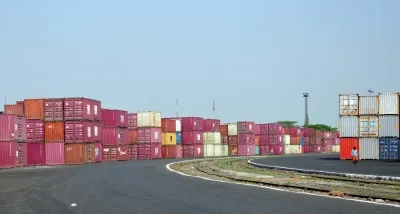
In the year 2023, imports from India to the EU were valued at around 62.2 billion euros. Out of this, only 12.9 billion euros were eligible under the EU’s Standard GSP framework. India has successfully graduated from 12 significant product categories. According to the updated regulation, exports worth 1.66 billion euros are set to graduate from the GSP, resulting in an eligible GSP trade of 11.24 billion euros based on the 2023 statistics.
In essence, the latest regulation affects only 2.66 per cent of India's exports to the EU, as noted in the official statement.
The graduation process is determined by the competitiveness of the country's exports, which the EU reviews periodically. India's progression over time is attributed to the increasing competitiveness of its exports.
The European Commission has implemented Regulation (EU) 2025/1909, which outlines the suspension of specific tariff preferences for select GSP beneficiary nations, including India, from 2026 to 2028. This regulation officially takes effect on January 1, 2026, and will remain in force until December 31, 2028.
Under this new GSP arrangement, agricultural products are not included in the graduation process. In the non-agricultural sector, only leather has been reinstated.
The suspension encompasses thirteen distinct GSP categories, including mineral products, inorganic and organic chemicals, plastics, rubber products, textiles, stone articles, ceramics, glass, precious metals, iron and steel, base metals (excluding iron and steel), machinery, and electrical equipment.
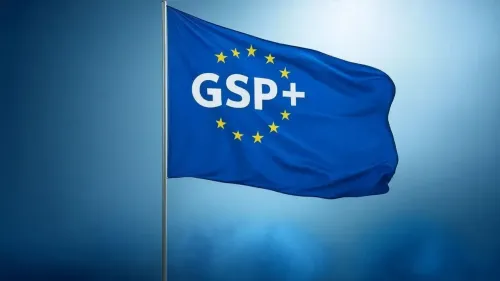
The EU's GSP is a unilateral trade preference program that allows the EU to offer reduced or zero customs duties on imports from developing and least-developed nations.
As a non-reciprocal scheme, it serves as an exception to the WTO’s Most-Favoured-Nation (MFN) principle, backed by the 1979 Enabling Clause that permits developed nations to extend differential and preferential treatment to developing countries.
The EU provides various trade benefits under the GSP. The Standard GSP offers easier market access to poorer and lower-middle-income developing countries, such as India. GSP+ is an enhanced version that delivers additional benefits to nations that adhere to international standards on labor, human rights, environmental protection, and governance, while the Everything But Arms (EBA) initiative grants the poorest countries duty-free, quota-free access to nearly all goods, barring arms.
Point of View
The Commerce Ministry's report on the EU's GSP modifications underscores India's growing export strength. While some may view this change as a setback, it actually reflects India's progress in global trade competitiveness. The nation is poised to adapt and thrive, leveraging new opportunities in the evolving trade landscape.
NationPress
30 Sept 2026
Frequently Asked Questions
What percentage of India's exports to the EU will be affected?
Only 2.66% of India's exports to the EU will be impacted by the EU's adjustment to the GSP.
What is the new GSP regulation period?
The new GSP regulation will be effective from January 1, 2026, until December 31, 2028.
How much trade is expected to graduate out of the GSP regime?
Approximately 1.66 billion euros of trade is expected to graduate out of the GSP regime.
What sectors are affected by the GSP suspension?
The suspension covers various sectors, including mineral products, chemicals, textiles, and machinery.
What does GSP+ offer?
GSP+ provides enhanced benefits for countries adhering to international standards on labor, human rights, and governance.