Why Did Ex-AIADMK MLA Vaithilingam Join DMK with CM Stalin?
Synopsis
In a significant political move, R. Vaithilingam, the former AIADMK MLA, has joined the DMK, marking a critical shift in Tamil Nadu's political landscape. This article explores his journey, the implications of his defection, and what it means for the upcoming Assembly elections.
Key Takeaways
Vaithilingam officially joined the DMK .
The induction reflects ongoing turmoil within the AIADMK .
This move may impact the upcoming Assembly elections .
Vaithilingam was previously a key supporter of Panneerselvam .
The DMK is leveraging divisions in the AIADMK .
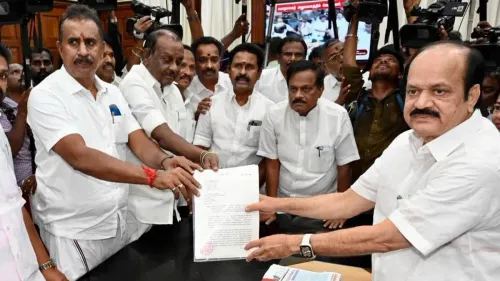
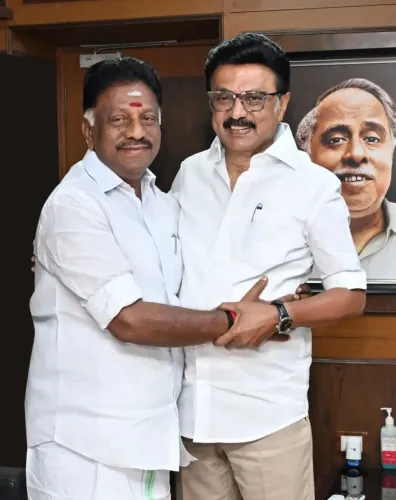
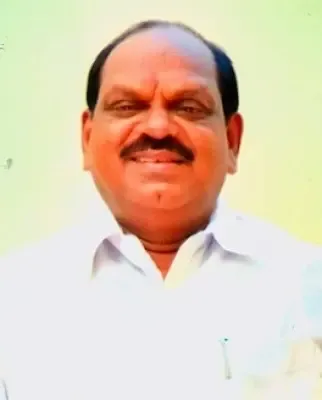
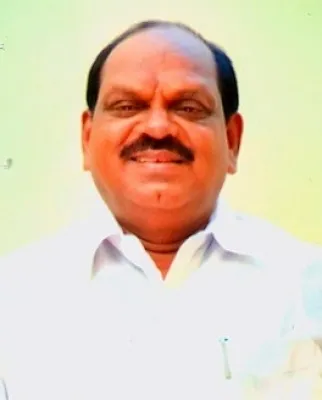
Chennai, Jan 21 (NationPress) Former AIADMK MLA R. Vaithilingam, who recently stepped down from his Orathanadu Assembly position, officially joined the Dravida Munnetra Kazhagam (DMK) on Wednesday, with Tamil Nadu Chief Minister M. K. Stalin present. This event took place at the DMK's headquarters, Anna Arivalayam, representing another notable political shift from the opposition side.
Vaithilingam's political journey has been intricately linked to the internal turmoil within the All India Anna Dravida Munnetra Kazhagam (AIADMK) over recent years.
He has also held the position of Housing Minister in the Tamil Nadu government.
Once a key ally of the late Chief Minister J. Jayalalithaa, he initially sided with V. K. Sasikala when the AIADMK fractured after Jayalalithaa's passing.
Following Edappadi K. Palaniswami's rise to Chief Minister, Vaithilingam realigned his support to him, establishing himself as a reliable figure within the party.
During a pivotal period of factional discord, he played a significant role in efforts to unite Palaniswami and O. Panneerselvam, aiding their temporary reconciliation and collaborative leadership.
Nonetheless, this unity was short-lived, as new leadership conflicts soon emerged within the AIADMK, ultimately prompting Palaniswami to politically separate from Panneerselvam.
Since then, Vaithilingam has shown his allegiance to O. Panneerselvam and has remained a trusted backer.
Despite Palaniswami's attempts post-parliamentary elections to unify the party and solidify leadership, these initiatives failed, exacerbating divisions and undermining organizational unity.
In recent months, the DMK has capitalized on these rifts.
Manoj Pandian, a notable supporter of Panneerselvam, also joined the DMK after resigning as an MLA.
Vaithilingam's transition to the ruling party follows a similar path.
Recognized as one of Panneerselvam's prominent and influential allies, Vaithilingam's choice to defect is viewed as politically impactful. His entry into the DMK is seen as part of a larger realignment ahead of upcoming Assembly elections, further bolstering the DMK while underscoring the ongoing fragmentation within the AIADMK.
Point of View
Vaithilingam's defection to the DMK signals a notable realignment in Tamil Nadu politics. This event underscores the turbulent dynamics within the AIADMK and could have lasting ramifications on the party's future and electoral prospects. As the political landscape evolves, it's essential for observers to consider how these shifts may influence governance and party strategies moving forward.
NationPress
28 Sept 2026
Frequently Asked Questions
What prompted R. Vaithilingam to leave AIADMK?
Vaithilingam's departure from AIADMK was influenced by internal conflicts within the party and his desire to align with the ruling DMK.
What role did Vaithilingam play in AIADMK?
He served as an MLA and was also the Housing Minister in the Tamil Nadu government.
What are the implications of this political shift?
Vaithilingam's move to the DMK could strengthen the ruling party and highlight ongoing divisions within the AIADMK ahead of the Assembly elections.
Who else has recently joined the DMK?
Manoj Pandian, a notable supporter of O. Panneerselvam, also joined the DMK after resigning as an MLA.
Is this a common trend in Tamil Nadu politics?
Yes, political defections are relatively common in Tamil Nadu, often reflecting shifts in power dynamics and party alignments.