JGU AI constitutionalism convention: Ex-CJI flags deepfake risks

Synopsis
A former Chief Justice of India has called AI ‘a new form of power’ and urged the law to move swiftly against deepfakes. At JGU's three-day Constitution Day convention in Sonipat, 216 panellists across 40 sessions debated whether constitutional guarantees can keep pace with algorithms.
Key Takeaways
Jindal Global University in Sonipat hosted a three-day international convention on AI and constitutionalism for Constitution Day 2026 .
The event featured 40 parallel sessions , 216 panellists and 40 moderators and presenters across 12 thematic areas .
Former CJI Justice P.
Sathasivam called AI ‘a new form of power’ and said the law must respond swiftly to deepfakes.
Benjamin of Brazil's Superior Court of Justice praised India's Constitution and urged safeguards against AI's harms.
Jeffrey Rosen warned that algorithmic echo chambers are pushing citizens towards extreme views.
Pratap Bhanu Mehta is set to deliver the valedictory address.
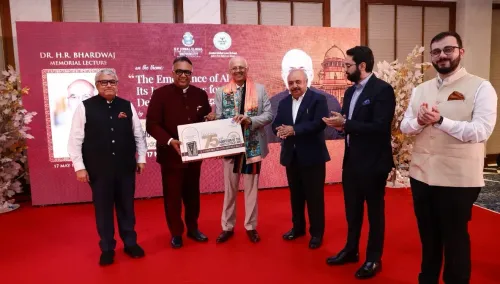
O.P. Jindal Global University (JGU) in Sonipat, Haryana, marked Constitution Day 2026 with a three-day International Convention titled ‘Constitutionalism in the Age of Artificial Intelligence: Transforming Courts, Rights & Governance’. The event brought together jurists, judges, constitutional experts, AI industry leaders and international delegates to examine how artificial intelligence is reshaping constitutional values. Former Chief Justice of India Justice P. Sathasivam used his address to call for a swift legal response to deepfakes and AI-driven intrusions on privacy.
Scale and Structure of the Convention
The convention featured 40 thematic parallel sessions alongside its inaugural and valedictory sessions. According to the university, 216 panellists, along with 40 moderators and presenters, took part in the deliberations.
The sessions were organised into 12 broad thematic groupings. These ranged from constitutional foundations and judicial accountability to predictive policing, biometrics and surveillance, digital inequality, gender justice, disability inclusion, deepfakes and elections, data sovereignty, Big Tech and competition, digital health, climate constitutionalism and university research ethics.
Key Remarks from Jurists
The convention opened with a special address by Justice Antonio H. Benjamin, Minister (Justice), Superior Court of Justice, Brazil. He said, “India sets an inspiring example through the strength and substance of its Constitution as well as its commitment to upholding it as an instrument of justice, public welfare and social transformation.” He cautioned that AI “can make decisions harder to challenge, and vulnerable people facing exclusion may find it difficult to protect their rights,” adding, “It is our duty to build walls around the detriments of AI.”
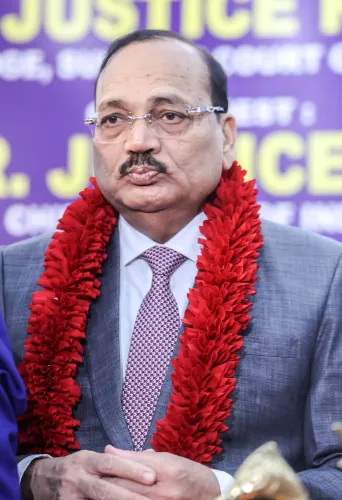
Delivering the Presidential Address, Justice Sathasivam said, “Today, AI is a new form of power... the Constitution does not need to be rewritten for the age of AI, but it does need to be read afresh.” On synthetic media, he warned, “Deepfakes, synthetic images and voices created without consent strike at both. They can destroy a reputation overnight, especially for women. The law must respond swiftly here.”
Constitution Day Lecture on Power and Algorithms
The Constitution Day Lecture was delivered by Prof. Jeffrey Rosen, Professor of Law at The George Washington University Law School and CEO Emeritus of the National Constitution Center. “We need to think more urgently about how to limit power in the age of AI,” he said.
Rosen pointed to the effect of algorithms on public opinion: “Citizens are getting their opinions from algorithmic filter bubbles and echo chambers, rather than primary sources. As a result, they're embracing more and more extreme versions of what they're already inclined to believe.” He also warned that AI could make concentration of power “possible on an entirely different scale.”
What the University Leadership Said
Prof. (Dr.) C. Raj Kumar, Founding Vice Chancellor of JGU, said the university organises an international convention every Constitution Day. “What is indisputable is that artificial intelligence is going to dramatically change the way human beings live,” he said.
Prof. (Dr.) Dipika Jain, Executive Dean, Jindal Global Law School, described the school's aspiration to be “a place where law is never treated as settled.” Prof. Sidharth Chauhan, Director of the Cyril Shroff Centre for AI, Law & Regulation, said, “Artificial intelligence is no longer simply a question of technological innovation. It has become a question of constitutional consequence.”
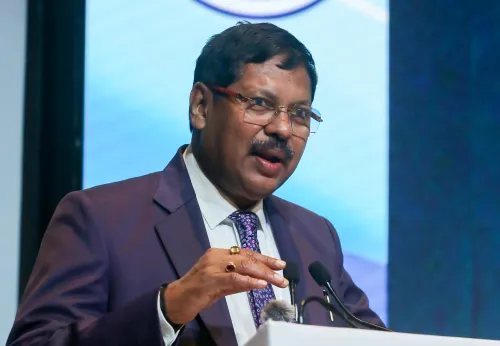
Registrar Prof. Dabiru Sridhar Patnaik delivered the concluding address, calling the convention a platform to “balance the opportunities and challenges emerging from Artificial Intelligence while safeguarding constitutional values.”
What Comes Next
The convention is set to close with a valedictory address by Professor Pratap Bhanu Mehta, University Lecturer at Princeton University and former President of the Centre for Policy Research. With regulators worldwide still drafting AI rules, the questions raised in Sonipat on deepfakes, surveillance and accountability are likely to grow sharper in India's own policy debates.
Point of View
Because it moves the debate from tech policy to constitutional accountability. India still lacks a dedicated legal regime for deepfakes, even as such content increasingly targets women and voters. Academic conventions can frame the questions, but they cannot substitute for legislation, regulatory capacity or court-tested standards. The real test is whether Parliament and regulators act on this urgency before the harms become normalised.
NationPress
28 Nov 2026
Frequently Asked Questions
What was the JGU Constitution Day convention about?
It was a three-day international convention titled ‘Constitutionalism in the Age of Artificial Intelligence: Transforming Courts, Rights & Governance’, hosted by O.P. Jindal Global University in Sonipat. It examined how AI is reshaping constitutional values, courts and governance.
What did Justice P. Sathasivam say about AI and deepfakes?
The former Chief Justice of India described AI as a new form of power and said the Constitution needs to be read afresh rather than rewritten. He warned that deepfakes can destroy reputations overnight, especially for women, and said the law must respond swiftly.
How many sessions and speakers were part of the convention?
The convention featured 40 thematic parallel sessions across 12 broad areas, besides the inaugural and valedictory sessions. It involved 216 panellists and 40 moderators and presenters.
Who delivered the Constitution Day Lecture at JGU?
Prof. Jeffrey Rosen of The George Washington University Law School, CEO Emeritus of the National Constitution Center, delivered the lecture. He warned that algorithmic filter bubbles are pushing citizens towards more extreme views.
Who will deliver the valedictory address?
Professor Pratap Bhanu Mehta, University Lecturer at Princeton University and former President of the Centre for Policy Research, is scheduled to deliver the valedictory address.