Supreme Court's Justice Manmohan calls for AI oversight law at JGU lecture

Synopsis
A sitting Supreme Court judge has put institutional weight behind calls for enforceable AI accountability in Indian law — disclosing an active Supreme Court AI committee and citing a November 2025 White Paper that draws a clear line: AI assists, judges decide. With no standalone statute yet, Justice Manmohan's remarks at JGU may be the clearest signal yet that the judiciary is moving toward formal guardrails.
Key Takeaways
Justice Manmohan of the Supreme Court of India called for institutional oversight and enforceable legal accountability for AI on 19 May at O.P.
Jindal Global University .
The Supreme Court has constituted an AI committee , chaired by a sitting judge, to develop strategy and policy guardrails for judicial AI.
The Supreme Court's White Paper on AI and the Judiciary , released in November 2025 , states judges must remain ultimate decision-makers with all AI output subject to human verification.
Justice Manmohan called for a clear regulatory framework for judicial AI developed in the Indian context, plus judiciary capacity building and university courses on AI ethics and law.
Bhardwaj ( 17 May 1937 – 8 March 2020 ), in whose memory the lecture was held, is credited with launching the Supreme Court's e-Courts Phase One during his tenure as Law Minister.
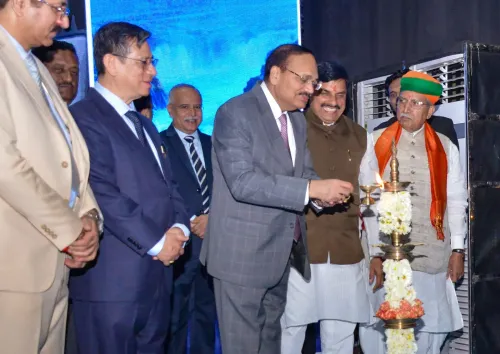
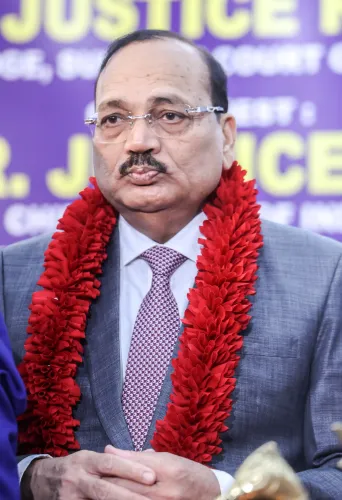
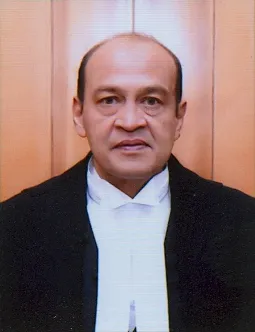
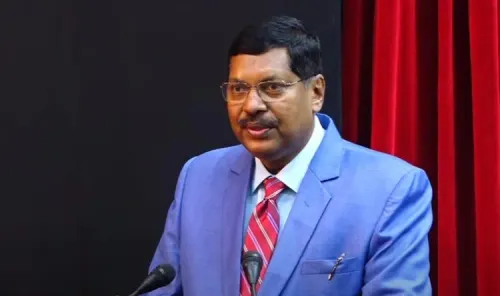
Supreme Court of India Judge Justice Manmohan on 19 May called for institutional oversight and enforceable legal accountability for artificial intelligence in the justice system, delivering the Dr. H.R. Bhardwaj Memorial Lecture at O.P. Jindal Global University (JGU) in Sonipat. Speaking on the theme 'The Emergence of AI and Its Implications for Justice Delivery and Legal Systems,' he argued that human judgment must remain central to judicial processes even as AI tools proliferate.
Justice Manmohan's Core Argument
Justice Manmohan drew a sharp distinction between rule-based software and genuine AI systems. 'If a system is built using techniques that allow the programme to create rules of its own based on input data or data sets provided to the programme, then it is an AI system,' he said. He stressed that the question today is 'no longer whether they will be used or not' but whether their use will be 'structured by clear principles of institutional oversight and enforceable accountability.'
He called for a clear regulatory framework for judicial AI developed specifically in the Indian context, alongside capacity building within the judiciary. Universities, he added, will need to develop courses covering the ethical, constitutional, and procedural dimensions of AI deployment.
Supreme Court's AI Committee and White Paper
Justice Manmohan disclosed that the Supreme Court has constituted an AI committee, chaired by a sitting judge, to lay down a broad strategy and policy with 'adequate guardrails.' He also cited the Supreme Court's White Paper on AI and the Judiciary, released by the Centre for Policy Research and Planning in November 2025, as an authoritative institutional statement.
The White Paper positions AI as an assisted technology capable of supporting legal research, transcription, translation, filing, scrutiny, and administrative analytics — while firmly stating that judges must remain the ultimate decision-makers, with every AI output subject to human verification. 'In consonance with our constitutional mandate, there is human oversight throughout the process,' he said.
He also flagged the issue of privacy and data consent, questioning whether individuals who provide data are 'even aware of the downstream consequences' of inferences drawn from it.
Tribute to Dr. H.R. Bhardwaj
Justice Manmohan paid tribute to Dr. Hans Raj Bhardwaj (17 May 1937 – 8 March 2020), former Union Minister of Law and Justice and former Governor of Karnataka and Kerala, noting that the first phase of the Supreme Court's e-Courts programme was launched during Bhardwaj's tenure as Law Minister. 'Technology and law have always had a very symbiotic relationship,' he said, adding that laws framed for a physical world now require fresh examination in a digital one.
Prof. C. Raj Kumar, Founding Vice Chancellor of JGU, credited Dr. Bhardwaj with being instrumental in the university's founding and described him as a constitutionalist committed to democratic values, legal aid expansion, and world-class legal education. Bhardwaj's grandson Karn Bhardwaj, an advocate, reflected that the late leader 'had a founding role in the implementation of technology in our justice system as it stands today.'
What This Signals for India's Legal AI Landscape
India currently has no standalone statute governing AI in judicial processes. Justice Manmohan's remarks, coming from a sitting Supreme Court judge, add significant institutional weight to calls for a dedicated regulatory framework. This comes amid growing global momentum — the European Union's AI Act and the United States' executive orders on AI governance have both raised pressure on jurisdictions like India to articulate their own positions.
The lecture concluded with remarks by Prof. Dabiru Sridhar Patnaik, Registrar of O.P. Jindal Global University. With the Supreme Court's AI committee actively working on policy guardrails, a formal framework could emerge within the next legislative cycle.
Point of View
And India's legislative calendar is crowded. The real test is whether the AI committee's guardrails translate into binding rules or remain advisory. Globally, courts that moved early on AI governance — Estonia's digital courts, the EU's risk-classification approach — did so because legislatures acted, not because judges asked nicely. India's judiciary is articulating the need; the question is whether Parliament is listening.
NationPress
3 Oct 2026
Frequently Asked Questions
What did Justice Manmohan say about AI and the judiciary?
Justice Manmohan called for institutional oversight and enforceable legal accountability for AI in judicial processes, arguing that human judgment must remain central even as AI tools are adopted. He also urged a clear regulatory framework for judicial AI developed specifically in the Indian context.
What is the Supreme Court's AI committee?
The Supreme Court of India has constituted an AI committee, chaired by a sitting judge, to lay down a broad strategy and policy with adequate guardrails for AI use in the judiciary. Its work is ongoing, and formal policy outputs are expected to follow.
What does the Supreme Court's White Paper on AI say?
Released in November 2025 by the Centre for Policy Research and Planning, the White Paper positions AI as an assisted technology for legal research, transcription, translation, and administrative analytics, while stating that judges must remain the ultimate decision-makers and every AI output must be subject to human verification.
Who was Dr. H.R. Bhardwaj and why was the lecture held in his memory?
Dr. Hans Raj Bhardwaj (17 May 1937 – 8 March 2020) was a five-time Member of Parliament, former Union Minister of Law and Justice (2004–2009), and former Governor of Karnataka and Kerala. He played a founding role in establishing O.P. Jindal Global University and in launching the Supreme Court's e-Courts Phase One programme. The annual memorial lecture honours his legacy in law, technology, and legal education.
Does India currently have a law governing AI in courts?
India does not yet have a standalone statute governing AI in judicial processes. Justice Manmohan's remarks underscore the urgency of developing such a framework, and the Supreme Court's AI committee is reportedly working on policy guardrails that could inform future legislation.