Trump claims Hormuz Strait as 'New US Territory' as Iran MoU collapses
Synopsis
Trump's Truth Social map declaring the Strait of Hormuz 'New US Territory' is not just bluster — it signals that the US-Iran diplomatic off-ramp has fully closed. With the MoU dead, ship attacks continuing, nuclear talks suspended, and a US ally threatened with bombing, the Hormuz standoff is entering its most dangerous phase yet.
Key Takeaways
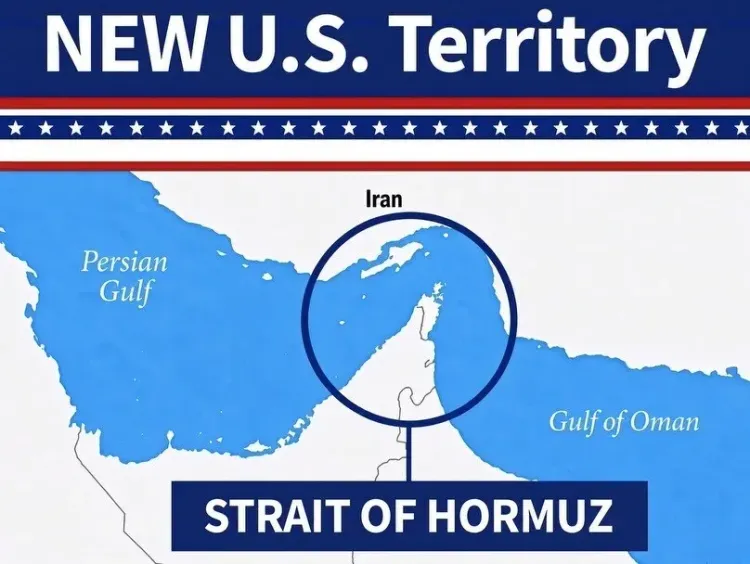
US President Donald Trump posted a map on Truth Social on Tuesday, 19 August labelling the Strait of Hormuz as 'New US Territory.' The US-Iran MoU , signed in June with a 60-day window , collapsed on Monday with no extension agreed by either side.
A bulk carrier was struck by an unknown projectile in the Strait on Tuesday; the UKMTO reported a similar attack on Monday and advised vessels to transit with caution.
Iran's Deputy Foreign Minister Kazem Gharibabadi called Trump's territorial claim a 'fanciful delusion' ; Parliament Speaker Qalibaf said the Strait stays closed until Iran's conditions are met.
Trump threatened to bomb Oman — a US ally — if it interferes with his Hormuz plans, after Iran reportedly neared a separate deal with Muscat.
Both Trump and the IRGC confirmed on Tuesday that no talks are ongoing or scheduled between the US and Iran.
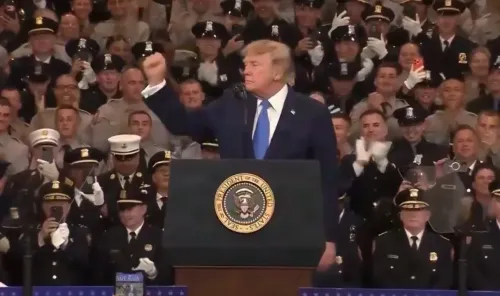
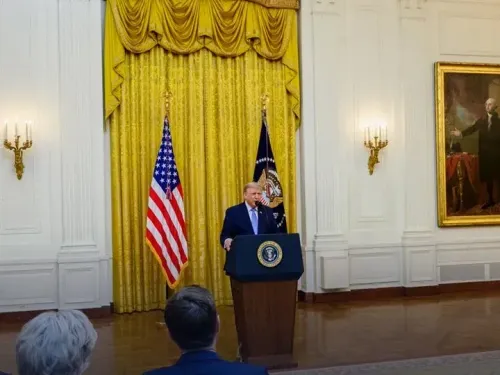
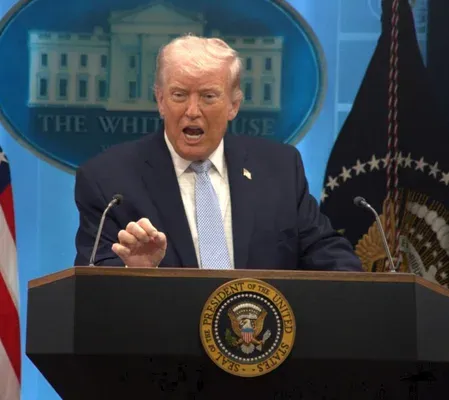
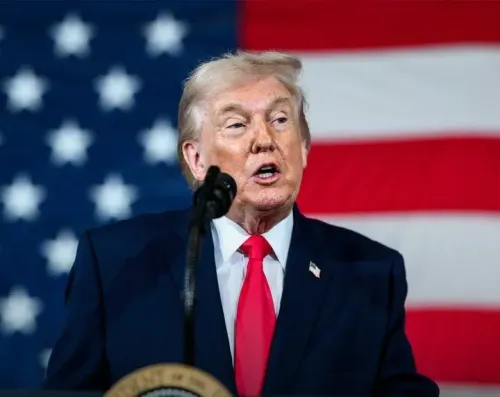
US President Donald Trump on Tuesday, 19 August posted a map on Truth Social labelling the Strait of Hormuz as 'New US Territory', doubling down on his claim to the world's most critical oil chokepoint just a day after a US-Iran memorandum of understanding (MoU) collapsed without renewal. The escalation marks a new flashpoint in an already volatile standoff that has disrupted global energy shipping for weeks.
What Trump Said and Did
Alongside the map, Trump wrote: 'The Hormuz Strait is open and operating. All water mines have been removed or detonated.' He also confirmed that the US naval blockade of Iranian ports 'remains in full force and effect.'
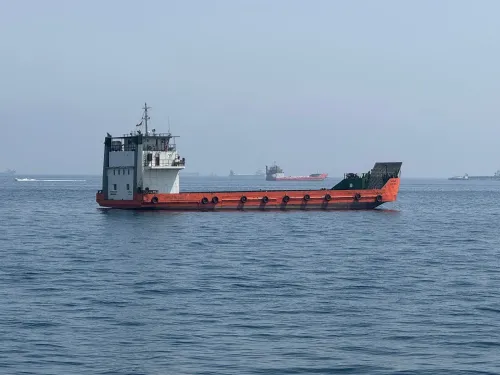
Multiple shipping-monitoring agencies, however, contradict that characterisation. Shipping through the Strait has not resumed anywhere near normal levels, according to those reports. On Tuesday, the United Kingdom Maritime Trade Operations (UKMTO) agency reported that a bulk carrier was struck by an unknown projectile while transiting the Strait, resulting in vessel damage and crew casualties. The UKMTO had reported a similar attack on Monday and advised vessels to 'transit with caution.'
The Iran and Oman Dimension
Iran has flatly rejected Trump's territorial claim. Deputy Foreign Minister Kazem Gharibabadi called the seizure a 'fanciful delusion' that cannot be accomplished by a tweet. Iranian Parliament Speaker Mohammad Baqer Qalibaf said the Strait would not open until Iran's conditions were met, according to Tasnim news agency.
Complicating the US position further, Iran has reportedly been close to finalising a separate deal with Oman — under which each country would control transit routes on its own side of the waterway — an arrangement that would effectively sideline Washington. Trump responded to that prospect with a stark threat on Fox News, warning: 'If Oman gets in the way, we'll bomb the s--t out of them.' Oman is a longstanding US ally and a key back-channel in the region.
The Strait is bordered by Iran, Oman, and the United Arab Emirates. Any US unilateral takeover of the 167-km-long waterway would require agreement from all three — and would, according to analysts, run afoul of international law. Analysts also note that maintaining unilateral military control of the Strait would pose significant logistical challenges for the US Navy.
How the MoU Collapsed
The MoU, signed with considerable fanfare in June, gave both sides a 60-day window to allow normal shipping and hold parallel negotiations on Iran's nuclear programme — Trump's stated top priority. The arrangement unravelled when Iran attacked two ships last month, prompting the US to bomb Iranian targets and impose a port blockade. Since then, both sides have struck ships, while Iran has pounded targets across the Gulf, sharply escalating tensions.
The 60-day window expired on Monday with no extension agreed. Trump confirmed on Tuesday: 'There are no talks or conversations going on, or scheduled.' Iranian Revolutionary Guard Corps (IRGC) Spokesperson Brigadier General Hossein Mohebbi echoed that position, telling Tasnim that no talks were taking place.
Domestic Pressure and What Comes Next
Trump is also facing domestic pressure over rising energy prices attributed to the Hormuz crisis. The combination of a collapsed diplomatic framework, continued ship attacks, a threatened ally, and an unresolved nuclear standoff leaves the situation with few off-ramps. With neither side in talks and shipping still disrupted, the risk of a further military escalation in the Strait remains high.
Point of View
International law governs its navigation, and US naval logistics make unilateral control a stretch. More telling is the collapse of the MoU — a framework that was always fragile, given it required both sides to hold fire while negotiating a nuclear deal neither had agreed on in principle. The threat to bomb Oman is the most alarming signal yet; alienating a Gulf mediator removes one of the last functioning back-channels. If Washington has no talks scheduled and no allied cover, its Hormuz policy is, at this point, a blockade in search of an endgame.
NationPress
18 Aug 2026
Frequently Asked Questions
What did Trump mean by calling the Strait of Hormuz 'New US Territory'?
Trump posted a map on Truth Social on 19 August labelling the Strait of Hormuz as 'New US Territory,' asserting US control over the critical waterway. He also claimed all water mines had been removed, though shipping monitors report that traffic has not resumed near normal levels and attacks on vessels continued the same day.
Why did the US-Iran MoU collapse?
The MoU, signed in June, gave both sides 60 days to allow normal shipping and hold nuclear talks. It broke down after Iran attacked two ships last month, prompting US airstrikes on Iran and a naval blockade of Iranian ports. The 60-day window expired Monday with no extension, and both sides confirmed no talks are ongoing.
Are ships still being attacked in the Strait of Hormuz?
Yes. The UK Maritime Trade Operations agency reported a bulk carrier was struck by an unknown projectile during a Strait transit on Tuesday, causing vessel damage and crew casualties. A similar attack was reported on Monday. UKMTO has advised all vessels to transit with caution.
Why did Trump threaten to bomb Oman?
Trump threatened Oman — a longstanding US ally — after Iran reportedly neared a deal with Muscat that would govern Strait transit routes on each country's own side, effectively sidelining the US. Trump told Fox News: 'If Oman gets in the way, we'll bomb the s--t out of them.'
Can the US legally take over the Strait of Hormuz?
Legal and strategic analysts say a unilateral US takeover would conflict with international law, as the Strait is bordered by Iran, Oman, and the UAE — all of whom would need to consent. Maintaining military control of the 167-km-long waterway would also present significant logistical challenges for the US Navy.