Eastern Railway logs 19.86 lakh pilgrims at Shravani Mela 2026, up 9%
Synopsis
Eastern Railway handled nearly 20 lakh pilgrims across four stations during Shravani Mela 2026 — a 9% jump over last year — with Basukinath's footfall surging nearly 38%. The scale of the operation, from an 87% expansion in pandal space to medical care for over 13,000 pilgrims, reflects how Indian Railways is being tested as a frontline infrastructure provider for mass religious events.
Key Takeaways
Eastern Railway recorded 19,86,294 pilgrims across four stations during Shravani Mela 2026 — a 9.02% rise over last year's 18.21 lakh .
Jasidih handled the highest footfall at 12,27,836 ; Basukinath posted the steepest growth at 37.89% .
The Asansol Division expanded pandal space by 87% , from 69,000 sq ft to 1,29,000 sq ft .
13,494 pilgrims received medical assistance across the four stations during the mela period.
330 RPF personnel were deployed for crowd and security management; a 24x7 Command and Control Centre operated at Jasidih.
Peak single-day footfall at Jasidih reached 92,898 pilgrims on 17 August .
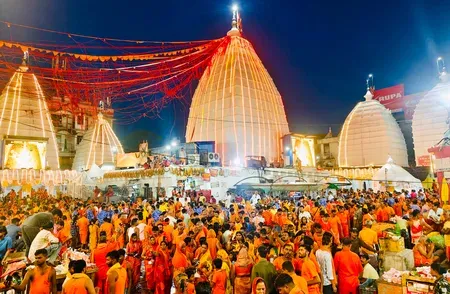
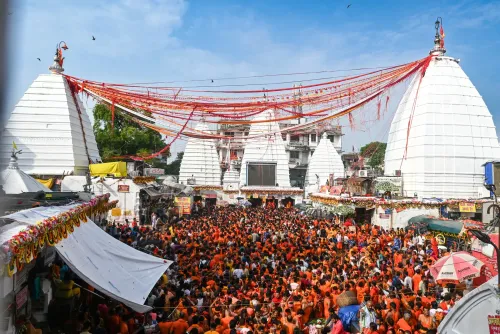
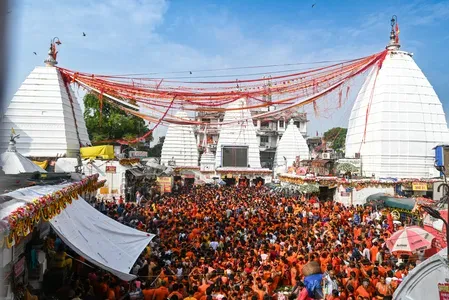
Eastern Railway (ER) recorded a footfall of 19,86,294 pilgrims across Jasidih, Basukinath, Deoghar, and Baidyanathdham stations between 30 July and 17 August 2026 during Shravani Mela, marking a 9.02 per cent rise over last year's count of 18.21 lakh. The surge underscores the growing scale of one of Jharkhand's most significant religious gatherings and the pressure it places on rail infrastructure each monsoon season.
Station-wise Footfall Breakdown
Jasidih handled the largest share of pilgrims at 12,27,836, cementing its role as the primary gateway to the Baidyanath Dham temple complex. Basukinath recorded the steepest growth at 37.89 per cent, while Deoghar saw a 21.31 per cent rise in footfall compared to the previous year.
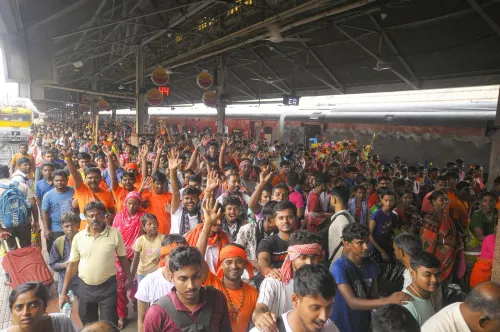
Peak crowds converged on 10 August and 17 August — both Mondays, regarded as especially auspicious during the month of Shravan. On 17 August, Jasidih alone processed 92,898 pilgrims. On 10 August, Basukinath and Deoghar handled 26,332 and 27,318 pilgrims respectively, while Baidyanathdham peaked at 9,170 pilgrims on 17 August.
Ticketing and Infrastructure Scale-up
To manage the volume without bottlenecks, ticketing ran continuously across all four stations. Jasidih deployed 10 automated ticket vending machines (ATVMs) and 20 Unreserved Ticketing System (UTS) counters across 43 shifts. Deoghar operated 3 ATVMs and 5 UTS counters across 12 shifts; Basukinath ran 2 ATVMs and 4 UTS counters across 9 shifts; and Baidyanathdham managed 1 ATVM and 3 UTS counters across 7 shifts.
The Asansol Division expanded its Shravani Mela pandal space by nearly 87 per cent — from 69,000 sq ft to 1,29,000 sq ft. Pandal floors and road zones were lined with PVC vinyl sheets for ease of cleaning. Additional Shravani Mela special trains and extra coaches on regular services helped maintain crowd flow throughout the period.
Pilgrim Comfort and Safety Measures
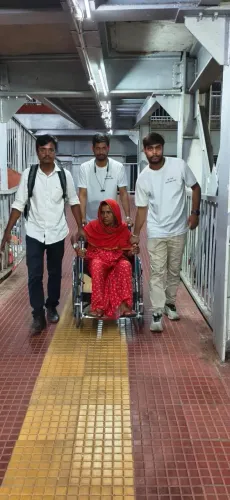
Devotee amenities were significantly upgraded, with 25 new water coolers, nearly 400 LED lights, expanded waiting halls, charging points, and 'May I Help You' booths installed across stations. Bharat Scouts and Guides joined railway staff to provide wheelchair assistance for elderly, sick, and Divyangjan passengers. Lifts on Platforms 2 and 3 at Jasidih operated without interruption.
Sanitation was maintained through rigorous protocols including regular mopping, disinfectants, bleaching powder, and mobile bio-toilet vans. Health monitoring ran around the clock via a 24x7 Integrated Command and Control Centre at Jasidih, backed by a War Room at the DRM Office in Asansol, with additional CCTVs, PA systems, and display boards in place.
Medical Aid and Security Deployment
Dedicated medical units attended to 13,494 pilgrims who required care during the mela — 6,500 at Jasidih, 3,146 at Deoghar, 2,014 at Basukinath, and 1,834 at Baidyanathdham. Services included first aid, oral rehydration salts (ORS), and essential medical care.
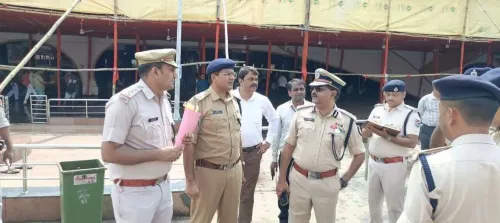
Security was reinforced with 330 RPF personnel managing queues, foot overbridges (FOBs), and entry and exit points. Passengers were advised to use FOBs strictly, avoid trespassing on tracks, and board only stationary trains.
ER's Chief Public Relations Officer Shibram Majhi said the core objective for Shravani Mela 2026 was to ensure every devotee experienced a safe, dignified, and effortless journey. He added that round-the-clock coordination among the Asansol Division, security forces, medical teams, and volunteers enabled ER to scale up infrastructure for nearly 20 lakh pilgrims without compromising on comfort or safety. With the mela now concluded, ER's performance this year sets a new operational benchmark for managing large-scale religious pilgrimages on the Indian rail network.
Point of View
But the fact that 13,494 pilgrims required medical attention during a single 19-day window points to the physical strain these events place on both infrastructure and human bodies. Eastern Railway's 87% pandal expansion and round-the-clock ticketing are commendable operational responses, yet they remain reactive — scaled up after crowds arrive, not before demand is forecast. As Shravani Mela footfall trends upward annually, the railway's planning cycle needs to shift from year-on-year improvisation to multi-year capacity design. The absence of any mention of crowd crush protocols or emergency evacuation drills in the official statement is a gap worth noting.
NationPress
3 Oct 2026
Frequently Asked Questions
How many pilgrims used Eastern Railway during Shravani Mela 2026?
Eastern Railway recorded a total of 19,86,294 pilgrims across Jasidih, Basukinath, Deoghar, and Baidyanathdham stations between 30 July and 17 August 2026. This was a 9.02% increase over the previous year's figure of 18.21 lakh.
Which station saw the highest footfall during Shravani Mela 2026?
Jasidih handled the largest share with 12,27,836 pilgrims, making it the primary gateway for the Baidyanath Dham pilgrimage. Its single-day peak was 92,898 pilgrims on 17 August 2026.
Which station recorded the biggest growth in pilgrim numbers?
Basukinath recorded the steepest year-on-year growth at 37.89%, followed by Deoghar at 21.31%. Both stations also saw their peak crowds on the auspicious Mondays of 10 and 17 August.
What arrangements did Eastern Railway make for pilgrim safety and health?
Eastern Railway deployed 330 RPF personnel, operated a 24x7 Integrated Command and Control Centre at Jasidih, and provided medical assistance to 13,494 pilgrims across the four stations. Services included first aid, ORS distribution, and wheelchair support for elderly and Divyangjan passengers.
How was ticketing managed at the four Shravani Mela stations?
Ticketing ran continuously across all stations using ATVMs and UTS counters. Jasidih alone operated 10 ATVMs and 20 UTS counters across 43 shifts, ensuring round-the-clock, hassle-free access for pilgrims.