North Korea border fencing not an Armistice violation, says ex-UNC official
Synopsis
A former UNC Military Armistice Commission deputy director has publicly pushed back against South Korea's 'clear violation' charge, arguing North Korea's barbed wire fencing and mine-laying near the MDL mirrors what the South itself does — and that the UNC's own cautious stance backs him up. The split assessment exposes just how contested the 70-year-old Armistice framework has become.
Key Takeaways
Former UNCMAC deputy director Michael MacArthur Bosack said North Korea's border fencing does not violate the Armistice Agreement , calling it 'construction and maintenance.' North Korean troops have reportedly installed barbed wire as close as 80-90 metres from the inter-Korean border, with mines reportedly laid as close as 5-10 metres to the MDL .
The South Korean military condemned the activity as a 'clear violation' of the armistice on Monday, 23 June .
The UNC itself said the measures 'do not automatically constitute' violations — a more cautious position than Seoul's .
Bosack noted that South Korea conducts similar fence and mine activities on its own side of the border.
Bosack served at UNCMAC from August 2019 to November 2025 and now works at a private think tank.
A former United Nations Command (UNC) official has assessed that North Korea's intensified border fencing along the Military Demarcation Line (MDL) does not constitute a violation of the Armistice Agreement that ended active hostilities in the 1950-53 Korean War, characterising the activity instead as routine 'construction and maintenance' work.
What the Former Official Said
Michael MacArthur Bosack, who served as deputy director of the UNC Military Armistice Commission (UNCMAC) from August 2019 to November 2025, shared his assessment in a post on X on Monday, 23 June. 'In my time at UNCMAC, I saw no evidence of the KPA boundary hardening activities being hostile in nature,' Bosack wrote, using the acronym for the Korean People's Army (KPA). Bosack currently works at a private think tank.
He further argued that North Korea's border-hardening campaign generates 'political friction at the top' while supporting practical stability on the ground, contending it reduces the risk of unauthorised crossings over the long term.
What North Korea Has Been Doing
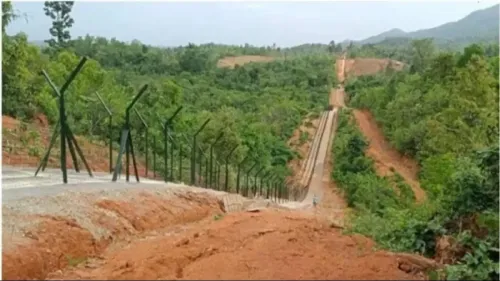
According to reports citing local media, North Korean troops have reportedly installed barbed wire fences as close as 80-90 metres from the inter-Korean border, with land cleared for mine-laying reported as close as 5-10 metres to the MDL. The construction activity has been observed in proximity to the Demilitarised Zone (DMZ), a buffer extending 2 kilometres on either side of the MDL designed to restrict troop movements and heavy weapons.
Divided Assessments: Seoul vs. the UNC
The South Korean military on Monday sharply condemned the border reinforcement efforts, calling them a 'clear violation' of the Armistice Agreement. Seoul's position rests on the DMZ's status as a restricted buffer zone where such physical alterations are considered impermissible.
The UNC itself — the body that administers and enforces the Armistice — took a more measured stance, stating that the border measures 'do not automatically constitute' violations of the agreement. This cautious framing stops short of endorsing Pyongyang's actions while declining to categorically condemn them.
Bosack's own position aligns with the UNC's restrained reading, noting that the South Korean army conducts comparable activities on its side of the border, including mine-planting and fence construction.
Broader Context
The dispute over North Korea's border activities comes amid sustained tensions on the Korean Peninsula, with inter-Korean communication channels remaining largely severed. The Armistice Agreement, signed on 27 July 1953, never gave way to a formal peace treaty, leaving the two Koreas technically still at war. Any action perceived as altering the DMZ's character carries outsized diplomatic weight. Notably, this is not the first time the two sides have disagreed on what constitutes a permissible activity within the DMZ framework — similar disputes have periodically flared over guard post construction and surveillance equipment deployment.
How the UNC formally rules on the matter — if it does — will be closely watched by both Seoul and Pyongyang as a signal of how far the armistice framework can flex under renewed border pressure.
Point of View
But who is saying it is permissible. A six-year UNCMAC insider publicly contradicting Seoul's 'clear violation' framing — and aligning with the UNC's own hedged position — reveals a structural crack in how the Armistice is interpreted. South Korea needs the violation label to build diplomatic pressure; the UNC needs interpretive caution to preserve its own authority as enforcer. Bosack's intervention makes it harder for Seoul to claim consensus. The deeper issue is that a 1953 document was never designed to adjudicate 21st-century border-hardening at sub-10-metre precision — and no one has a credible mechanism to update it.
NationPress
21 Sept 2026
Frequently Asked Questions
Did North Korea violate the Armistice Agreement with its border fencing?
A former UNC Military Armistice Commission official, Michael MacArthur Bosack, said the fencing does not constitute a violation, describing it as 'construction and maintenance' activity. The UNC itself has said the measures do not automatically constitute a violation, though South Korea's military has called it a 'clear violation.'
How close is North Korea's fencing to the Military Demarcation Line?
North Korean troops have reportedly installed barbed wire fences as close as 80-90 metres from the inter-Korean border, with land reportedly cleared for mine-laying as close as 5-10 metres to the MDL, according to reports citing local media.
What is the Demilitarised Zone (DMZ) and why does it matter here?
The DMZ is a buffer zone extending 2 kilometres on either side of the MDL, established under the 1953 Armistice Agreement to restrict troop movements and heavy weapons. Any physical alteration within or near this zone carries significant diplomatic and legal weight under the armistice framework.
Who is Michael MacArthur Bosack and why does his view carry weight?
Michael MacArthur Bosack served as deputy director of the UNC Military Armistice Commission from August 2019 to November 2025, giving him direct oversight experience of armistice enforcement. He currently works at a private think tank and shared his assessment in a post on X on 23 June.
What has the UNC said about North Korea's border activities?
The UNC, which administers and enforces the Armistice Agreement, stated that North Korea's border measures 'do not automatically constitute' violations — a deliberately cautious position that stops short of both endorsing and condemning Pyongyang's actions.