Maharashtra CM Fadnavis gets power to override ministers under new 2026 rules
Synopsis
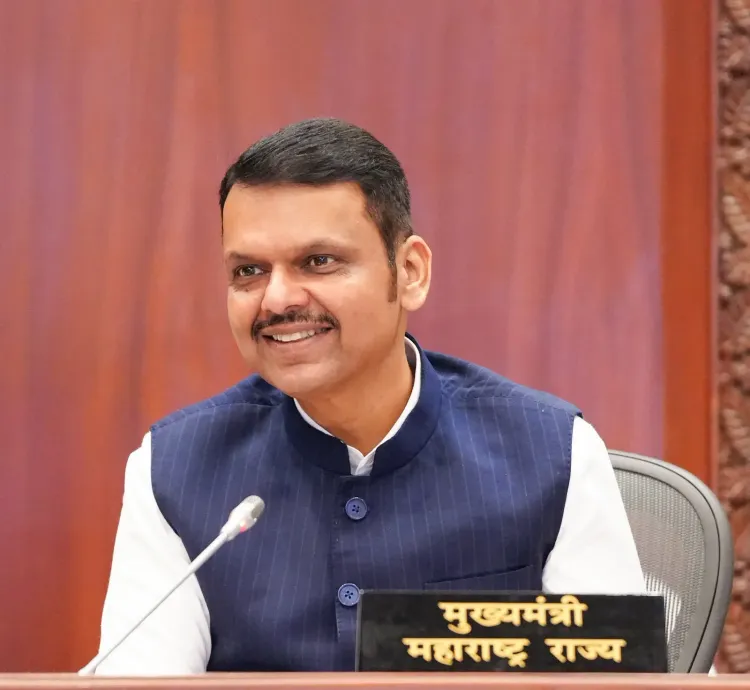
Maharashtra's new Rules of Business 2026 hand Chief Minister Devendra Fadnavis an explicit legal override over every cabinet minister in the state — a sweeping centralisation of executive power that analysts say could test the Mahayuti coalition's fault lines if deployed against BJP's own alliance partners.
Key Takeaways
Chief Minister Devendra Fadnavis has been granted legal authority to alter, modify, or cancel any cabinet minister's decision under Rule 13(5) of the Maharashtra Government Rules of Business, 2026 .
The rules came into force on 14 August 2026 upon publication in the official state gazette under Article 166(2) and (3) of the Constitution of India .
Quasi-judicial matters are exempt; the CM must record written reasons before overturning any ministerial decision.
No department can issue orders with financial implications without prior concurrence from the Finance Department , per Rule 17(2) and Rule 39 .
The rules raise concerns over Mahayuti coalition dynamics, with portfolios shared among BJP , Shiv Sena , and NCP .
Chief Minister Devendra Fadnavis has been vested with explicit legal authority to intervene in, modify, or overturn decisions made by any cabinet minister in Maharashtra, as long as the action is taken in the public interest. The powers are enshrined in the newly notified Maharashtra Government Rules of Business, 2026, which came into force on 14 August 2026 upon publication in the official state gazette.
What the New Rules Say
Published by the General Administration Department under Article 166(2) and (3) of the Constitution of India, the framework supersedes all prior rules governing executive decision-making across Maharashtra. Under Rule 13(5), the Chief Minister holds the authority to alter, modify, or cancel any decision taken by a departmental minister in the public interest — though quasi-judicial matters are explicitly exempt.
Critically, the Chief Minister is legally required to record detailed written reasons before overturning a minister's decision. The CM also retains the right to requisition files, documents, or records from any department at any time, and ministers as well as departmental secretaries are legally bound to comply. Day-to-day administrative responsibility for each portfolio continues to rest with the minister-in-charge.
Key Provisions of the Framework
Rule 2(c) formally defines a 'case' to include digital notes, e-documents, and files processed through the state's e-Office system — a recognition of Maharashtra's shift toward digital governance. Rule 17(2) and Rule 39 mandate that no department can issue orders with financial implications — such as revenue abandonment, land grants, concessions, or unbudgeted expenditure — without prior concurrence from the Finance Department.
Under Rule 16(1), the Chief Secretary — designated as the chief of civil services and secretary to the Cabinet — is mandated to advise the Chief Minister or ministers if any proposed action violates statutory provisions or established policy. Departments must consult all affected ministries before finalising decisions, and any dispute involving the Government of India or another state government must be reported immediately to both the Chief Minister and the Governor.
Empowered Committees and Digital Governance
The rules also allow the state government to constitute Empowered Committees headed by the Chief Secretary, Additional Chief Secretary, or Principal Secretary to decide on designated subjects. This creates a parallel fast-track mechanism for complex inter-departmental matters, reducing bureaucratic bottlenecks.
Coalition Implications and Political Reactions
The notification has reportedly raised eyebrows across political corridors in Mumbai, particularly over its implications for the ruling Mahayuti coalition. Cabinet portfolios are currently shared among the Bharatiya Janata Party (BJP), Eknath Shinde's Shiv Sena, and Sunetra Pawar's Nationalist Congress Party (NCP). Analysts suggest that if Fadnavis exercises this override authority against decisions taken by ministers from allied parties, it could trigger internal friction or political debate within the alliance.
This is a significant structural shift in how Maharashtra's executive branch is organised — and how power is distributed within a coalition government. Whether Fadnavis uses these powers sparingly or assertively will likely define the political temperature within the Mahayuti in the months ahead.
Point of View
And a single high-profile reversal of an allied minister's decision could fracture the alliance's working trust faster than any electoral setback. What the rules do not answer is the enforcement dynamic: the CM's power is only as stable as the coalition's tolerance for its use. Notably, the written-reasons requirement is a safeguard on paper, but with no independent review mechanism specified, it is ultimately self-policed. Maharashtra has a long history of coalition governments unravelling over administrative turf — this framework, if used assertively, could accelerate that pattern.
NationPress
2 Oct 2026
Frequently Asked Questions
What are the Maharashtra Government Rules of Business, 2026?
The Maharashtra Government Rules of Business, 2026 is a newly notified administrative framework that defines the powers and procedures of the Chief Minister, cabinet ministers, Chief Secretary, and departmental secretaries. It supersedes all previous rules and came into force on 14 August 2026 upon publication in the official state gazette.
Can CM Devendra Fadnavis override any minister's decision in Maharashtra?
Yes, under Rule 13(5) of the new rules, Chief Minister Devendra Fadnavis has explicit legal authority to alter, modify, or cancel decisions taken by any departmental minister in the public interest. Quasi-judicial matters are exempt, and the CM must record detailed written reasons for any such intervention.
How do the new rules affect Maharashtra's Mahayuti coalition?
Analysts suggest the override powers could create internal friction within the Mahayuti alliance, which comprises the BJP, Eknath Shinde's Shiv Sena, and Sunetra Pawar's NCP — all of whom hold cabinet portfolios. If Fadnavis exercises the authority against an allied party's minister, it could trigger political tensions within the coalition.
What financial controls are introduced under the new rules?
Under Rule 17(2) and Rule 39, no administrative department can issue orders involving financial implications — including revenue abandonment, land grants, concessions, or unbudgeted expenditure — without prior approval from the Finance Department.
What role does the Chief Secretary play under the new framework?
The Chief Secretary is designated as the chief of civil services and secretary to the Cabinet. Under Rule 16(1), the Chief Secretary is mandated to advise the Chief Minister or ministers if any proposed action violates statutory provisions or established policy.