Balochistan oil: Only 6% of Pakistan's 1,250 exploratory wells drilled there

Synopsis
Balochistan once supplied 82% of Pakistan's natural gas — now it contributes just 20%, and only 6% of the country's exploratory wells have ever been drilled there. With 90% of the province unexplored, the gap between Balochistan's hydrocarbon potential and its actual output is a direct consequence of security breakdown and chronic underdevelopment of producing communities.
Key Takeaways
Only 6 per cent of Pakistan's nearly 1,250 exploratory wells have been drilled in Balochistan , leaving about 90 per cent of the province unexplored.
Balochistan supplied approximately 82 per cent of Pakistan's natural gas in 1982 ; that share has fallen to roughly 20 per cent today.
Key gas fields in Dera Bugti district — including Sui , Loti , Pirkoh , Uch , and Zin — once dominated national supply.
Oil and gas districts generate tens of billions of rupees annually in royalties and taxes, yet remain significantly underdeveloped, fuelling local alienation.
The analysis argues that security normalisation and meaningful community engagement are prerequisites for unlocking the province's hydrocarbon potential.
Despite holding vast untapped hydrocarbon reserves, Balochistan has seen only about 6 per cent of the nearly 1,250 exploratory wells drilled across Pakistan — leaving roughly 90 per cent of the province largely unexplored, according to a recent analysis cited by The Express Tribune. The report argues that improved security conditions could unlock a fresh wave of exploration capable of reversing Pakistan's steady decline in domestic oil and gas output.
A Province That Once Powered Pakistan's Gas Supply
Balochistan's energy significance is not new. As recently as 1982, the province supplied approximately 82 per cent of Pakistan's total natural gas requirements, with the Dera Bugti district alone contributing a dominant share through major fields including Sui, Loti, Pirkoh, Uch, and Zin.
That contribution has fallen sharply over the decades — to around 55 per cent by 1995, 25 per cent by 2005, and currently close to 20 per cent of national natural gas supply. The decline tracks directly with the deterioration of the security environment, which has progressively choked off exploration investment.
Security Barrier: The Core Obstacle to Exploration
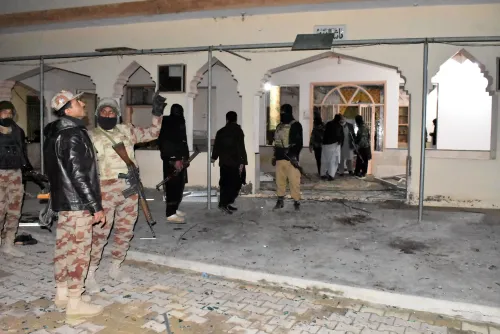
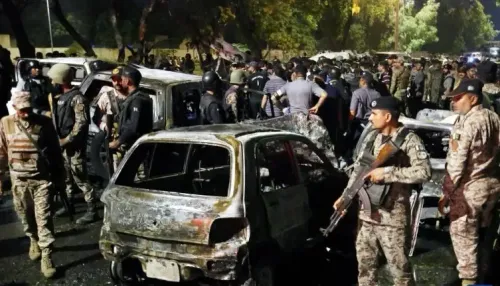
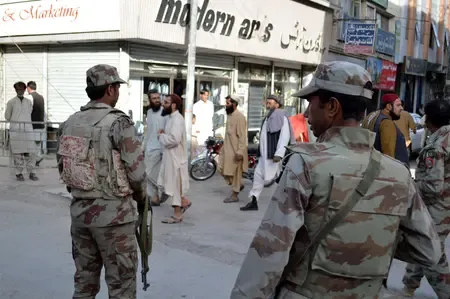
Growing security challenges over the past two decades have severely curtailed exploration activity and efforts to replace depleting reserves, the analysis noted. With approximately 90 per cent of Balochistan's territory still largely unexplored, the province represents one of the most significant untapped hydrocarbon frontiers in South Asia — but one that energy companies have been reluctant to enter.
The report argues that a stable security environment could trigger a fresh exploration cycle, potentially helping Pakistan not only arrest but reverse the decline in indigenous production — a critical pressure point for an economy grappling with chronic energy deficits and import costs.
The Development Gap Fuelling Unrest
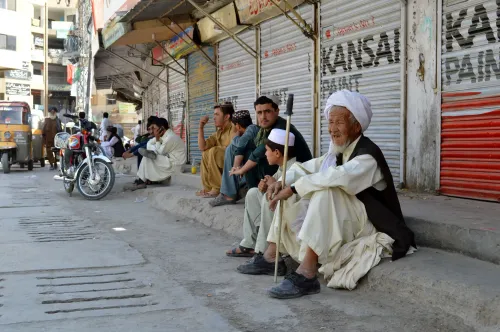
The analysis identifies a structural contradiction at the heart of the Balochistan problem: oil and gas producing districts generate tens of billions of rupees annually for the state through royalties, production bonuses, and taxes paid by exploration and production companies — yet many of these same areas remain significantly underdeveloped.
This gap between resource extraction and local development, the report argues, breeds despondency and alienation among local populations, making communities vulnerable to exploitation by what it terms 'negative forces.' The same dynamic is described as a contributing factor to security challenges in Khyber-Pakhtunkhwa as well.
Community Engagement as a Strategic Lever
The analysis stresses that community engagement is not a soft add-on but a strategic necessity for enabling energy companies to operate in resource-rich regions. It identifies two core components: first, the state's obligation to deliver basic services — healthcare, education, and employment — to producing communities; and second, ensuring that local populations have a visible stake in the revenues their land generates.
Failure on the first count, the report warns, creates the conditions for instability that then make the second impossible to achieve. This cycle, critics argue, has persisted in Balochistan for decades despite repeated policy commitments from successive governments in Islamabad.
What Needs to Change
For Balochistan's hydrocarbon potential to be realised, the analysis points to a twin imperative: security normalisation and a credible compact with local communities on development spending. Without both, the province's vast reserves are likely to remain stranded — and Pakistan's energy import bill will continue to climb. How quickly Islamabad can move on either front remains an open question.
Point of View
But of a resource extraction model that has taken royalties out of Balochistan for decades without proportionate investment back in. Pakistan's energy crisis is partly self-inflicted: the province most likely to hold the reserves needed to reduce import dependence is also the one Islamabad has most consistently failed on development. Successive governments have treated Balochistan's instability as a law-and-order problem when the analysis here suggests it is equally a political economy problem. Until the revenue-to-development pipeline is fixed, security will remain elusive — and so will the exploration that Pakistan's energy balance desperately needs.
NationPress
18 Aug 2026
Frequently Asked Questions
How much of Balochistan has been explored for oil and gas?
Only about 6 per cent of Pakistan's nearly 1,250 exploratory wells have been drilled in Balochistan, leaving approximately 90 per cent of the province largely unexplored. The low drilling rate is primarily attributed to deteriorating security conditions over the past two decades.
What share of Pakistan's natural gas does Balochistan currently supply?
Balochistan currently accounts for nearly 20 per cent of Pakistan's natural gas supply. This is a sharp decline from 82 per cent in 1982 and 55 per cent in 1995, reflecting both reserve depletion and reduced exploration investment.
Why has oil and gas exploration in Balochistan declined?
Growing security challenges over the past two decades have made it difficult for energy companies to operate in the province. The analysis also points to a development deficit — producing districts generate tens of billions of rupees in royalties annually but remain significantly underdeveloped, fuelling local alienation.
What would it take to revive exploration in Balochistan?
According to the analysis, two conditions are essential: a stable security environment and meaningful community engagement, including state delivery of basic services such as healthcare, education, and employment in producing districts. Without both, energy companies are unlikely to commit capital to the region.
Which gas fields in Balochistan were historically significant?
The Dera Bugti district was historically the most productive, with major fields including Sui, Loti, Pirkoh, Uch, and Zin accounting for a large share of Pakistan's national gas output. Sui in particular was the cornerstone of Pakistan's gas network for decades.