India flags Balochistan resource exploitation at UN, warns of regional instability
Synopsis
India used a UN Security Council debate on natural resource governance to deliver a pointed — if diplomatically unnamed — indictment of Pakistan's treatment of Balochistan. The message: resource-rich but development-poor provinces don't just suffer internally; they export instability across borders. It is a rare multilateral move by New Delhi on an issue Islamabad considers strictly domestic.
Key Takeaways
India's Permanent Representative P.
Harish raised Balochistan's resource exploitation at a UN high-level debate on 23 July without naming Pakistan directly.
Harish warned that denying resource-rich provinces an equitable share of benefits causes 'internal instability and insecurity' — visible 'in our own region.' Balochistan holds major reserves of natural gas, coal, copper, and gold but remains one of Pakistan's poorest provinces.
India cautioned that 'heavy-handed and securitised' governance of resource-rich provinces 'only makes matters worse.' UN Secretary-General António Guterres separately called for closing the gap between recognised sovereignty over natural resources and actual sovereign rights in practice.
India also acknowledged that illicit resource exploitation can finance armed groups and prolong conflict, while stressing resources must primarily serve development.
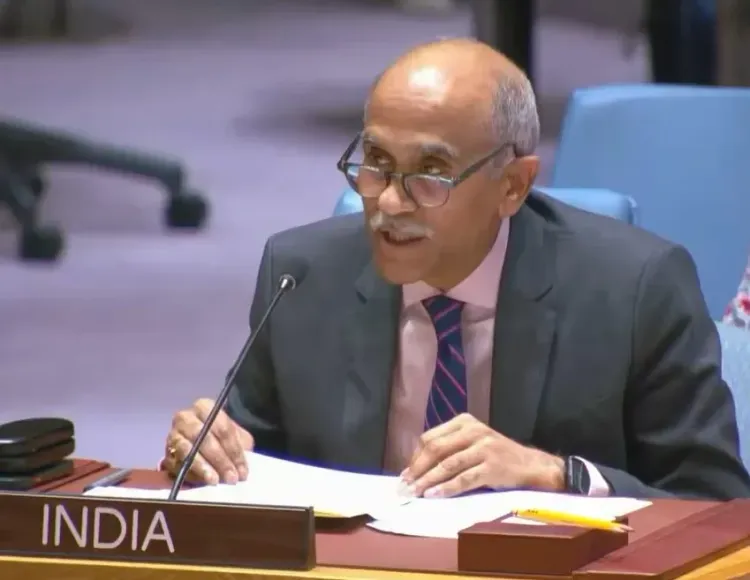
India's Permanent Representative P. Harish on Wednesday, 23 July raised the issue of Balochistan's resource exploitation at the United Nations, warning that denying resource-rich provinces their equitable share of benefits breeds insurgency and regional instability. Speaking at a high-level UN open debate, Harish stopped short of naming Pakistan but made the reference unmistakable.
What India Said at the UN
'It is the responsibility of States to ensure that subnational provinces that are rich in resources, like oil and gas, minerals, rare earths and precious metals... have an equitable and just share in the benefits derived from these resources,' Harish told the debate on 'Natural Resource Governance: The Foundation of Peace, Security and Prosperity'.
He added that failing to do so risked 'internal instability and insecurity, not just within such countries, but also in the wider region.' The consequences of this failure, he said, are 'clearly visible, including in our own region' — a pointed diplomatic reference to Pakistan's handling of Balochistan.
The Balochistan Context
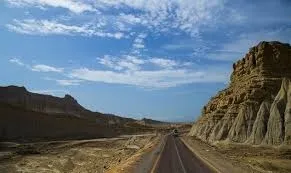
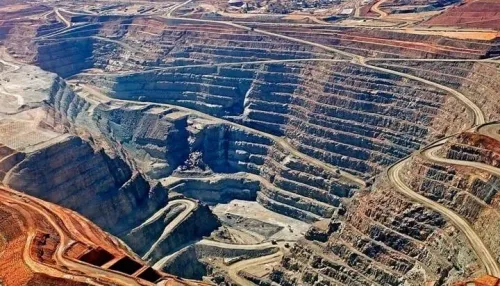
Balochistan, Pakistan's largest province by area, holds significant reserves of natural gas, coal, copper, and gold, and contributes disproportionately to Pakistan's economy. Yet it remains among the country's poorest provinces by development indicators. Decades of perceived economic marginalisation have fuelled recurring demands among Baloch communities for a fair share of resource revenues.
Those demands, met with what critics describe as a heavy security response by Islamabad, have sustained a long-running insurgency. Harish directly addressed this dynamic: 'A heavy-handed and securitised approach to governance of resource-rich provinces only makes matters worse.'
Transborder Spillover Risk
India's representative also flagged the secondary consequences of resource misgovernance. 'Provinces that are resource rich but development poor become centres of insecurity that radiate instability beyond their borders, even into neighbouring countries,' Harish said. He further warned that such instability 'attracts transborder interventions and resource extraction by external actors, which further exacerbates grievances of local communities and fuels instability.'
The remarks carry significance given India's own border with Pakistan and its longstanding concerns about cross-border militancy linked to ungoverned spaces.
UN Secretary-General's Broader Warning
UN Secretary-General António Guterres echoed the theme, stating that 'countries and communities must benefit — first and most — from the resources in their own backyard.' Guterres drew a direct line from colonial-era extraction patterns to present-day governance deficits, particularly in Africa, where he said 'resources are extracted, value is captured elsewhere, and impoverished communities are left behind to cope with the environmental and socioeconomic damage.'
'It is time to close the gap between a State's recognised sovereignty over its natural resources, and its sovereign rights in practice,' Guterres said.
India's Broader Position on Resource Governance
Harish affirmed that India recognises 'the illicit exploitation and trafficking of natural resources can, in certain situations, contribute to the financing of armed groups, and prolong conflict.' However, he stressed that natural resources are 'first and foremost, an engine of development and prosperity for sovereign States,' and that the challenge lies in governing them 'in a transparent, accountable and nationally owned manner for the benefit of present and future generations.'
With Balochistan's unrest showing no signs of abating, India's decision to raise the issue in a multilateral forum signals a calibrated shift toward internationalising the narrative around Pakistan's internal governance failures.
Point of View
Letting geography do the work. By framing Balochistan's crisis as a natural resource governance failure rather than a bilateral dispute, New Delhi has sought to internationalise an issue Pakistan insists is a domestic security matter. The move is notable for its timing: Baloch civil society protests have intensified in recent months, drawing rare international attention. What India did not address is its own complex history with resource-revenue disputes in states like Jharkhand and Chhattisgarh — a gap that Pakistan's diplomatic corps will likely exploit. The sharper question is whether this statement is a one-off rhetorical point or the opening of a sustained multilateral campaign.
NationPress
21 Oct 2026
Frequently Asked Questions
What did India say about Balochistan at the United Nations?
India's Permanent Representative P. Harish, speaking at a UN high-level debate on 23 July, argued that resource-rich provinces must receive an equitable share of the benefits from their natural resources. Without naming Pakistan, he said the consequences of failing to do so are 'clearly visible, including in our own region' — a direct reference to Balochistan's ongoing insurgency.
Why is Balochistan considered resource-rich but underdeveloped?
Balochistan holds significant reserves of natural gas, coal, copper, and gold, and contributes disproportionately to Pakistan's economy. Despite this, it remains one of Pakistan's poorest provinces by development indicators, a disparity that has fuelled decades of Baloch demands for a fair revenue share and, when suppressed, an armed insurgency.
What was the UN debate where India made these remarks?
India spoke at a high-level UN open debate titled 'Natural Resource Governance: The Foundation of Peace, Security and Prosperity' on 23 July. UN Secretary-General António Guterres also addressed the debate, warning against patterns where resources are extracted but value is captured elsewhere, leaving communities behind.
Did India name Pakistan in its UN statement on Balochistan?
No. India did not name Pakistan directly. Harish used diplomatic language, referring to 'our own region' and stating that the consequences of denying resource revenues to provinces are 'clearly visible' — language widely interpreted as pointing to Pakistan's governance of Balochistan.
What broader warning did India issue on natural resource governance?
India warned that 'provinces that are resource rich but development poor become centres of insecurity that radiate instability beyond their borders.' It also flagged that such instability attracts 'transborder interventions and resource extraction by external actors,' further fuelling local grievances and regional conflict.