Operation Sindoor documentary rattles Pakistan, ISPR launches counter-offensive

Synopsis
Discovery Channel's 'Declassified: Operation Sindoor' has done what no diplomatic communique could — it has forced Pakistan's military establishment into a public, defensive crouch. The ISPR's aggressive rebuttal, combined with an alleged coordinated disinformation campaign, signals that the documentary has struck exactly where Islamabad is most vulnerable: the gap between what it told its people and what actually happened.
Key Takeaways
Discovery Channel premiered 'Declassified: Operation Sindoor' on 15 August , featuring Indian military commanders and personnel.
Pakistan's ISPR has publicly questioned India's 100 per cent success claim and called the documentary a one-sided depiction.
Indian officials allege the ISPR has been specifically instructed to run a sustained campaign against the documentary's authenticity.
Lashkar-e-Taiba (LeT) , Jaish-e-Mohammad (JeM) , and Hizbul Mujahideen reportedly suffered the heaviest infrastructure losses during the operation.
Indian intelligence agencies are reportedly monitoring Pakistani social media handles allegedly spreading manipulated content to discredit the Indian armed forces .
Officials say Pakistan's aggressive military posture in PoK , Balochistan , and Khyber Pakhtunkhwa is aimed at deflecting domestic scrutiny over the operation's outcome.
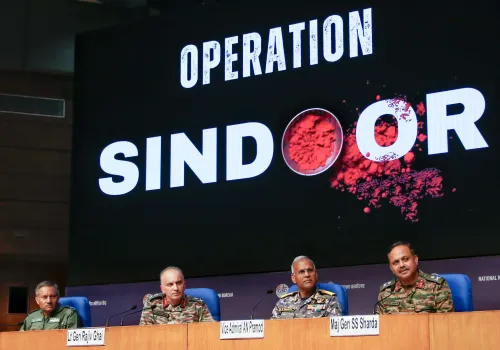
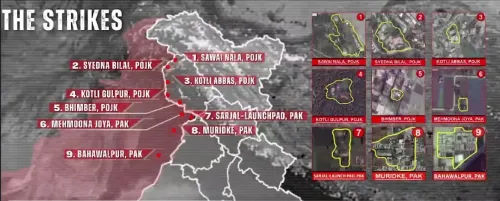
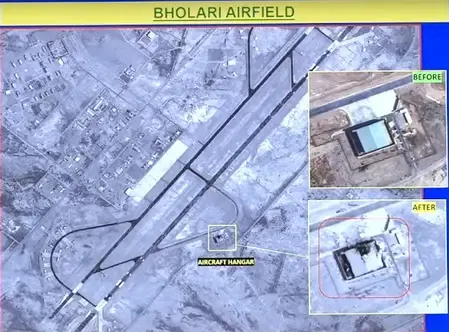
Pakistan's military establishment is visibly unsettled by Discovery Channel's two-part documentary titled 'Declassified: Operation Sindoor', which premiered on 15 August and has since drawn an aggressive rebuttal from Islamabad. The film, featuring Indian military commanders and personnel directly involved in the cross-border strikes, offers a detailed account of the planning and execution of Operation Sindoor — the Indian armed forces' precision campaign launched in response to the Pahalgam terror attack.
ISPR Fires Back
The official Pakistani response came from the Inter-Services Public Relations (ISPR), the media wing of the Pakistan Army. The ISPR dismissed the documentary as India's own depiction of events and publicly questioned India's claim of 100 per cent operational success. According to Indian officials, the ISPR has been specifically instructed to mount a sustained campaign against the documentary and challenge its authenticity.
'Although it makes no difference to the Indian people, those in Pakistan will once again begin questioning the establishment,' an Intelligence Bureau official said, explaining the rationale behind Islamabad's aggressive pushback.
What the Documentary Exposes
The two-part series delves into the operational mechanics of Operation Sindoor, including the targeting of infrastructure linked to Lashkar-e-Taiba (LeT), Jaish-e-Mohammad (JeM), and Hizbul Mujahideen — the three terror outfits that, according to officials, bore the heaviest losses. All three groups reportedly lost a significant portion of their infrastructure, including training facilities, headquarters, and key personnel.
Analysts tracking Pakistan say the documentary has 're-opened a wound' that the Pakistani military would prefer to keep buried. 'The experts say that the documentary has just rubbed salt to the wounds. It has hit a nerve centre and once again raked up a sensitive issue,' one official noted.
Pakistan's Post-Sindoor Information War
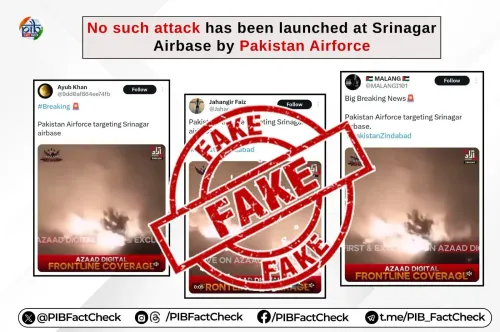
Indian officials allege that since Operation Sindoor, Pakistan's Army and its intelligence directorate, the Inter-Services Intelligence (ISI), have operationalised a coordinated disinformation campaign against India. Multiple social media handles, reportedly created and managed by Pakistani military and intelligence operatives, have been used to spread fabricated narratives and manipulated visuals aimed at discrediting the Indian armed forces and the Union Government.
'These were aimed at both spreading lies and also trying to demoralise the forces,' an official said. Indian intelligence agencies are reportedly maintaining close surveillance of these handles. The ISPR's latest offensive against the documentary, officials say, is a continuation of this broader information warfare strategy — designed to seed doubt among international audiences about the true outcome of the operation.
The Broader Fallout in Pakistan
Pakistan watchers note that the domestic political fallout from Operation Sindoor has placed the Pakistani military under sustained pressure. The establishment, they argue, faces the difficult task of explaining operational losses not just to its civilian population but also to the very terror groups it has long patronised. The aggressive posture adopted by the Pakistani military in regions including Pakistan-occupied Kashmir (PoK), Balochistan, Afghanistan, and Khyber Pakhtunkhwa (KP) is, according to Indian officials, a deflection strategy to mask the loss of face suffered during the Indian operation.
As the documentary continues to circulate globally, the ISPR's countermeasures are expected to intensify — making the information battle around Operation Sindoor as contested as the operation itself.
Point of View
And every ISPR statement amplifies its reach. Pakistan's information war since Operation Sindoor has been reactive rather than strategic, and this latest episode follows the same pattern. The more telling question is what the three named terror groups — LeT, JeM, and Hizbul Mujahideen — make of a military that cannot protect their infrastructure and cannot credibly deny the losses either.
NationPress
18 Aug 2026
Frequently Asked Questions
What is the 'Declassified: Operation Sindoor' documentary?
It is a two-part Discovery Channel documentary that premiered on 15 August, featuring Indian military leaders and personnel who planned and executed Operation Sindoor — the Indian armed forces' precision strikes targeting terror infrastructure in Pakistan linked to the Pahalgam attack.
Why has Pakistan's ISPR reacted so strongly to the documentary?
The ISPR has questioned India's 100 per cent success claim and called the film a one-sided account. According to Indian Intelligence Bureau officials, the ISPR has been specifically instructed to attack the documentary's credibility to prevent domestic audiences in Pakistan from questioning the military establishment over operational losses.
Which terror groups were most affected by Operation Sindoor?
Lashkar-e-Taiba (LeT), Jaish-e-Mohammad (JeM), and Hizbul Mujahideen reportedly suffered the heaviest losses, including destruction of training facilities, headquarters, and loss of personnel, according to officials cited in reports.
What is Pakistan's alleged disinformation campaign after Operation Sindoor?
Indian officials allege that since Operation Sindoor, Pakistan's Army and the ISI have created and operated social media handles to spread fabricated narratives and manipulated visuals aimed at discrediting the Indian armed forces. Intelligence agencies are reportedly monitoring these handles closely.
What does Pakistan's post-Sindoor behaviour signal, according to Indian officials?
Indian officials say the Pakistani military's aggressive posture in PoK, Balochistan, Afghanistan, and Khyber Pakhtunkhwa is a deflection strategy — an attempt to cover up the loss of face suffered during Operation Sindoor by projecting strength domestically.