Surat businessman duped of ₹1.24 crore by fake govt cyber forensic agent
Synopsis
A man who forged a government cyber forensic identity card and invented a web of fake cryptocurrency transactions allegedly defrauded a Surat petrochemical businessman of ₹1.24 crore — then spent the money on a BMW and Mumbai property. The accused was himself a prior fraud victim who reportedly replicated the same playbook on others.
Key Takeaways
Priyank Vyas , 34, was arrested from Mira Road, Mumbai for allegedly defrauding a Surat petrochemical businessman of ₹1,24,53,900 .
Vyas posed as a Forensic Cyber Crime Specialist using a fake government identity card bearing the national emblem.
A total of ₹1,29,25,100 was collected from the complainant and a friend in 21 instalments over 11 months (November 2025 – October 2026).
The accused allegedly used the funds to buy a property worth ₹1.5 crore , a BMW , and paid ₹80 lakh as token for another flat in Mumbai.
Police suspect the total amount collected from Surat victims may be close to ₹2 crore , with at least two additional victims identified.
Co-accused chartered accountant Rohan Kelawala remains absconding; the case was filed under the BNS 2023 and IT Act Section 66(D) .
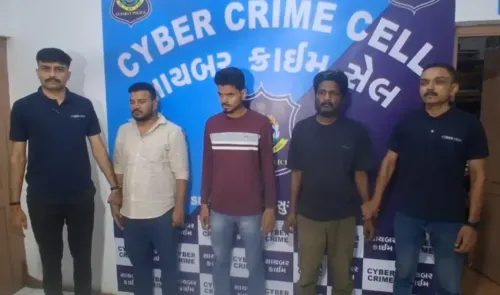
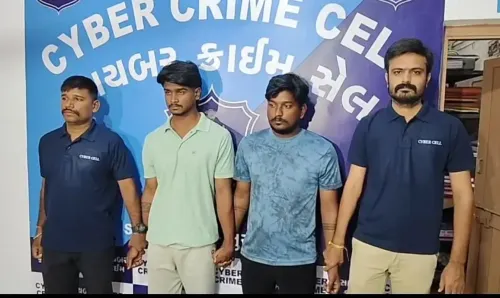
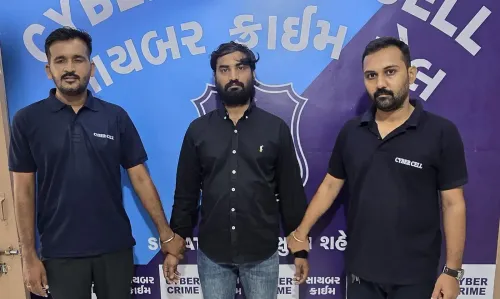
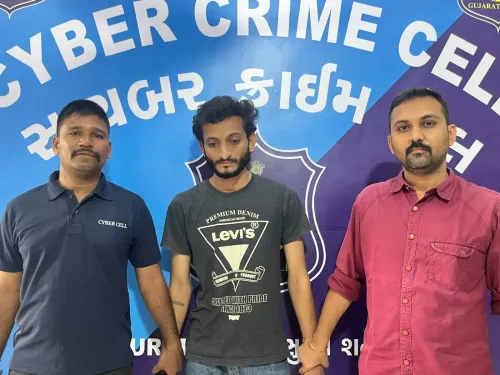
A Surat-based petrochemical businessman was allegedly defrauded of ₹1.24 crore by a man who posed as a government cyber forensic specialist, promising high returns through forex trading, cryptocurrency, and overseas funds — before using the proceeds to buy property and luxury cars in Mumbai, according to police. The Surat City Cyber Crime Cell arrested the main accused, Priyank Vyas, 34, from Mira Road, Mumbai, following a complaint registered on 30 October 2026.
How the Fraud Was Executed
The scheme began in November 2025, when the complainant approached a chartered accountant in Surat for assistance with banking and loan-related work. The accountant — identified as Rohan Kelawala, who is currently absconding — allegedly told the businessman that he invested clients' money in forex trading and introduced him to Vyas, describing him as a cyber forensic expert and cryptocurrency specialist. The two first met at a hotel in Mumbai.
To establish credibility, Vyas allegedly produced a fake identity card bearing the national emblem, identifying him as 'Dr Priyank Samirbhai Vyas – Forensic Cyber Crime Specialist, Cyber Forensic Department, Mumbai'. He also claimed his car carried a government board and operated under a UPI ID named 'fslcyberforensic' and an email address styled 'fslmumbai'.
Vyas initially demanded ₹18 lakh, claiming it was needed to renew the IP address of a terminal he had developed. He promised to return ₹30 lakh within 60 days and offered the complainant a 20 per cent partnership in his business. On 21 January 2026, the complainant sent ₹18 lakh in cash to Kelawala's office.
Mounting Demands and Fabricated Transactions
Over the following months, Vyas communicated with the complainant through a 'Work' group on the BOTIM application, sharing screenshots of USDT transactions and photographs of VISA cards issued by foreign banks to simulate genuine activity. Between February and October 2026, he allegedly demanded further payments on a series of pretexts — including a ₹15 crore server fund, a ₹153 crore fund from Argentina, the withdrawal of 5.3 million US dollars from a card, and the recovery of Bitcoin from a wallet linked to a person in Nashik.
Payments were collected as gas fees, transaction charges, withdrawal charges, processing fees, and personal loans through cash, bank transfers, Google Pay, angadia channels, and USDT. In total, the accused and his associates collected ₹1,29,25,100 from the complainant and a friend in 21 instalments over 11 months. Of this, ₹4.70 lakh was returned, leaving ₹1,24,53,900 unpaid.
To sustain the deception, Vyas repeatedly displayed large balances on a laptop and sent screenshots showing 'Transaction Success', only to later claim the transactions had failed — citing IP-related banking errors, Ethereum server outages, and 83,768 ETH allegedly blocked due to transaction size. He also claimed a wallet audit had flagged 17 errors — 15 yellow and two red alerts — and demanded additional fees to resolve them.
Where the Money Went
According to police, none of the collected funds were used for any server, fund, or cryptocurrency transaction. Instead, Vyas allegedly purchased a property in Mumbai worth approximately ₹1.5 crore, bought a BMW luxury car, and paid roughly ₹80 lakh as a token amount for another flat. Investigators are gathering documentary evidence to establish that these assets were acquired from fraud proceeds, with a view to seizing or freezing them.
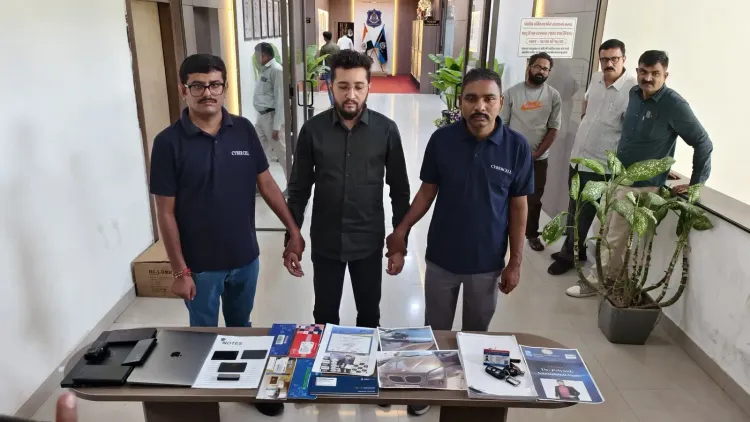
Police have seized two mobile phones, two laptops, two hard disks, two pen drives, three cryptocurrency wallet cards, the fake Cyber Forensic Department identity card, a card of the Crime Grievance and Intelligence Council, two cheque books, two bank passbooks, flat-related documents, a BMW, and a Honda City. The total value of seized items has been assessed at ₹9.65 lakh.
Wider Victim Circle and Accused Background
The investigation has revealed at least two additional alleged victims in Surat. One of the complainant's friends reportedly paid ₹74.90 lakh in instalments via bank transfers and cash, while another Surat resident allegedly lost ₹7.5 lakh. Police suspect the total amount collected from victims in the city may be close to ₹2 crore and are investigating whether more individuals were cheated.
Notably, investigators found that both Vyas and Kelawala had themselves been defrauded while trading on a platform called GlobalSwiftPay, which displayed large US dollar balances that could not be withdrawn. Police suspect the two subsequently replicated that very model — displaying fictitious balances and demanding fees — to defraud others.
The case was registered at the Surat City Cyber Crime Police Station on 30 October 2026 under provisions of the Bharatiya Nyaya Sanhita (BNS), 2023, including Sections 318(4), 204, 205, 336(2), 338, 336(3), 340(2), 61(2), and 3(5), as well as Section 66(D) of the Information Technology Act. A team led by Police Inspector N R Patel conducted the investigation.
Police Advisory
Police have urged the public to verify investment platforms and brokers before transferring money, avoid offers guaranteeing unusually high returns, and refrain from paying additional amounts in the name of withdrawal or tax-processing fees. Efforts to arrest the absconding accused Rohan Kelawala are ongoing.
Point of View
Yet went on to replicate the same model. This is a pattern investigators increasingly encounter — scam victims who absorb the playbook and graduate to perpetrators. The fabrication of a government identity card bearing the national emblem is a serious escalation, raising questions about whether existing penalties under the IT Act and BNS are deterrent enough. With police suspecting a total exposure of nearly ₹2 crore across multiple Surat victims, the full scale is likely still emerging.
NationPress
3 Nov 2026
Frequently Asked Questions
Who is Priyank Vyas and what is he accused of?
Priyank Vyas, 34, from Mira Road in Mumbai, is the main accused in a cyber fraud case in which he allegedly posed as a government cyber forensic specialist and defrauded a Surat petrochemical businessman of ₹1.24 crore by promising returns through forex trading, cryptocurrency, and overseas funds. He was arrested by the Surat City Cyber Crime Cell on charges under the Bharatiya Nyaya Sanhita, 2023 and the IT Act.
How did the accused gain the victim's trust?
Vyas allegedly presented a fake identity card bearing the national emblem, identifying him as a Forensic Cyber Crime Specialist from the Cyber Forensic Department, Mumbai. He also used a UPI ID named 'fslcyberforensic', shared screenshots of fabricated cryptocurrency transactions, and demonstrated purported live Bitcoin transfers on a laptop he described as a government terminal.
How much money was collected and how was it paid?
A total of ₹1,29,25,100 was collected from the complainant and a friend in 21 instalments over 11 months, between November 2025 and October 2026. Payments were made through cash, bank transfers, Google Pay, angadia channels, and USDT. After ₹4.70 lakh was returned, the net unpaid amount stands at ₹1,24,53,900.
What did the accused do with the defrauded money?
According to police, Vyas did not use the money for any server, fund, or cryptocurrency transaction as claimed. Instead, he allegedly purchased a Mumbai property worth approximately ₹1.5 crore, bought a BMW luxury car, and paid around ₹80 lakh as a token amount for another flat. Investigators are working to seize or freeze these assets.
Are there more victims beyond the main complainant?
Yes. The investigation has identified at least two additional alleged victims in Surat — one of the complainant's friends reportedly paid ₹74.90 lakh, and another Surat resident allegedly lost ₹7.5 lakh. Police suspect the total amount collected from Surat victims could be close to ₹2 crore and are investigating whether further individuals were cheated.