Why Are Farmers in TN's Cauvery Delta Waiting for Crop Damage Assessments?
Synopsis
As farmers in the Cauvery Delta grapple with the aftermath of Cyclone Ditwah, uncertainty looms over crop damage assessments. With compensation crucial for recovery, the community is demanding timely evaluations to safeguard their agricultural future amid ongoing challenges.
Key Takeaways
Farmers are facing uncertainty over crop damage assessments.
Severe rainfall has caused extensive crop damage in the Cauvery Delta.
The government has reverted to manual methods for assessments after protests.
Delays in assessments could impact the next planting season.
Efforts are underway to expedite the assessment process.
Chennai, Dec 15 (NationPress) Weeks after significant crop damage was reported throughout the Cauvery Delta due to the northeast monsoon and Cyclone Ditwah, farmers are left in a state of anxiety regarding the crop damage assessment, which is vital for securing compensation and resuming farming activities.
Although the state government's choice to eliminate the app-based GPS verification system in favor of traditional manual methods was met with approval following extensive protests, farmers remain doubtful about the timely completion of the assessment and the prompt distribution of compensation.
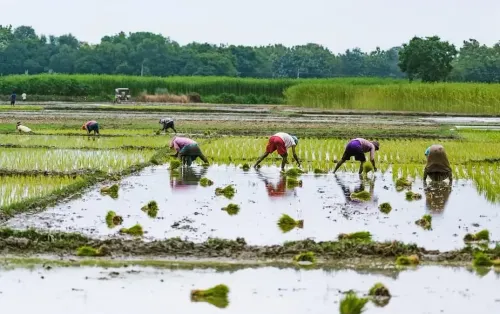
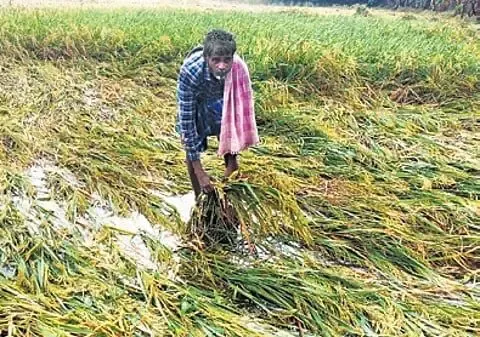
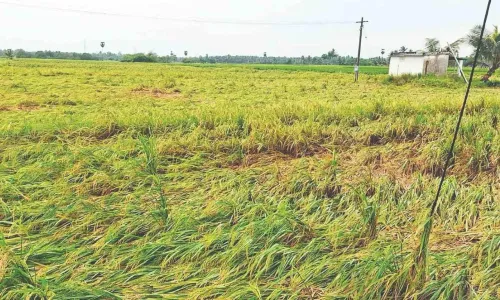
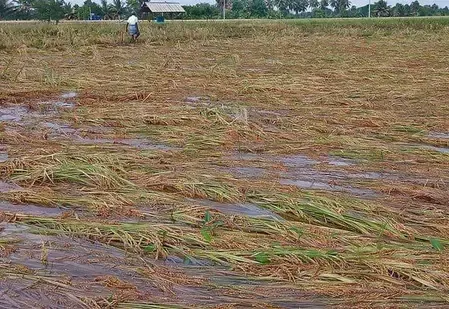
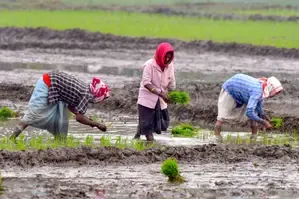
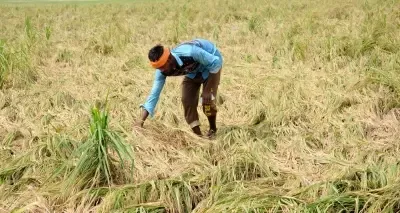
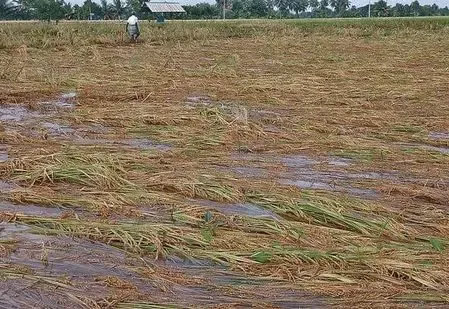
Severe rainfall across the delta regions devastated samba and thalady crops, inundating nearly 90,000 hectares, approximately 2.22 lakh acres, of farmland. In numerous areas, water stagnation persisted for over a week post-rainfall, leading to extensive crop spoilage and leaving farmers uncertain about the sustainability of their fields for future planting cycles.
In late October, the government initiated crop damage assessments with an upgraded GPS verification system. However, technical difficulties, including network failures and field challenges, significantly hampered progress.
As delays accumulated, farmers across the delta called for a return to traditional methods, asserting that the digital approach was inadequate under disaster conditions.
In response to ongoing protests, the government reverted to manual enumeration, while still maintaining a minimum of 10% app-based verification in each district. Despite this transition, farmers express that the assessment's speed remains inconsistent. Many are hesitant to begin land preparations until the assessment is finalized, fearing it might impact damage verification and their eligibility for compensation.
Simultaneously, postponing land preparation poses risks of further degradation and could jeopardize the upcoming planting season. Staff shortages have exacerbated the issue, as Assistant Agriculture Officers responsible for evaluations have been assigned to multiple revenue villages, complicating timely and accurate survey completion.
Farmers contend that the demands placed on each officer are unrealistic, especially during a widespread crisis affecting numerous districts. The damage encompasses Nagapattinam, Tiruvarur, Mayiladuthurai, Thanjavur, along with parts of Pudukkottai and Tiruchy, with Nagapattinam experiencing the worst conditions after receiving around 300 mm of rainfall in a mere 36 hours.
Sensitive samba and thalady crops, only two weeks old, were completely submerged in many areas. Officials from the agriculture department have stated that efforts are currently being made to expedite the process and clear existing backlogs.
To address the workforce shortage, additional Assistant Agriculture Officers have been relocated from non-delta regions, and assessment tasks are being conducted intensively.
Officials report that a considerable portion of the evaluation has been completed, with the remaining surveys expected to conclude soon, allowing compensation processes to commence and enabling farmers to restore their fields and prepare for the next agricultural cycle.
Point of View
The situation in Tamil Nadu highlights the critical need for timely disaster response and support for farmers facing unprecedented challenges. The delays in crop damage assessments underscore the importance of efficient systems that can adapt to emergencies and ensure swift compensation, ultimately safeguarding the agricultural backbone of the region.
NationPress
16 Sept 2026
Frequently Asked Questions
What caused the crop damage in the Cauvery Delta?
The crop damage was primarily caused by heavy rains associated with the northeast monsoon and Cyclone Ditwah, which submerged vast areas of farmland.
What is the current status of crop damage assessments?
The assessments have been delayed due to technical issues with the initial GPS verification system, but the government has reverted to manual methods to expedite the process.
How are farmers responding to the assessment delays?
Farmers are expressing dissatisfaction with the slow pace of assessments and are hesitant to begin land preparations until the evaluation process is complete.
What impact does this situation have on the upcoming planting season?
Delays in preparing the land could lead to further degradation and may disrupt the timing of the next planting season.
What measures are being taken to speed up the assessment process?
Additional Assistant Agriculture Officers from non-delta districts have been deployed to help complete the assessments more efficiently.